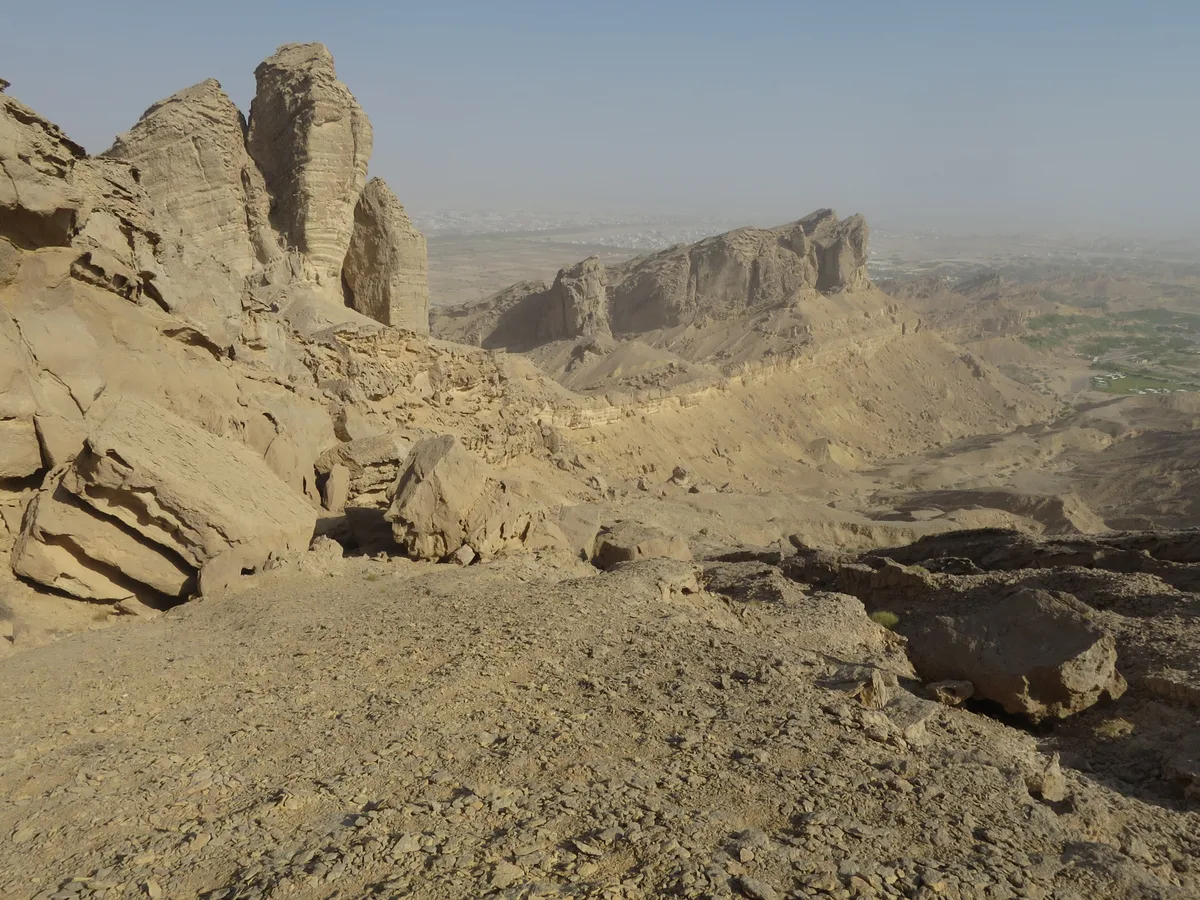
Why Jebel Hafeet is worth the drive
You feel it before you see it: the flat, beige sprawl of Al Ain suddenly interrupted by a limestone massif jutting more than 1,200 metres out of the desert floor. Jebel Hafeet straddles the border between the UAE and Oman, and it’s one of the few places in this part of the country where the land actually goes up.
There’s no ticket booth, no turnstile. You just point your car at the mountain and start climbing.
Getting there and the drive itself
The road up is the real attraction. It’s a smooth, 12-kilometre ribbon of asphalt with 21 or so hairpin curves, built with wide lanes and low speed limits so drivers can actually enjoy it rather than white-knuckle it.
- From central Al Ain, it’s roughly a 20-30 minute drive to the mountain’s base
- A car is essential. There’s no public bus route up the mountain
- Taxis and ride-hailing apps will take you up, though arranging a return pickup takes planning
- The road is paved the entire way, no 4x4 needed
As you climb, the temperature noticeably drops and the view opens up behind you, Al Ain’s grid of palm groves and low buildings shrinking into a green smudge against the sand.

What you’ll find at the top
Near the summit there’s a large parking area and a viewing platform where most people stop. On a clear day you can see for tens of kilometres across the border region into Oman, with the jagged, sun-bleached ridgeline of the Hajar foothills stretching out below.
The mountain is also known for the Mercure Grand Jebel Hafeet Hotel, perched dramatically on the upper slopes. A good marker for how far up you’ve come. Near the base, the Jebel Hafeet Desert Park and the Green Mubazzarah gardens make an easy add-on, with natural warm springs and picnic lawns at the foot of the rock face.
Archaeology buffs should know Jebel Hafeet gave its name to the “Hafit period,” after Bronze Age beehive tombs discovered scattered across its lower slopes, some of the oldest structural remains in the UAE.
When to go
Avoid the midday sun, especially between May and September, when the tarmac and rock radiate heat well into the evening. Cooler months, from November through March, make for a genuinely pleasant drive with the windows down.
Late afternoon is the sweet spot year-round. You get softer light for photos, a noticeable temperature drop compared to the desert floor below, and a sunset that turns the whole ridge amber and pink. Bring a light jacket. It’s genuinely breezy up top even when Al Ain is baking.
How to visit like a local
Jebel Hafeet isn’t a heavily touristed stop compared to Abu Dhabi’s skyline sights or Dubai’s malls, so you can usually find a quiet pull-off on the drive up even during peak season. Locals treat it as an evening escape from the heat rather than a box to tick.
- Time your drive for the last two hours before sunset. The light and temperature are both at their best
- Fill your tank before you leave Al Ain; there are no petrol stations on the mountain road
- Pull into the marked viewpoints rather than stopping on the curves, other drivers use this road for genuine recreational driving, including cyclists on weekend mornings
- Bring water and cash for any roadside stalls near Green Mubazzarah, since card readers aren’t guaranteed
- Weekday visits are noticeably quieter than Thursday and Friday evenings, when local families and motorcyclists head up in numbers
The mistake most first-timers make is treating this as a quick photo stop. Budget at least two hours round trip, more if you want to linger at Green Mubazzarah or explore the tombs near the base.
Frequently asked questions
How do I get to Jebel Hafeet Mountain?
You need a car, taxi, or ride-hail — there's no public bus. From central Al Ain, it's about a 20-30 minute drive to the base, then a 12km paved road climbs to near the summit.
Is there an entrance fee for Jebel Hafeet?
No, the mountain road and viewpoints are free to access. You may pay separately for facilities like the hot springs at Green Mubazzarah or the hotel near the summit.
What is the best time to visit Jebel Hafeet?
Late afternoon into sunset, especially from November to March. Avoid midday heat between May and September, when temperatures on the exposed rock and road climb sharply.
How long should I spend at Jebel Hafeet?
Plan on at least two hours round trip for the drive and viewpoint stop. Add more time if you want to visit Green Mubazzarah gardens or the Bronze Age tombs at the base.
What else is near Jebel Hafeet worth visiting?
The Jebel Hafeet Desert Park and Green Mubazzarah gardens sit at the mountain's base with warm springs and picnic areas, both easy to combine with the drive up.
Plan your trip to Al Ain
United Arab Emirates eSIM & staying connected →
Some links above are affiliate links — if you book through them, Wander Atlas earns a small commission at no extra cost to you. It's how we keep every guide free.