The Temple of the Emerald Buddha: Bangkok Travel Guide
When to visit Thailand: month-by-month weather, crowds and holidays →
✓ Facts verified via Google Places · Aug 28, 2026
At a glance
Opening hours
- Monday: 8:30 AM – 3:30 PM
- Tuesday: 8:30 AM – 3:30 PM
- Wednesday: 8:30 AM – 3:30 PM
- Thursday: 8:30 AM – 3:30 PM
- Friday: 8:30 AM – 3:30 PM
- Saturday: 8:30 AM – 3:30 PM
- Sunday: 8:30 AM – 3:30 PM
Live foot-traffic data via BestTime.app
How this guide is made
Produced with AI assistance and reviewed against live data sources. Facts such as hours, ratings, and location come from Google Places; images are licensed or public domain. Details can change — please verify before visiting. Editorial policy
Why go
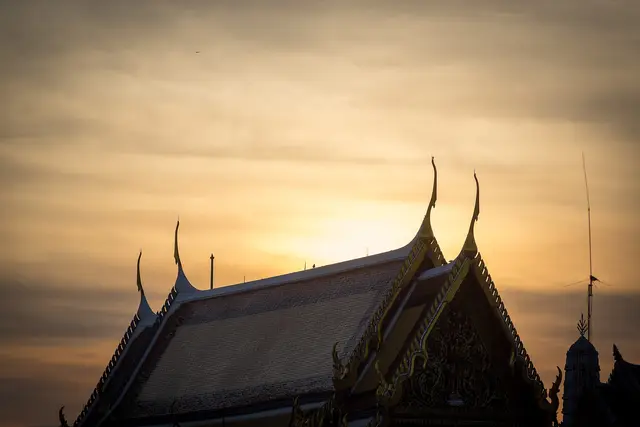
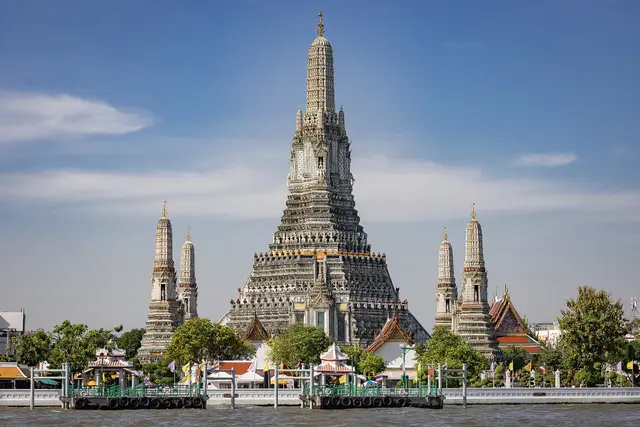
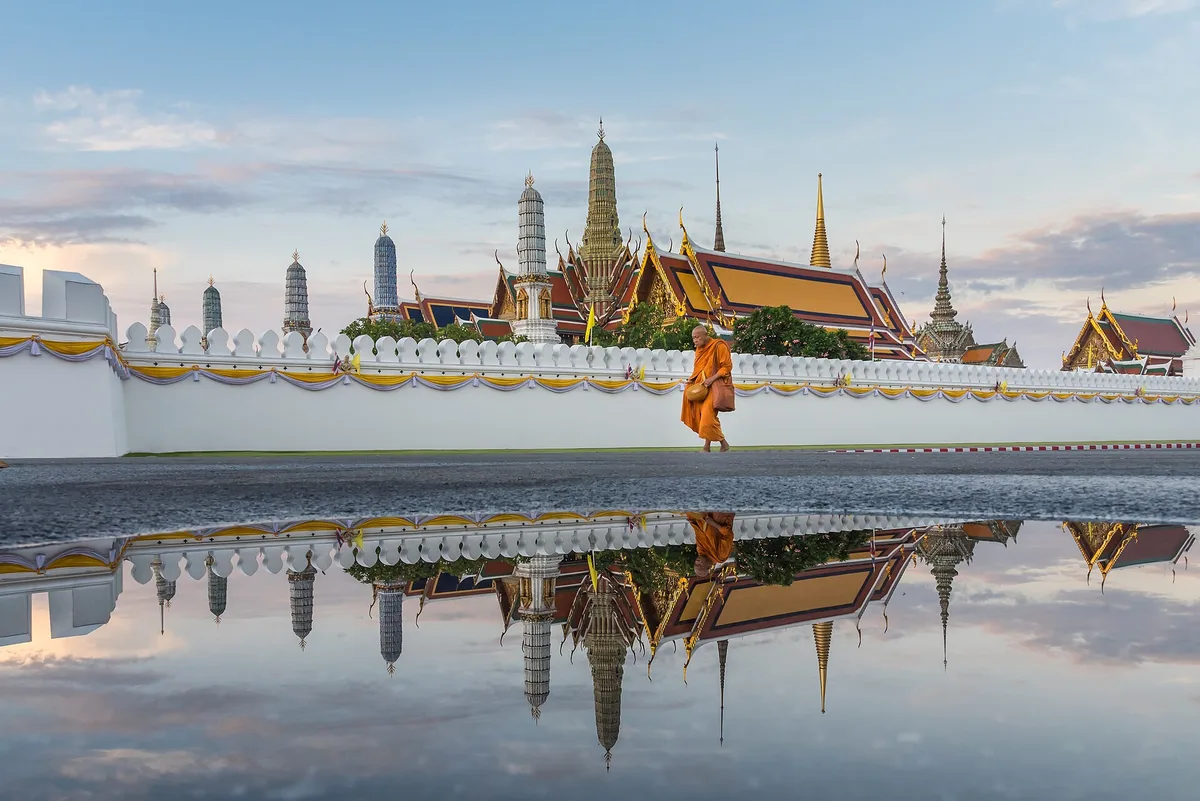
You come around the whitewashed perimeter wall on Na Phra Lan Road and the first thing that hits you is the glare, sunlight bouncing off thousands of mirrored glass mosaic tiles and gilded chedis stacked against the sky. This is Wat Phra Kaew, the Temple of the Emerald Buddha, sitting inside the walls of the Grand Palace and functioning as the spiritual heart of Thailand.
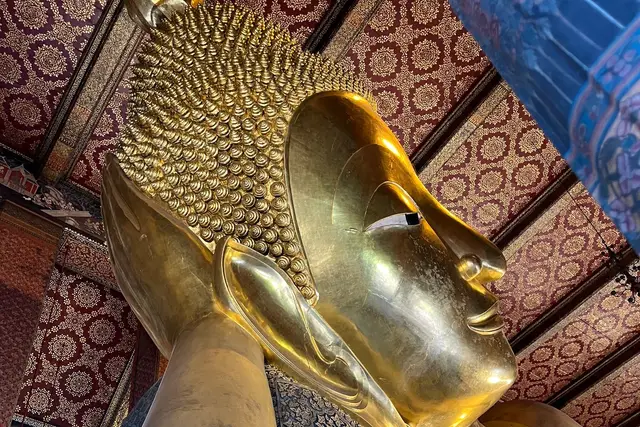
No monks live here; it exists purely to house the Emerald Buddha, a small jade-green figure (not actually emerald) that Thai kings have re-robed by hand three times a year for the changing seasons. It’s one of the most visited religious sites on earth, and it earns that status. The craftsmanship at close range, the gold leaf, the demon guardians (yaksha) looming twice human height at the gates, is not something photos prepare you for.
Getting there
The easiest approach is by river: take the Chao Phraya Express Boat to Tha Chang pier, then walk about five minutes inland. If you’re coming by BTS or MRT, there’s no station right at the door. The closest useful stop is Sanam Chai on the MRT Blue Line, roughly a 10–15 minute walk through the old town past Sanam Luang.
Taxis and tuk-tuks can get stuck in the tangle of one-way streets around the palace, so factor in extra time, or skip the road entirely and take the river route. Entry is through the Wiset Chaisi Gate off Na Phra Lan Road, where you’ll go through a security check and, if needed, borrow a sarong or shirt at the counter for covering bare arms or legs.

What to see
Once inside, the ordination hall (ubosot) holds the Emerald Buddha itself, raised high on a gilded altar, you view it from the floor, seated or standing quietly, shoes left outside. Around the hall, the Ramakien murals wrap the cloistered galleries in a continuous painted narrative of the Thai version of the Ramayana, panel after panel of battles, demons, and monkey armies rendered in a style you won’t see reproduced elsewhere in the city.
Look for Phra Si Rattana Chedi, the golden bell-shaped stupa said to enshrine a piece of the Buddha’s breastbone, and the miniature model of Angkor Wat that Rama IV commissioned when Cambodia’s temple was under Thai influence. From the temple grounds you flow directly into the Grand Palace itself, including the Chakri Maha Prasat throne hall with its odd, elegant mash-up of Italian Renaissance base and traditional Thai spired roof.
When to go
The complex is open daily, with last entry generally enforced well before closing, so this is a morning-to-early-afternoon visit, not a late-day one. Cover the site in two to three hours. Weekday mornings between 8:30am and 9:30am are consistently the quietest slot, and that same 8:30–9:30am window holds true on weekends too, worth prioritizing if a weekend is your only option, since traffic builds fast and 10am to noon on Saturdays and Sundays is the peak crush you want to avoid.
Bangkok’s cooler, drier months from November through February make the shadeless courtyards more bearable; by midday in April or May the reflective tile work turns the plazas into a furnace.
How to visit like a local
Dress rules are strictly enforced and non-negotiable: no shorts, no sleeveless tops, no see-through fabric, closed shoes preferred. Bring your own light long-sleeve layer and a sarong rather than relying on the loan counter, which can have a line of its own. Entry tickets are bought at the counter near the gate on the day. There’s no need to book far ahead, but don’t buy from touts outside claiming the temple is “closed for a holiday,” a long-running scam meant to divert visitors to jewelry shops.
Pay in Thai baht cash or by card at the official counter only. Once inside, move around the ubosot’s exterior galleries counter-clockwise as devotees do, keep voices low near the altar, and never point your feet toward the Buddha image when sitting. Because this remains an active place of worship despite the crowds, treat it with the same quiet as you would a working temple, not a museum, that mindset alone puts you ahead of most tour groups shuffling through at 11am.
Frequently asked questions
What are the opening hours?
Daily, 8:30am to 3:30pm, including weekends and most public holidays — check for occasional closures on royal ceremony days before you go.
When is the quietest time to visit?
Between 8:30am and 9:30am, both on weekdays and weekends. Weekends get busiest from 10am to noon, so aim to be inside before then.
How do I get there without a car?
Take the Chao Phraya Express Boat to Tha Chang pier (about a 5-minute walk to the entrance), or the MRT Blue Line to Sanam Chai station, then walk roughly 10–15 minutes.
How long should I plan to spend there?
Two to three hours covers the temple grounds, the Ramakien gallery murals, and an adjoining walk through the Grand Palace's throne halls.
What should I wear?
Shoulders and knees fully covered, no see-through clothing, closed-toe shoes recommended; sarongs and cover-ups are available to borrow at the entrance if needed.
Plan your trip to Bangkok
Some links above are affiliate links — if you book through them, Wander Atlas earns a small commission at no extra cost to you. It's how we keep every guide free.