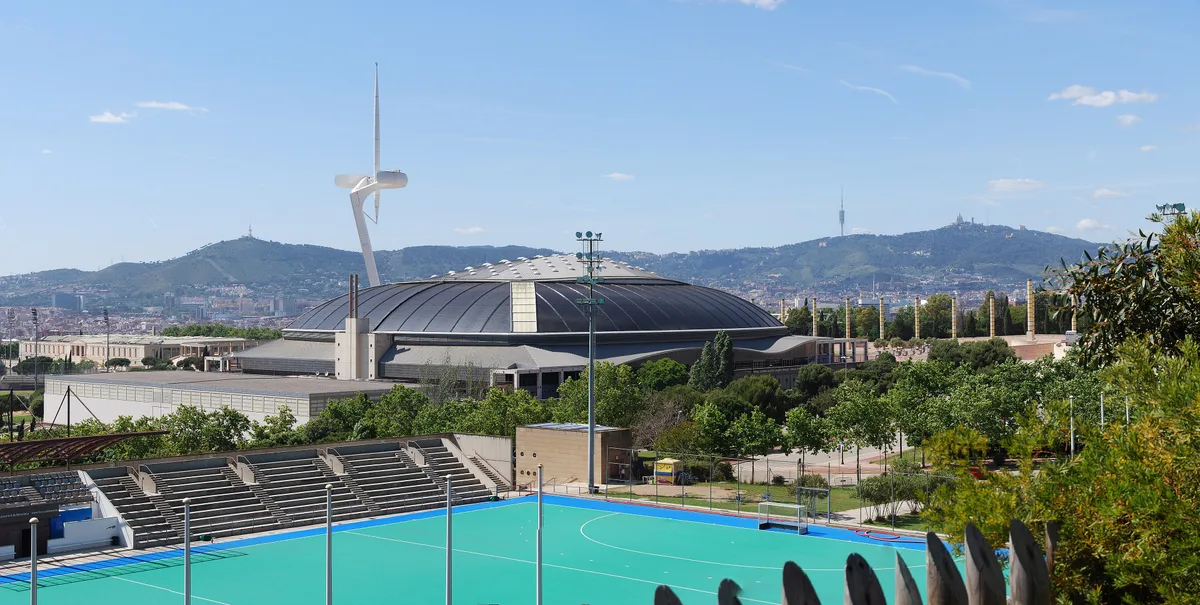
Eight pairs, one glass court
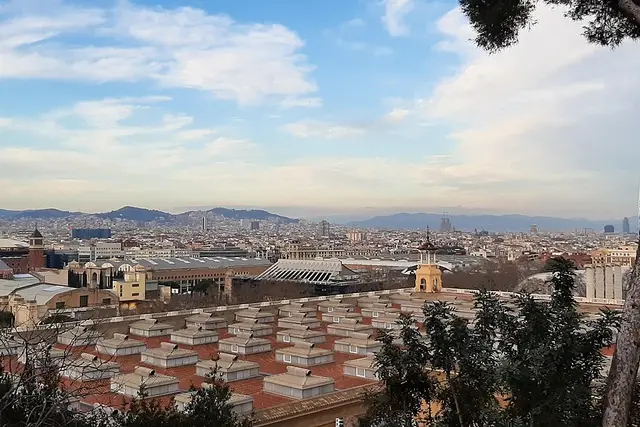
The season ends on a hill above the city. Every December, the Premier Padel Tour closes with a Finals event, and in 2026 it runs from Thursday, December 10 to Sunday, December 13. The field is small: only the top eight pairs in the world ranking qualify.
That makes this a different week from a regular tour stop. No early rounds against qualifiers, no outside courts. Every match on the schedule is between pairs who have spent the year near the top of the ranking, and every one of them is played in the same arena.
Padel is a doubles game played inside a court enclosed by glass walls and wire mesh. The ball stays in play off the glass, so rallies run long and points get rebuilt from the back wall. Spain is the sport’s heartland, and a Barcelona crowd follows those rallies closely.
Inside Isozaki’s dome
The venue is the Palau Sant Jordi, the indoor arena of the 1992 Olympic Games. Japanese architect Arata Isozaki designed it, and it opened in 1990. Its low, curving roof is a steel space frame that was assembled on the ground and then lifted into position.
Inside, a steep bowl of seating surrounds the arena floor. For padel, the glass court sits in the middle under the lights, so even upper seats look down through the walls at the full rally. Higher rows give you the geometry of the point. Lower rows give you the speed of the smash.
Outside, the plaza in front of the entrance holds Aiko Miyawaki’s Utsurohi, a field of tall steel posts strung with thin wires. It’s the usual meeting point before a session.
Tickets and how the week is sold
The organiser, Premier Padel, publishes the dates, session schedule and ticket links on its official site. That’s the place to look for prices too; this guide doesn’t print any.
Events at the Palau Sant Jordi are usually sold by session rather than as one pass for all four days. Fans typically weigh it like this:
- Thursday and Friday: the opening days, with the full field of eight pairs still in contention.
- Saturday: the field narrows and the stakes rise.
- Sunday, December 13: the final match of the season and the trophy ceremony.
Fans who only have one day in the city usually aim for the weekend. Those who want to see every qualified pair play usually pick the opening days.
The climb to the Olympic Ring
Getting up Montjuïc is part of the evening. The arena sits on the Anella Olímpica (Olympic Ring), alongside the Estadi Olímpic Lluís Companys and Calatrava’s white Montjuïc Communications Tower. Three routes cover most arrivals:
- Metro + escalators: ride L1 or L3 to Espanya and walk up Avinguda de la Reina Maria Cristina past the Magic Fountain. Outdoor escalators beside the steps of the Museu Nacional d’Art de Catalunya (MNAC) carry you most of the way up. Allow 20–25 minutes from the station.
- Funicular: from Paral·lel (L2/L3), the Funicular de Montjuïc runs underground to Parc de Montjuïc, about a 10-minute walk from the arena.
- Bus 150: this route runs from Plaça d’Espanya up the hill and stops close to the Olympic Ring.
After the final point, thousands of people leave at once. Many walk back down to Plaça d’Espanya, where trains run more often and the downhill walk is quick. December evenings on Montjuïc are cool and the hilltop catches the wind, so spectators usually bring a layer for the walk.
Reading a padel crowd
The crowd is loud between points and quiet during them. Spanish padel fans know when to cheer. They stay silent while the ball is live, then the noise comes all at once after a recovery off the back glass or a smash that bounces out of the court. Standing or calling out mid-rally earns you looks from the people around you.
A few habits make the session smoother:
- Moving seats: spectators usually wait for the changeover between games before leaving or returning to their row, as in tennis. Ushers often hold people at the aisle until then.
- Chants: “¡Vamos!” is the standard cheer, and home crowds get behind the Spanish players in particular.
- Paying: card and contactless payment is standard across Barcelona, including at arena concessions.
- Language: signage in the city is in Catalan and Spanish. “Palau Sant Jordi” is the Catalan name, and it’s what taxi drivers and locals call it.
Dinner on the way down
Barcelona eats late, and that suits evening sessions. Dinner at 9pm or later is normal, so a match that ends at night still leaves time for a full meal. The Montjuïc side of the hill drops straight into two good neighbourhoods for it.
Poble-sec, at the foot of the funicular, is the closest. Carrer de Blai is lined with pintxo bars where the small skewered snacks sit on the counter and you pay by the toothpick. Sant Antoni, one stop further along L2, has more sit-down tapas bars and vermouth places around its restored market hall.
People with a free afternoon before a session often visit the hill’s daytime sights:
- MNAC: Romanesque church murals in the palace above the fountain.
- Fundació Joan Miró: a short walk east of the Olympic Ring.
- Poble Espanyol: an open-air village of Spanish architectural styles near the CaixaForum.
Making a weekend of it
The Finals run Thursday to Sunday, so a long weekend fits the whole event. Visitors here for padel usually stay in Sant Antoni, Poble-sec or around Plaça d’Espanya. All three are walkable or one metro hop from the arena, and Espanya has direct links to the airport by Aerobús and by metro on L9 Sud.
December in Barcelona is low season for beaches but busy for Christmas. The Fira de Santa Llúcia Christmas market sets up outside the cathedral in the Gothic Quarter, and the city’s lights come on along Passeig de Gràcia. A morning in the old town and an evening at the Palau Sant Jordi make an easy, unhurried day.
Frequently asked questions
When are the Premier Padel Tour Finals in Barcelona?
The 2026 Finals run from Thursday, December 10 to Sunday, December 13, 2026. The final match of the season is on the Sunday.
Where is the venue and how do I get there?
The event is held at the Palau Sant Jordi on the Olympic Ring on Montjuïc. Most fans take metro L1 or L3 to Espanya and ride the outdoor escalators up past the MNAC, a 20–25 minute trip. You can also take the Funicular de Montjuïc from Paral·lel (L2/L3), or bus 150 from Plaça d'Espanya.
Who plays in the Finals?
Only the top eight pairs in the world ranking qualify, so every match is between pairs from the top of the season's standings.
Where can I find tickets?
The organiser, Premier Padel, publishes the session schedule and ticket links on its official site. Prices are listed there, not in this guide.
What is there to do nearby?
Montjuïc has the MNAC, the Fundació Joan Miró, Poble Espanyol and the Magic Fountain. For dinner after a session, the pintxo bars on Carrer de Blai in Poble-sec and the tapas bars of Sant Antoni are just down the hill.
Plan your trip to Barcelona
Spain eSIM & staying connected →
Some links above are affiliate links — if you book through them, Wander Atlas earns a small commission at no extra cost to you. It's how we keep every guide free.