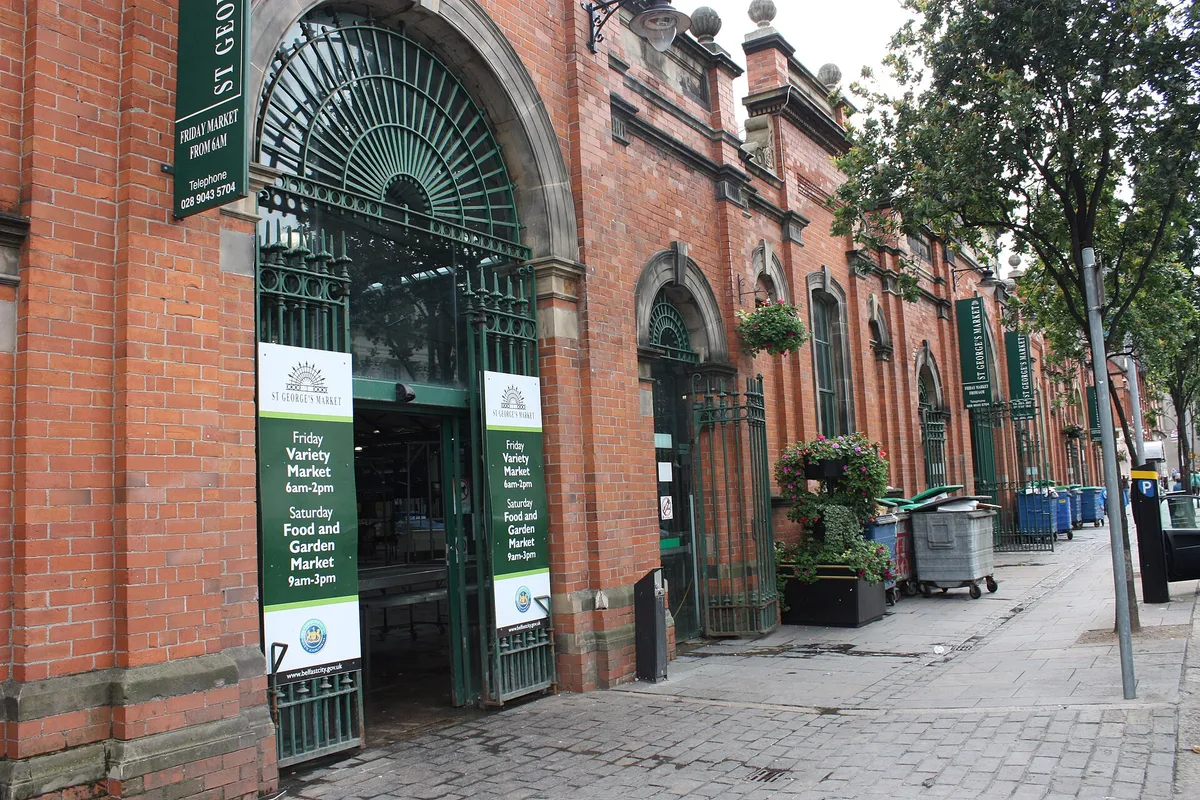
Red brick, iron and glass on East Bridge Street
From the street, the market is a long run of red brick and sandstone with tall arched entrances. Inside, the roof is iron and glass, and daylight falls on rows of stalls under one big shed. St George’s was built in phases between 1890 and 1896. It is the last Victorian covered market still standing in Belfast.
It’s no secret. This is one of the most-reviewed places in Northern Ireland and it’s consistently well rated. Go expecting a busy, working market with a lot of noise and good food, not somewhere quiet. Locals do their weekly shop here and visitors come to graze. Both crowds share the same narrow aisles.
The building came close to being lost. By the late twentieth century it was run down, and a restoration finished in 1999 brought it back into use. Thanks to that work, the hall still runs as a market today rather than standing as a monument you photograph from outside.
Three days, three different markets
The current schedule is short. The doors open on three days and stay shut from Monday to Thursday, so plan your Belfast trip around it:
- Friday, 8am–2pm: the Variety Market. Expect a mix of everything: secondhand goods, clothes, household odds and ends, fruit and veg, plus the fish traders the market has been known for.
- Saturday, 9am–3pm: the weekend mood. Food is in charge here, alongside local produce, craft and plants.
- Sunday, 10am–3pm: a later start, with food, craft and some antiques and collectables.
Live music often plays on weekends, so expect to hear it from the food end of the hall. The stalls change week to week. If you’re after one particular trader, check the market’s official Belfast City Council page before you go.
Breakfast in a bap
People in Belfast eat breakfast here. A soft, floury Belfast bap filled with bacon, sausage or egg is the standard thing to carry round the aisles. You’ll also see full Ulster fries, served with the two griddle breads that set it apart: soda farls and potato bread.
Things worth hunting for while you graze:
- Soda bread and wheaten bread, sold whole to take home
- Dulse, dried seaweed from the north coast, eaten as a salty snack
- Yellowman, the honeycomb toffee linked with the Ould Lammas Fair in Ballycastle
- Local cheeses, smoked fish and Irish chocolate, which survive a flight better than a bap does
- Street food from wherever the weekend traders come from that week
On Fridays, look at the fish stalls even if you aren’t buying. It’s the oldest working part of the market and the most useful for locals. On Saturday and Sunday the hot food counters take over, and the seating fills up as fast as you’d guess.

Getting to East Bridge Street
The market is at 12 East Bridge Street, BT1 3NQ, on the east side of the city centre close to the River Lagan.
- By train: Lanyon Place station is the closest, a short walk downhill. Grand Central Station, the city’s main transport hub, is further away but the walk is easy, across the centre.
- On foot from City Hall: about ten minutes heading east along May Street.
- From Victoria Square: the shopping centre is just a few streets north, so you can combine the two.
If you’re driving, use one of the city-centre car parks and walk. Kerbside spaces near the market go quickly on weekends.
Working the aisles without the crush
Our foot-traffic data shows weekends busy from 9am to 3pm. That’s the whole Saturday trading day and every hour of Sunday, so a weekend visit means crowds at any time. If your plans allow it, come on Friday. It opens earliest, at 8am, and it falls outside that measured weekend peak.
How the market works:
- Pay as you go, stall by stall. Lots of traders take cards and contactless, but not all of them do. Carry some sterling for the smaller stalls.
- Northern Irish notes. Change from some stalls may come as Ulster Bank or Bank of Ireland sterling notes. They’re legal here, but shops in England sometimes refuse them, so spend them before you leave.
- Queue at the food counters. Lines form along the aisle, so keep them tidy and don’t block the stall next door.
- Don’t hold a table. At weekends the shared seating is for eating, not for camping. Finish your food and pass the table on.
- Ask before you photograph a stall up close, especially the craft makers, whose designs are their living.
- Bring a bag. It’s handier for produce and bread than juggling loose items.
Talking to traders is normal. Ask where the cheese or the fish comes from and you’ll usually get a proper answer.
How long to stay, and closing time
An hour covers a loop of the hall and something to eat. Add another hour if you’re shopping for crafts, or if you want to sit with a coffee and listen to the band.
Watch the clock. On Fridays the market closes at 2pm, an hour earlier than at weekends, and traders start packing up before the end. Late on a Friday afternoon you’ll find the doors shut. Arriving in the morning gives you the full choice of stalls and bread that’s still warm.
Before and after: the river side of town
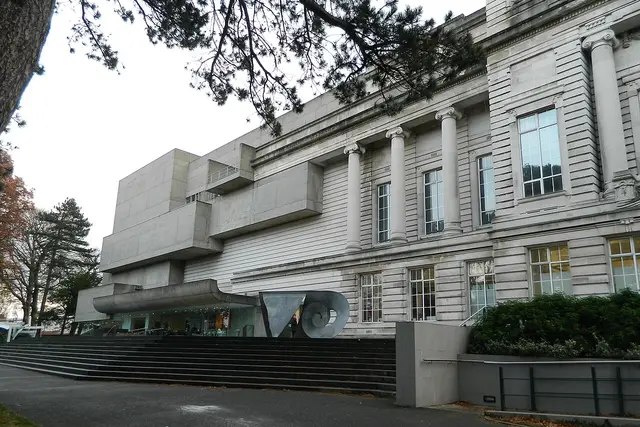
The market sits in a part of Belfast that’s easy to walk around. A few minutes away, the Waterfront Hall faces the River Lagan, and the riverside path goes towards the Lagan Weir and the Big Fish, the tiled salmon sculpture at Donegall Quay.
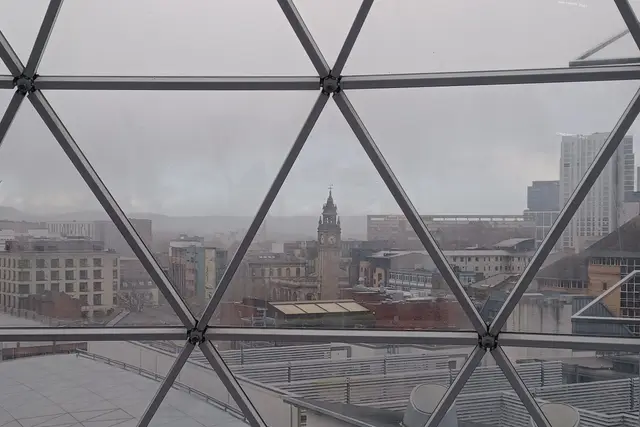
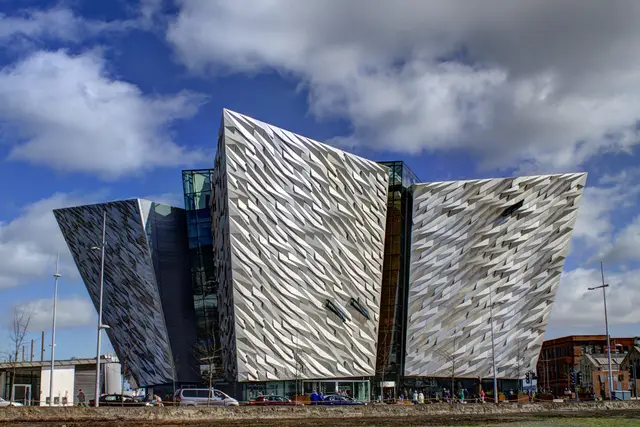
If you head west, Belfast City Hall is about ten minutes off, and Victoria Square’s glass dome has a free view over the rooftops. Across the river, the Titanic Quarter makes a good afternoon after the market closes. That way your morning goes on food and your afternoon on the city’s shipbuilding story.
Frequently asked questions
What days is St George's Market open?
Right now it trades on three days: Friday 8am–2pm, Saturday 9am–3pm and Sunday 10am–3pm. It's closed Monday to Thursday. Check the official listing before you go, because special events can change the schedule.
When is the quietest time to visit?
We don't have a measured quiet window, but weekends are busy for the whole 9am–3pm trading day. Friday is the best choice if you want to avoid that weekend peak. It also opens earliest, at 8am.
How do I get to St George's Market?
It's at 12 East Bridge Street, Belfast BT1 3NQ. Lanyon Place train station is the closest, a short walk away, and Belfast City Hall is about ten minutes on foot.
What should I eat there?
Try a Belfast bap breakfast or an Ulster fry with soda farls and potato bread. For snacks, look for dulse and yellowman. Local cheeses, wheaten bread and smoked fish travel well if you want to take something home.
What is near the market?
The Waterfront Hall, the River Lagan, the Lagan Weir and the Big Fish sculpture are all a few minutes' walk away. Victoria Square and City Hall are slightly further, and the Titanic Quarter is just over the river.
Plan your trip to Belfast
United Kingdom eSIM & staying connected →
Some links above are affiliate links — if you book through them, Wander Atlas earns a small commission at no extra cost to you. It's how we keep every guide free.