A temple on a plinth
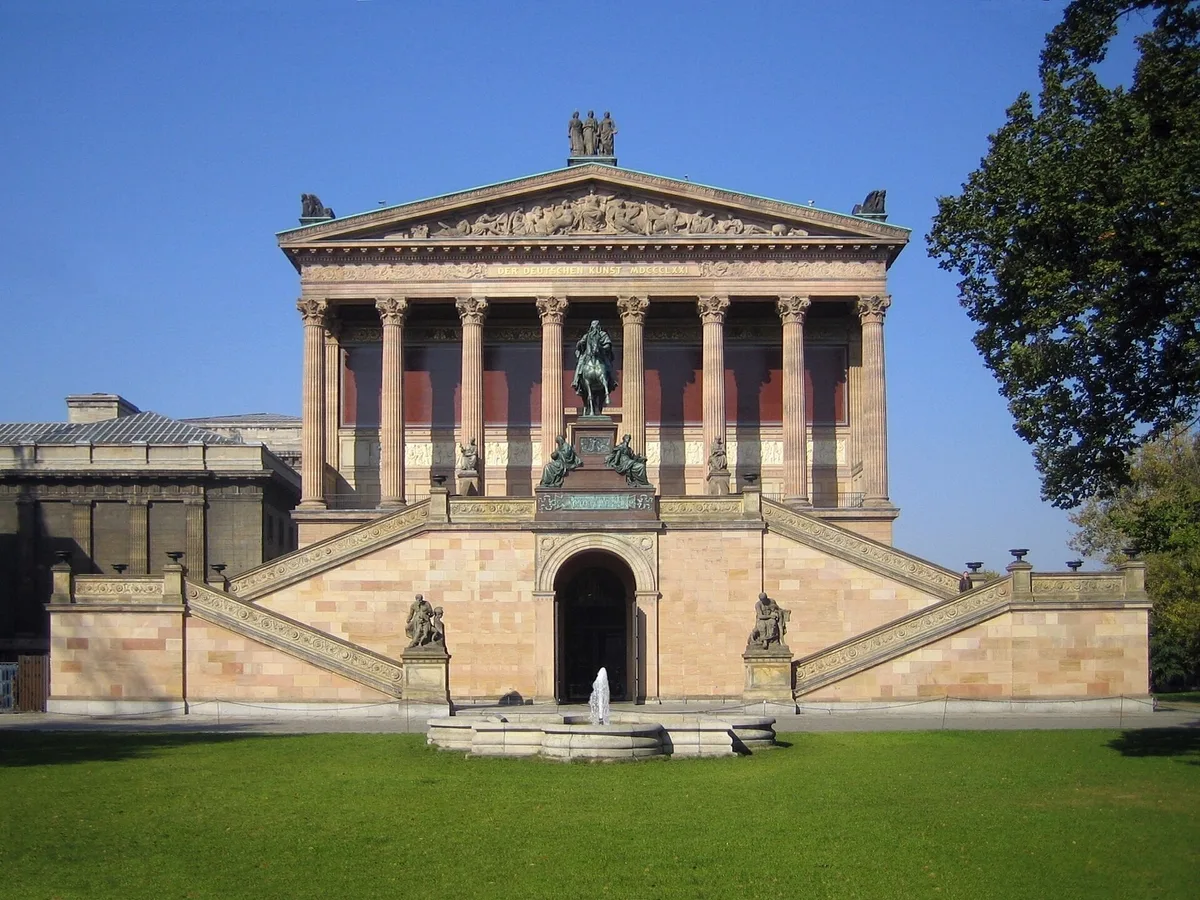
You climb to the art. The Alte Nationalgalerie stands on a tall sandstone base like a Corinthian temple. A double staircase sweeps up to the portico, and an equestrian statue of King Friedrich Wilhelm IV sits on the landing. Above the columns, the inscription dedicates the building “Der Deutschen Kunst”, to German art.
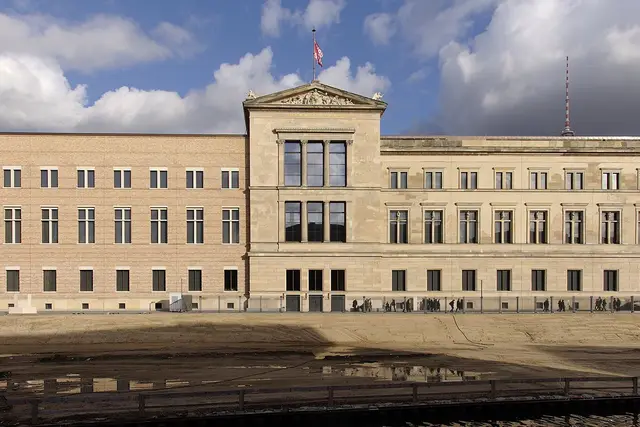
Friedrich August Stüler designed it and Heinrich Strack finished it in the 1870s. Around the base runs a garden courtyard framed by colonnades, the Kolonnadenhof. Here you can sit among sculptures with the Neues Museum on one side and the Spree on the other. The address is Bodestraße 1-3, on the northern half of Museum Island.
What hangs inside
The collection covers roughly a century. It runs from Romantic painting through Impressionism to the edge of Modernism, spread over three floors that are each a manageable size. Rehangs and loans move things around, so ask at the desk if one painting is the reason you came.
Pieces people usually come for:
- Caspar David Friedrich: The Monk by the Sea and Abbey in the Oakwood, the museum’s most visited pair.
- Adolph Menzel: The Iron Rolling Mill, a smoky, crowded factory interior that stands apart from everything around it.
- Karl Friedrich Schinkel: the architect’s dreamlike Gothic cathedral paintings.
- French Impressionists: Manet’s In the Conservatory, plus Monet, Renoir and Cézanne.
- Arnold Böcklin: a version of Isle of the Dead.
- Johann Gottfried Schadow: the marble Princesses Group, two Prussian sisters arm in arm.
Max Liebermann and Lovis Corinth carry the story into the early twentieth century. That makes this a good place to see what German painters were doing while Paris got the headlines.

Getting to Bodestraße
Museum Island is easy to reach from anywhere in central Berlin.
- S-Bahn: Hackescher Markt (S3, S5, S7, S9), then a short walk over the Spree.
- U-Bahn: Museumsinsel on the U5 comes up beside the Lustgarten, a few minutes south.
- Tram: M1 and 12 stop at Am Kupfergraben, just across the water.
- Bus: lines 100 and 300 stop at Lustgarten.
Expect to spend 1.5 to 2.5 hours inside. Add more if you sit in the colonnade courtyard afterwards.
Beating the weekend crush
This is one of Berlin’s best-known museums, so plan around the crowds. BestTime’s forecast puts its busiest stretch on weekends from 11am to 6pm. Try not to turn up mid-Saturday afternoon. That is when the Friedrich room fills and the cloakroom queue backs up.
A weekday is the easier choice. If a weekend is your only option, be at the door at 10am, when it opens. Arriving before the late-morning wave usually means you get the Romantics before the tour groups do. Remember the museum is currently closed on Mondays. Opening times can shift through the year and on holidays, so check smb.museum before you go.
Tickets, bags and gallery manners
Tickets are sold by the Staatliche Museen zu Berlin. Booking a timed slot on their website is the easiest way to skip the ticket desk on busy days. Prices are listed there and at the entrance. If you plan to see several museums on the island, compare single tickets with the Museum Island combined ticket on the same site.
A few habits help the visit go smoothly:
- Large bags and backpacks go in the cloakroom or lockers before you enter the galleries.
- Photography without flash is generally allowed in the permanent collection. Watch for signs in temporary exhibitions.
- Card payment is normal at the desk, but booking online avoids paying there at all.
- Start at the top if the Romantics are your priority, then work down to the Impressionists.
Berliners in galleries tend to be quiet and keep their distance from the canvases. Keep phone calls for the courtyard outside.
Making a day of Museum Island
Everything around the gallery is within a few minutes’ walk. The Neues Museum, home of the Nefertiti bust, is next door. The Altes Museum and its classical antiquities face the Lustgarten. The Bode-Museum sits on the island’s northern tip, where the Spree splits.
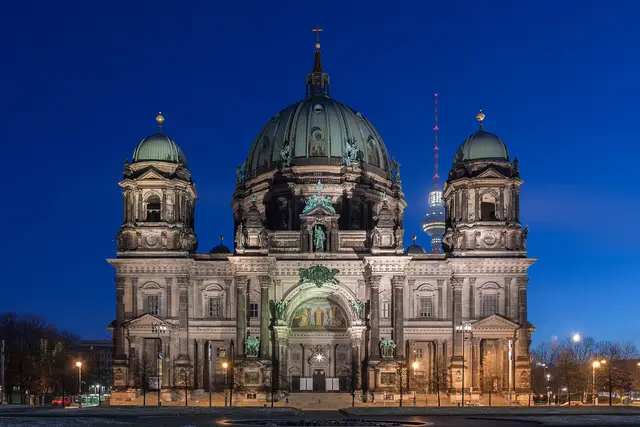
The domed Berliner Dom closes off the south end of the Lustgarten, and its roof walk looks back over the island. The James-Simon-Galerie, the colonnaded visitor centre, handles tickets and information for the whole island. For coffee and food, cross the river to the cafés around Hackescher Markt.
Frequently asked questions
When is the quietest time to visit the Alte Nationalgalerie?
BestTime's forecast flags weekends from 11am to 6pm as the busiest period. A weekday visit avoids that. On weekends, arrive at the 10am opening, before the late-morning wave.
Is the Alte Nationalgalerie open on Mondays?
No. It is currently closed on Mondays and open Tuesday to Sunday from 10am to 6pm. Hours can change seasonally and on holidays, so check smb.museum before you go.
How do I get to the Alte Nationalgalerie?
Take the S-Bahn to Hackescher Markt (S3, S5, S7, S9) and walk across the Spree. You can also take the U5 to Museumsinsel, or the M1 or 12 tram to Am Kupfergraben. The entrance is at Bodestraße 1-3.
How long should I spend there?
Allow 1.5 to 2.5 hours for the three floors. Leave extra time to sit in the colonnade courtyard or walk on to the Neues Museum next door.
What are the must-see works?
Most visitors go first to Caspar David Friedrich's The Monk by the Sea and Abbey in the Oakwood. Menzel's The Iron Rolling Mill, Manet's In the Conservatory, Böcklin's Isle of the Dead and Schadow's Princesses Group are the other highlights. Ask at the desk in case a work has been moved or loaned out.
Plan your trip to Berlin
Germany eSIM & staying connected →
Some links above are affiliate links — if you book through them, Wander Atlas earns a small commission at no extra cost to you. It's how we keep every guide free.