A forest with a traffic circle in the middle
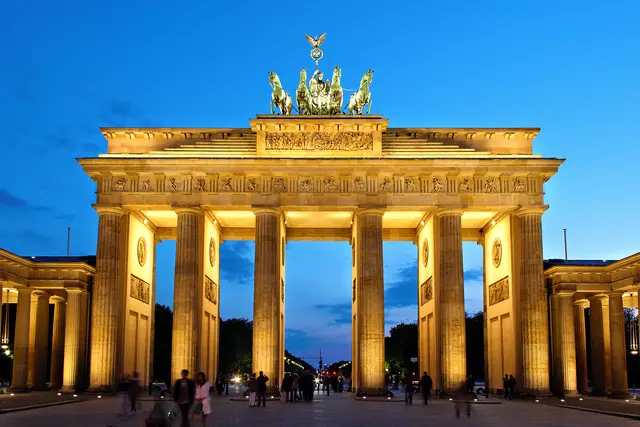
Tiergarten does not feel like a city park. It feels like woodland that the city grew around. Straße des 17. Juni cuts straight through it, a wide boulevard running from the Brandenburg Gate in the east to Ernst-Reuter-Platz in the west.
Halfway along, the road loops around a roundabout called the Großer Stern. A gilded figure stands on top of a column at its centre. Step off the boulevard onto any side path and within minutes the traffic noise fades. You’re left with gravel underfoot, canals edged with reeds, and paths heading off in every direction.
The name means “animal garden”. For centuries this was a royal hunting ground for the Prussian court. In the 19th century the landscape architect Peter Joseph Lenné turned it into the public park you see now, with winding paths, lakes and open lawns in the English style.
Picking your edge of the park
The park covers more than 200 hectares, so where you enter shapes the whole visit. Choose by what you want to see first:
- East side: U5 or S-Bahn to Brandenburger Tor. You come out by the Brandenburg Gate, with the Reichstag just to the north.
- Centre: S-Bahn to Tiergarten or Bellevue (lines S3, S5, S7 and S9). Both drop you close to the Victory Column.
- Southwest: Zoologischer Garten station, which serves U-Bahn, S-Bahn and regional trains. It puts you beside the Berlin Zoo and near the Neuer See.
- Bus 100: this sightseeing-friendly line runs between Zoo and Alexanderplatz and stops at the Großer Stern.
Walking straight across the park along the boulevard takes roughly 45 minutes. The winding paths take a good deal longer, which is the point of them.
Up the column to Goldelse
The Victory Column, or Siegessäule, went up in the 1870s to mark Prussian military victories. It was moved to the Großer Stern in 1939 as part of Nazi plans to remodel Berlin. Berliners call the gilded Victoria on top “Goldelse”.
Don’t try to cross the roundabout at street level. Pedestrian tunnels run underneath from the edge of the circle to the base of the column.
Inside, a spiral staircase of more than 280 steps climbs to a viewing platform just below the statue. There is no lift, and the stairs are narrow when people are coming down. From the top, the boulevard runs dead straight east to the Brandenburg Gate. The Fernsehturm stands beyond it, and the tree canopy spreads in every direction. The platform charges for entry; the current price is posted at the entrance.

Water, islands and old lamps
Most of the park’s character sits along its waterways. These are the spots to look for:
- Neuer See: a lake in the southwest corner. Café am Neuen See runs a beer garden and rents rowing boats in season.
- Rousseauinsel: a tiny island in the Großer Tiergarten pond. It holds a memorial stone to Jean-Jacques Rousseau and makes a quiet stop on a loop.
- Englischer Garten: a landscaped section in the northwest, near Bellevue, with a thatched teahouse.
- Gas lantern museum: an open-air collection of historic gas street lamps from Berlin and other European cities. It lines the paths near Tiergarten S-Bahn station and glows after dark.
Schloss Bellevue sits on the northern edge. It is the official residence of the German Federal President, and you can see it from the path but not go in. Nearby, the curved roof of the Haus der Kulturen der Welt rises beside the Spree. The Carillon bell tower stands next to it.
What the trees remember
Hardly any of the woodland is original. In the hungry winters after 1945, Berliners cut down almost every tree for firewood and dug up the lawns to grow vegetables. Replanting began in the late 1940s, so most of what shades you today is post-war growth.
The east side is dense with memorials, and all of them are free to walk past:
- The Soviet War Memorial on Straße des 17. Juni, built in 1945 just west of the Brandenburg Gate.
- The Memorial to the Sinti and Roma Victims of National Socialism, a dark round pool close to the Reichstag.
- The Memorial to Homosexuals Persecuted under Nazism, a concrete block facing the Holocaust Memorial across Ebertstraße.
The boulevard’s own name is a memorial too. It marks 17 June 1953, when East Germans rose up against the communist government.
Beer-garden and lawn etiquette
Berliners use Tiergarten as their back garden, and a few unwritten rules make the day smoother.
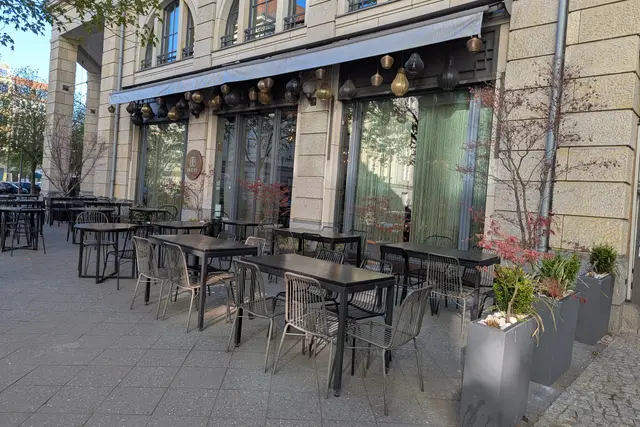
At the beer gardens, service is usually at the counter. You queue, order, carry your own tray and find a seat at the shared benches. Sitting down next to strangers at a half-empty table is normal. Glasses and mugs often carry a deposit (Pfand), which you get back when you return them to the counter.
Cyclists take the park seriously. Many paths are shared, so step aside when you hear a bell and don’t walk side by side on the marked bike lanes. On sunny days you’ll see some nude sunbathing on certain meadows. It’s an old Berlin habit, and nobody stares.
Barbecues are only allowed where signs say so. Check before you unpack a grill.
Timing the visit
Tiergarten is open 24 hours, every day. Even so, the clock matters more than you’d think in a park this popular.
On weekends it’s calmest from 7am–9am. At that hour you mostly share the paths with joggers and dog walkers, and the light falls low across the canals. Try to avoid arriving between 10am and 8pm on a weekend. That’s when families, picnic groups and tourists walking from the Brandenburg Gate fill the main routes and the lakeside seats.
Allow at least two hours for the Victory Column and a lakeside loop. Make it half a day if you add the memorials, a beer garden and the gas lamps. After dark the park is large and poorly lit away from the boulevard, so stick to the main paths if you cross it at night.
Frequently asked questions
When is the quietest time to visit Tiergarten?
On weekends, go from 7am–9am, when the paths are mostly joggers and dog walkers. Try not to arrive between 10am and 8pm on weekends, when the park is at its busiest.
How do I get to Tiergarten by public transport?
For the east side, take the U5 or S-Bahn to Brandenburger Tor. For the centre and the Victory Column, take the S-Bahn (S3, S5, S7, S9) to Tiergarten or Bellevue. For the southwest and the Neuer See, go to Zoologischer Garten. Bus 100 also stops at the Großer Stern.
Is Tiergarten open at night?
Yes, the park is open 24 hours every day. Away from Straße des 17. Juni it's large and dimly lit, so stick to the main paths after dark.
How long should I spend in Tiergarten?
Allow about two hours for the Victory Column and a loop past the lakes. Make it half a day if you want to add the memorials near the Reichstag, a beer garden stop and the gas lantern museum.
Can I climb the Victory Column?
Yes. Pedestrian tunnels lead under the Großer Stern roundabout to the base. From there, more than 280 steps climb to a viewing platform below the golden Victoria statue. There's no lift, and the entry price is posted at the entrance.
Plan your trip to Berlin
Germany eSIM & staying connected →
Some links above are affiliate links — if you book through them, Wander Atlas earns a small commission at no extra cost to you. It's how we keep every guide free.