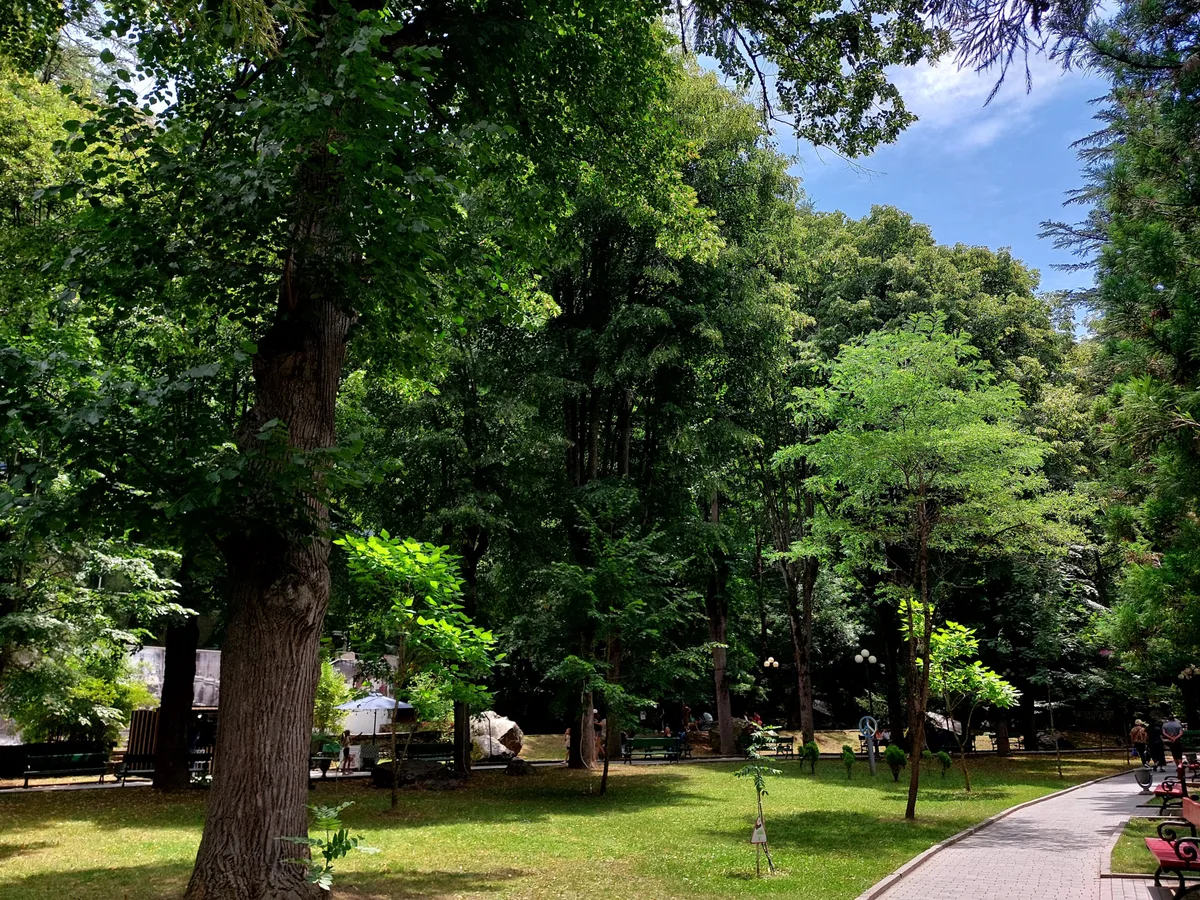
The spring at the bottom of the gorge
The park follows the Borjomula, a fast, stony stream squeezed between pine-covered slopes. Paths, footbridges and old lamp posts line both banks. It was laid out in the mid-19th century, when Borjomi became a spa resort for the Russian imperial elite.
The main draw is the spring pavilion near the entrance. Taps run with the same naturally carbonated water sold in green bottles across the former Soviet world. It comes out lukewarm, salty and faintly sulphurous. Many first-timers are surprised by that, because they expect it to taste like chilled table water.
Up the cable car and along the river
The cable car climbs from the park’s lower end to a plateau above town. Up top there’s the Ferris wheel and a view down onto Borjomi’s rooftops and the Mtkvari valley. The ride is short, and on a clear day it’s the easiest way to see how tightly the town sits in its gorge.
Back on the valley floor, the riverside path heads deeper into the forest. You’ll pass:
- children’s rides and small cafés near the entrance
- footbridges over the Borjomula
- the open-air sulphur pools further upstream, warm mineral baths where many visitors end the walk
The walk to the pools is gentle but takes a while. Bring swimwear and a towel if you plan to soak.

Using the park like a regular
Borjomi Central Park is one of the most-reviewed sights in this part of Georgia, so expect company, especially on summer weekends when Tbilisi families come for the day. Arriving soon after the 9am opening usually puts you ahead of the day-trippers’ marshrutkas and tour coaches.
- Bring an empty bottle. Locals fill bottles at the spring taps and drink the water through the day. Don’t drink much on your first go, because it is strongly mineral.
- Pay at the gate. There’s an entry ticket, and the current price is posted at the entrance. The cable car and the sulphur pools are ticketed separately at their own kiosks.
- Carry some lari in cash for the café stalls and small vendors along the path.
- Use the 8pm close. That’s the current listed time, but park hours can shift with the season, so check locally before planning an evening visit.
Getting there and what’s nearby
Borjomi is about 160 km west of Tbilisi. Marshrutkas leave from Didube bus station and take roughly two and a half to three hours. A slow scenic train also runs from Tbilisi to Borjomi Park station, close to the park end of town. Once you’re in town, the park entrance on 9 April Street is an easy walk from the centre.
Make a day or two of the area:
- Likani Palace, the Romanovs’ summer residence, just west of town
- Borjomi-Kharagauli National Park, with marked forest trails starting a short drive away
- Green Monastery, a small medieval church in the woods near Chitakhevi
- Bakuriani, the ski and summer resort up the mountain road
Frequently asked questions
Can you drink the water at Borjomi Central Park?
Yes. The spring pavilion near the entrance has taps of natural Borjomi mineral water. It's lukewarm, salty and slightly sulphurous. Bring a bottle to fill.
What are the opening hours?
At the moment the park opens 9am–8pm every day. Hours can change with the season, so check locally before you go.
How long should I spend there?
An hour is enough for the spring and a short stroll. Allow 2–4 hours if you add the cable car, the Ferris wheel and the walk up to the sulphur pools.
How do I get to Borjomi from Tbilisi?
Take a marshrutka from Didube bus station, which takes about two and a half to three hours, or the slower scenic train to Borjomi Park station. Either way, the park is a short walk from the centre on 9 April Street.
What else is near the park?
Likani Palace, the trails of Borjomi-Kharagauli National Park, the Green Monastery and the mountain resort of Bakuriani are all close by.
Plan your trip to Borjomi
Georgia eSIM & staying connected →
Some links above are affiliate links — if you book through them, Wander Atlas earns a small commission at no extra cost to you. It's how we keep every guide free.