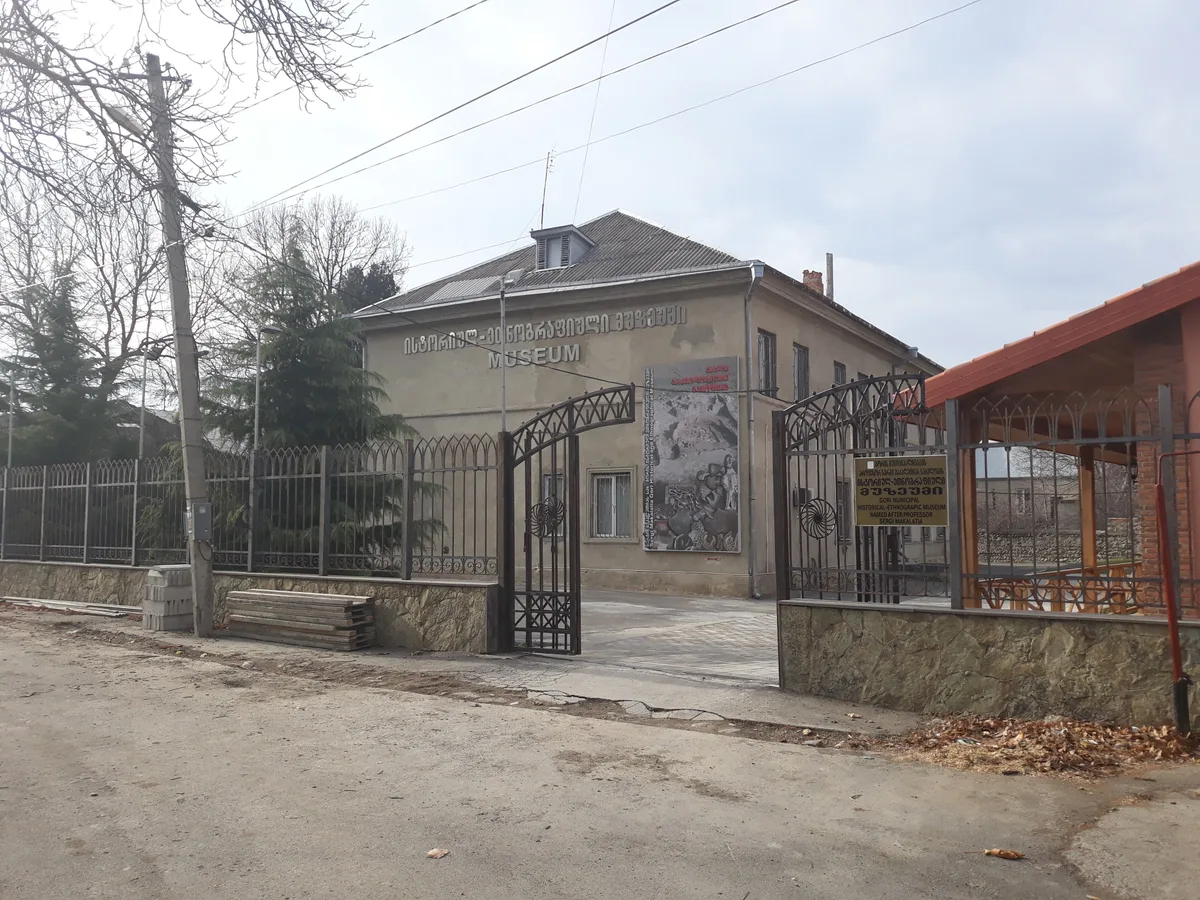
A quieter door in Stalin’s town
Most visitors come to Gori for one man. Coaches pull up at the Stalin Museum, groups file through the railway carriage, and then most of them leave for Uplistsikhe or straight back to Tbilisi. Very few of them find their way to Kirion II Street.
That’s the reason to come here. The Gori Ethnographic Museum sits at number 12, on a street named after Kirion II, a Catholicos-Patriarch of the Georgian Orthodox Church. It gets a fraction of the attention its famous neighbour does. Reviews are few but almost all of them are glowing, and that pattern usually points to a small place where the staff care.
What an ethnographic museum means here
Expect a museum about how people lived, not about who ruled them. Ethnographic collections in Georgia usually cover village life in a region. In Gori’s case that region is Shida Kartli, the farming heartland of the Mtkvari valley around the town.
We can’t give you a reliable inventory of the rooms, and we won’t make one up. What you can do is go in with questions. These are the threads worth pulling in any Georgian folk collection:
- Wine and the qvevri, the clay vessel buried in the ground that Georgians have used for millennia
- Costume and textiles, and how they differed from one valley to the next
- Farm and household tools, which show how the Kartli plain was actually worked
- Feast traditions, the supra and the toasts that structure it
If an attendant walks you through, let them choose the order. In small museums the person at the desk often knows the collection better than any label does.
Getting to Gori and finding Kirion II Street
Gori is about 85 km west of Tbilisi on the main east–west highway. You have two straightforward options.
- Train: regional services on the Tbilisi–west Georgia line stop at Gori station. The ride takes roughly an hour to an hour and a half.
- Marshrutka: minibuses leave from Didube bus station in Tbilisi and run frequently through the day.
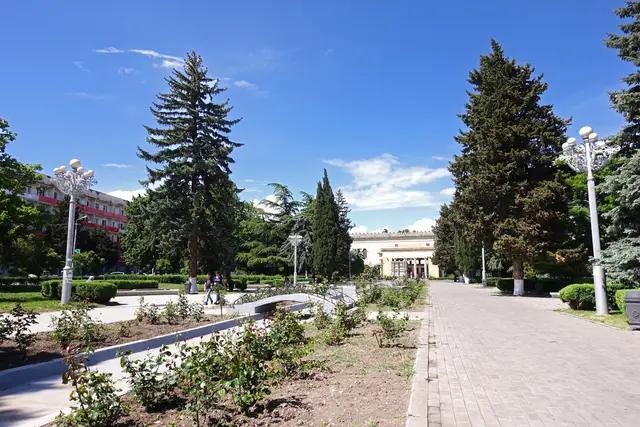
Gori’s centre is compact, so once you’re in town you can walk most of it. The fortress on its hill makes a handy landmark. Type the address into a map app in Georgian script, კირიონ II-ს ქუჩა 12, because transliterated spellings of Kirion vary and can send you to the wrong place.
The Monday rule and the Tuesday half-hour
The schedule has two quirks that catch people out. Right now the museum is closed on Mondays. A lot of travellers do Gori as a Monday day trip from Tbilisi, so check your day first.
On Tuesdays it opens at 10am, half an hour later than the rest of the week. Wednesday to Sunday it currently opens at 9:30am. Every open day it closes at 5:30pm. Like most museums it adjusts its hours across the year and over holidays, so check the current schedule before you plan the day around it.
Since it closes at 5:30pm, aim to arrive by mid-afternoon. Allow 45 minutes to an hour inside, or longer if someone is showing you round.
At the desk on Kirion II Street
Small Georgian museums run on personal contact. These habits make the visit easier:
- Greet the attendant first. “Gamarjoba” (hello) works, and “madloba” (thank you) on the way out is always noticed.
- Language: older staff may speak more Georgian or Russian than English. A translation app with downloaded Georgian makes questions possible.
- Paying: buy your ticket at the desk. Small regional museums don’t always take cards, so carry some lari in cash. The current price is posted at the entrance.
- Photography: ask before you take pictures. Some rooms or pieces may be off limits, and asking tends to start a conversation.
- Lights and doors: in quieter museums, rooms are sometimes unlocked or lit only when a visitor arrives. Wait a moment instead of wandering ahead.
If the staff offer to guide you and you accept, a small thank-you is welcome but not expected.
Building a Gori day around it
The museum works best as one part of a full day. Here is a sensible order for a day trip.
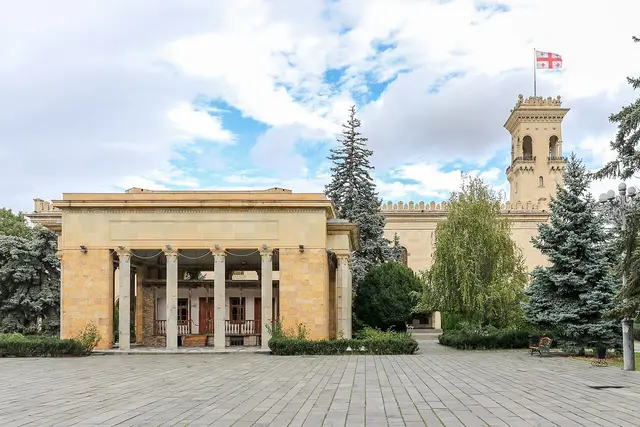
- Morning: start at the Stalin Museum on Stalin Avenue before the tour groups arrive. Inside are the dictator’s birth house and his armoured railway carriage.
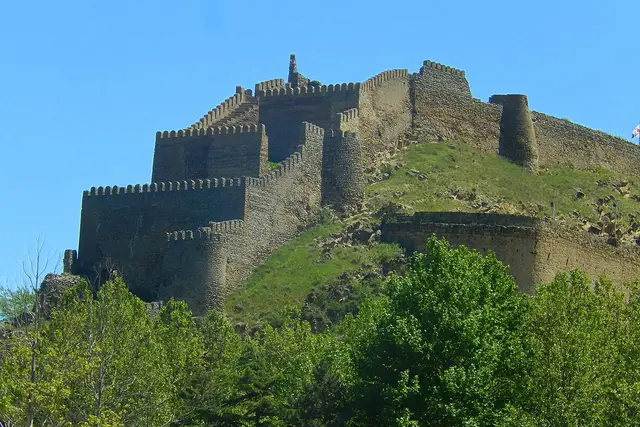
- Late morning: walk up to Gori Fortress, the medieval citadel on the hill above town. From the top you can see the whole Mtkvari valley.
- After lunch: come down to Kirion II Street for the Ethnographic Museum, while it’s open and quiet.
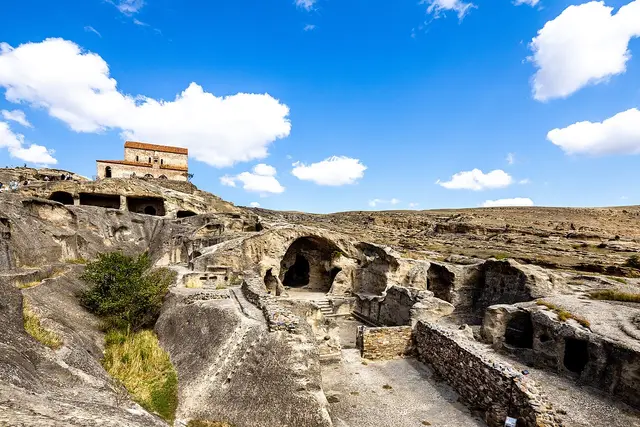
- Late afternoon: take a taxi about 10 km east to Uplistsikhe, the rock-cut cave town above the river. Or go south to Ateni Sioni, a 7th-century church known for its frescoes.
Seeing the folk collection before Uplistsikhe makes the cave town easier to read. Wine presses, storage pits and halls carved into the rock make more sense once you’ve thought about how Kartli households lived.
Who will get the most out of it
Choose this museum if Gori’s Soviet story isn’t the only one you came for. It suits slow travellers, anyone heading on to wine country, and people who prefer one engaged attendant to a room full of audio guides.
If you only want the headline sights, you’ll miss it, and the museum won’t mind. If you do go, keep your expectations modest and ask plenty of questions. The visit is about what the staff tell you as much as what’s in the cases.
Frequently asked questions
When is Gori Ethnographic Museum open?
At the moment it's closed on Mondays and opens 10am–5:30pm on Tuesdays and 9:30am–5:30pm Wednesday to Sunday. Museum hours change with the season and over holidays, so check the current schedule before you travel.
How do I get to the museum from Tbilisi?
Take a regional train to Gori station, which takes roughly 1 to 1.5 hours, or a marshrutka from Didube bus station. Gori's centre is walkable. Search for the address 12 Kirion II Street in Georgian script (კირიონ II-ს ქუჩა 12) to avoid spelling mix-ups.
How long should I spend there?
Plan on 45 minutes to an hour, or longer if a staff member shows you round. It's closed on Mondays and closes at 5:30pm, so arrive by mid-afternoon.
Is it crowded?
It's a quiet museum that most visitors to Gori skip in favour of the Stalin Museum. You won't usually be sharing it with tour groups.
What else is nearby?
In town there's the Stalin Museum on Stalin Avenue and Gori Fortress on the hill above the centre. Within about 10 km you can reach the Uplistsikhe cave town to the east and Ateni Sioni church to the south.
Plan your trip to Gori
Georgia eSIM & staying connected →
Some links above are affiliate links — if you book through them, Wander Atlas earns a small commission at no extra cost to you. It's how we keep every guide free.