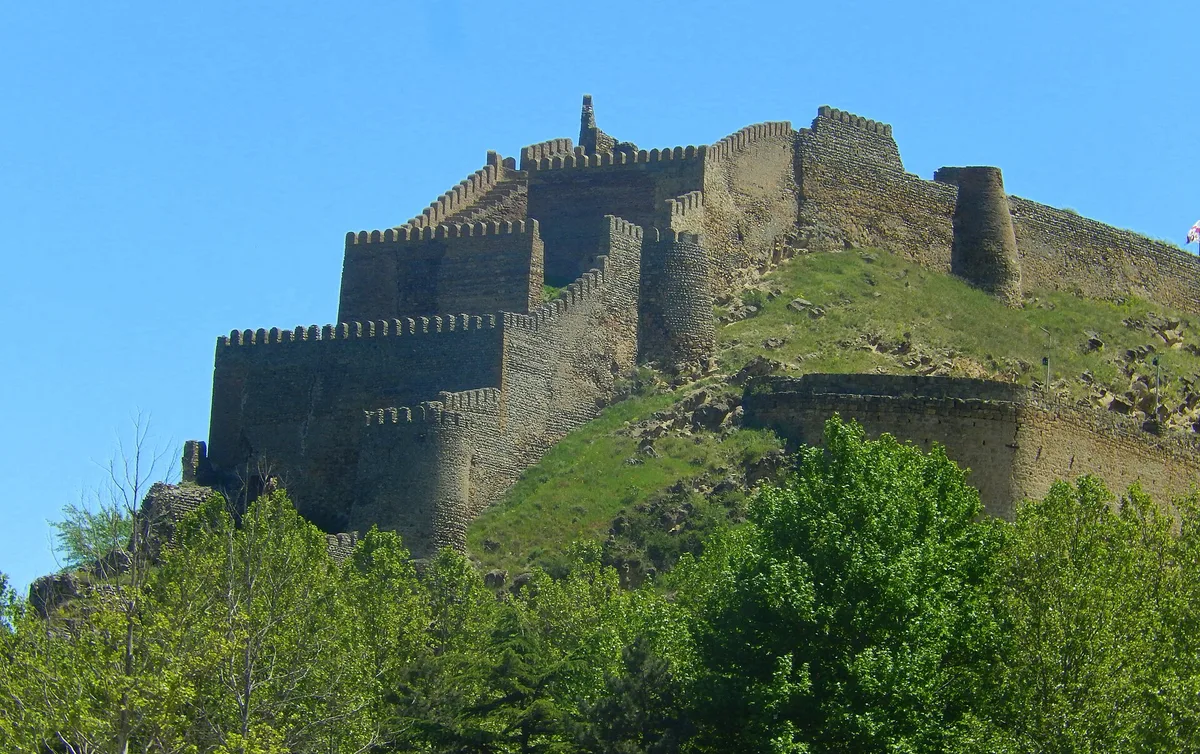
A citadel on bare rock
Gori grew up around this hill. The fortress, Goris Tsikhe in Georgian, crowns a steep stone outcrop above the town centre. Its walls follow the line of the rock instead of a neat geometric plan.
What survives is mostly an outer ring of stone curtain walls and towers, with an open, grassy interior. There are no furnished halls to tour. You come for the ramparts and the height, and the walls are the point.
The site has defended the road through central Georgia since the medieval period. It was rebuilt several times and badly damaged in the 1920 earthquake. That history shows in the patched, uneven masonry.
The climb and the view
The way up starts near 27 Arsen Marabdeli St. A path and steps wind up the slope, and the climb takes most visitors 10–15 minutes. The surface is uneven stone and loose gravel in places, so grippy soles help more than usual here.
From the top you look out over:
- Gori’s grid of Soviet-era blocks and older low roofs
- The Mtkvari (Kura) and Liakhvi river valleys
- On clear days, the Greater Caucasus ridge to the north
Near the base of the hill stands a memorial of dark bronze warrior figures arranged in a circle, honouring Georgians who fell defending the country. Most people walk through it on the way up or down.

Timing your visit to the ramparts
Google currently lists the fortress as open 24 hours. Treat that as an open hilltop with no gate, not a promise of staffed hours, and check locally if you plan to go after dark. There is no lighting you can count on along the path.
Morning and late afternoon give the softest light on the stone and on the plain below. Midday in July and August is exposed: the hilltop has almost no shade. Spring brings green fields and clearer mountain views. Wind is common at the top, so carry a layer even in summer.
The fortress is well known and draws a steady flow of day-trippers. It is not a secret spot. Tour groups usually combine it with the Stalin Museum, so climbing early, before the museum circuit gets going, usually means fewer people on the walls.
Doing Gori like the day-trippers who get it right
Gori is about 85 km west of Tbilisi, roughly an hour by road on the E60 highway. Marshrutkas (shared minibuses) leave Tbilisi’s Didube bus station often. Trains run from Tbilisi Central Station. From Gori’s centre the fortress hill is visible and walkable.
A practical route:
- Climb the fortress first while you have energy and good light
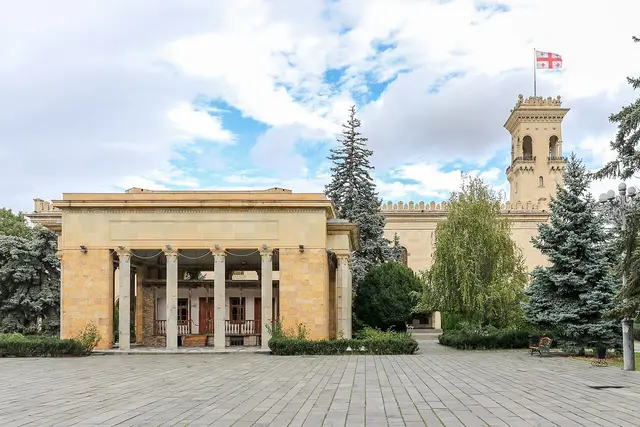
- Walk down to the Joseph Stalin Museum on Stalin Avenue, about 15 minutes away
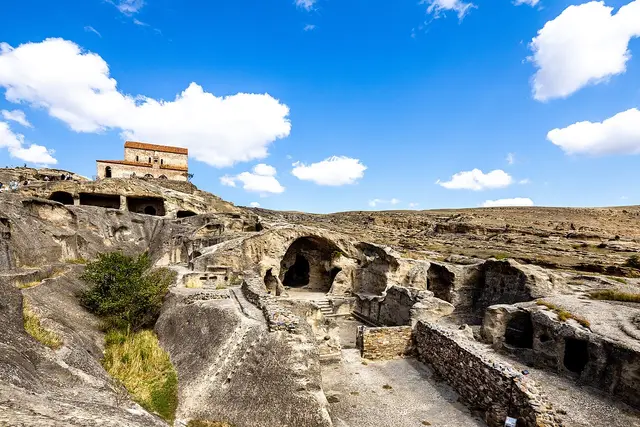
- Take a taxi to Uplistsikhe, the rock-cut cave town roughly 12 km east
Locals pay for marshrutkas and small taxis in Georgian lari, mostly in cash. Agree on a taxi fare before you get in, or use the Bolt app, which works in Gori. If any entry charge applies at the site, it will be posted on the spot.
The walls have no railings in many places, and parts of the stone are crumbling. Stay off the loose sections and keep children close near the drops.
Frequently asked questions
How do I get to Gori Fortress from Tbilisi?
Take a marshrutka from Didube bus station or a train from Tbilisi Central Station to Gori, about an hour. The fortress hill is in the town centre and you can walk to it. The climb starts near 27 Arsen Marabdeli St.
How long should I spend at Gori Fortress?
Allow 45–90 minutes. That covers the 10–15 minute climb, a walk around the walls and time for the view.
What are the opening hours?
Google currently lists it as open 24 hours because it is an open hilltop site. The path has no lighting you can rely on, so a daylight visit is the sensible choice. Check locally before going after dark.
What is there to see inside?
Mainly stone curtain walls, towers and an open grassy interior. The site has no museum rooms. The main draw is the view over Gori, the river valleys and, on clear days, the Caucasus.
What else is nearby?
The Joseph Stalin Museum is a short walk away, and the warriors' memorial sits at the foot of the hill. Uplistsikhe cave town is about 12 km east, a short taxi ride.
Plan your trip to Gori
Georgia eSIM & staying connected →
Some links above are affiliate links — if you book through them, Wander Atlas earns a small commission at no extra cost to you. It's how we keep every guide free.