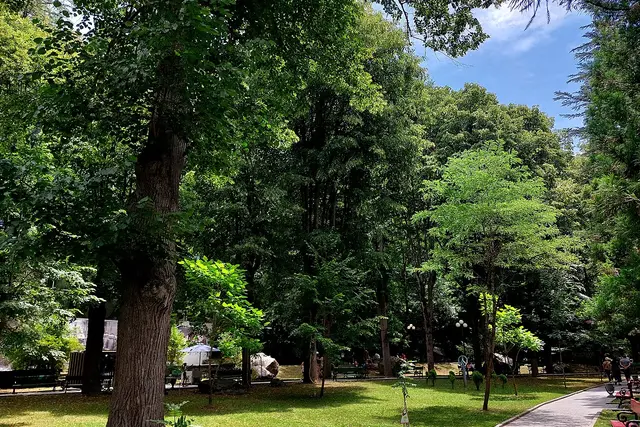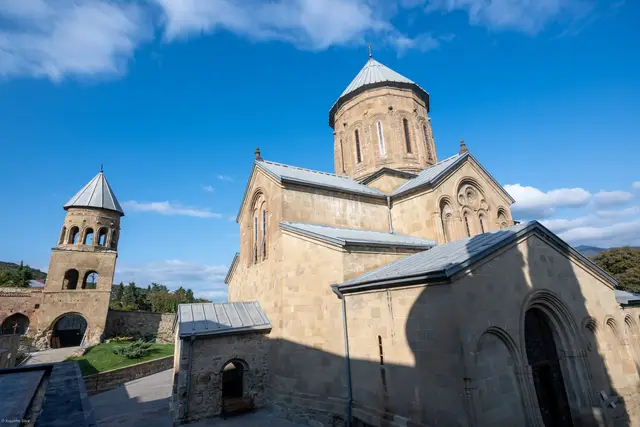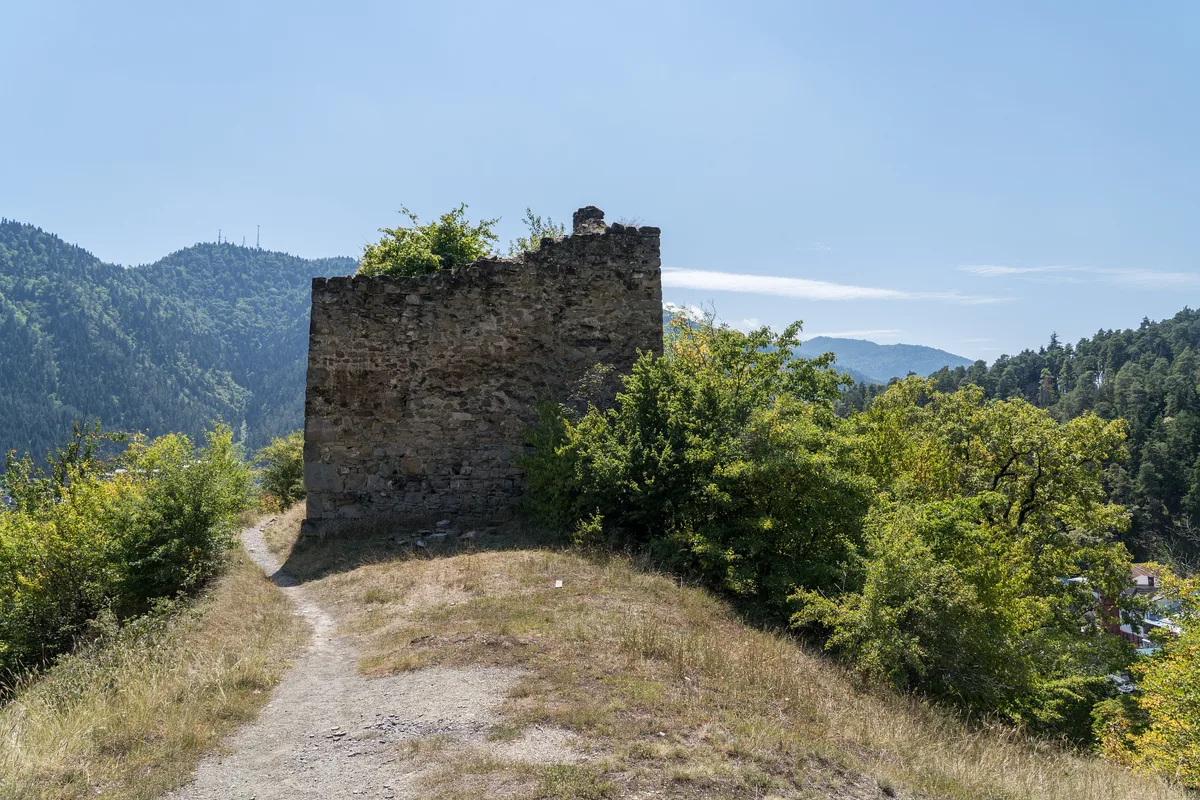
Borjomi sits at the bottom of a forested gorge. The usual way to see it is from below: the spa park, the mineral-water pavilions, the river. Gogia Fortress turns that around. You climb out of town on Giorgi Saakadze Street and keep going until the roofs are under you. What’s waiting at the top is a broken line of old stone walls with the whole valley laid out around them.
It’s a short, sweaty climb with a quiet payoff. Most visitors to Borjomi never make it up.
What waits at the top
This is a ruin, and nobody has restored it into a museum. Expect rough masonry walls standing in fragments on the high ground, grass and scrub growing between the stones, and no ticket booth, café or gift shop as far as anyone has reported. That rawness is the point. Nothing is roped off or explained for you, so the stones are what you get.
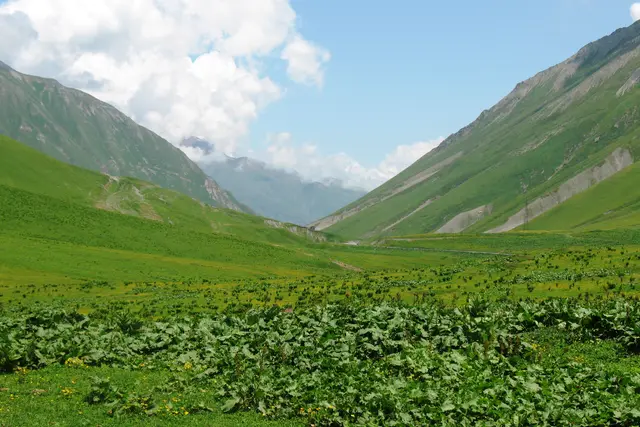
The view is the other half of the reward. From the hill you look down on Borjomi’s rooftops and along the curve of the Mtkvari (Kura) river, with the steep, wooded slopes of the gorge closing in on both sides. Those forests run on into Borjomi-Kharagauli National Park. From up here you can see why people built a fortress on this hill: it watches over the valley.
The climb from Saakadze Street
The fortress is listed at R9RG+HH7 on Giorgi Saakadze St. That plus code is the most reliable thing to navigate by, so paste it into Google Maps or a similar app before you leave your guesthouse. Street names in Borjomi can be hard to spot on the ground, and signage for the fortress is limited.
Plan for an uphill walk on uneven ground, not a paved promenade. Things that make it easier:
- Shoes with grip. The ground near the walls is loose stone and earth, and it gets slick after rain.
- Water. You won’t find anywhere to buy it at the top.
- A charged phone. Use it for the map pin, and so you have a light if you stay later than planned.
- Daylight. It’s an unlit hillside, so come down before dark.
Most people manage the climb, a slow look around and the walk back in one to two hours. If you’re fit and in a hurry it takes less. If you settle on a wall with a snack it takes more.
When the hill works best
Google currently shows the site as open 24 hours. In practice that just means it’s an open ruin with no gate. Opening hours aren’t really the question here. Light and weather are.
Morning and late afternoon are the gentlest times to climb. The slope isn’t baking in the midday sun then, and the low light picks out the texture of the stone. Late spring through early autumn gives you dry paths and green slopes. In winter, snow and ice can make the final stretch treacherous, so judge the ground on the day and don’t push it.
If you want to watch the sun go down from the walls, bring a torch and leave while there’s still some light to see the path. Coming down a dark, stony hillside is how people turn ankles.
Manners on an unguarded ruin
There’s no warden up here, so how you behave on the site is up to you. A few habits will make you welcome:
- Stay off the wall tops. The masonry is old and loose in places. Climbing it is risky for you and damages a monument that gets very little protection.
- Carry your rubbish down. There are no bins on the hill.
- Greet people you pass. A simple gamarjoba (hello) is the normal thing in Georgia, and locals walking the slopes will usually return it.
- Expect dogs. Free-roaming dogs are common around Georgian towns. Most are indifferent or friendly, and some will happily walk up with you. Don’t run from them.
- Keep some lari in cash for later. Small bakeries and shops back in town don’t always take cards.
The fortress is a quieter find, so you’ll often have the walls mostly to yourself. That’s a good reason to keep it as you found it.
Pairing it with the rest of Borjomi
The climb fits easily into a day in town. Down in the valley, Borjomi Central Park is the famous one. Its mineral-spring pavilion is where you can taste Borjomi’s salty, naturally fizzy water straight from the source, and the riverside paths go deeper into the gorge.
A short way out of town is the Romanov Palace at Likani, the summer residence built for a branch of the Russian imperial family. For a longer outing, the trails of Borjomi-Kharagauli National Park start nearby. You can also take the narrow-gauge railway from Borjomi up to the ski village of Bakuriani.
Doing Gogia Fortress first thing and the park in the afternoon works well. You get the climb over while you’re fresh, then spend the rest of the day on flat ground.
Getting to Borjomi in the first place
Borjomi is in Samtskhe-Javakheti, in south-central Georgia, and is a common trip from Tbilisi. Marshrutkas (shared minibuses) leave from Tbilisi’s Didube bus station and take roughly two and a half to three hours. Trains run too, though more slowly. Check current departures at the station or on the Georgian Railway site, because timetables change.
From Kutaisi and western Georgia, minibuses and road links come in along the Mtkvari valley through Khashuri. Once you’re in town, you can walk to the fortress from the centre. Taxis are easy to find if you’d rather save your legs for the hill itself.
Is it worth the effort?
If you like your history unvarnished, yes. You won’t find guides or plaques at Gogia Fortress, and nobody will sell you a ticket. You get old stone, a long view and the quiet of a hill most Borjomi visitors skip.
Climbing it also changes how the town looks. The park, the river and the gorge come together into one landscape. You’ll know where everything sits when you walk back down.
Frequently asked questions
How do I find Gogia Fortress in Borjomi?
It's listed on Giorgi Saakadze Street at plus code R9RG+HH7. Paste that code into Google Maps before you set off, because signs on the ground are limited. From the town centre you reach it on foot by an uphill walk.
How long does a visit take?
Allow one to two hours for the climb, a look around the walls and the walk back down. Fit walkers in a hurry can do it faster.
When is the best time to go?
Google currently lists the site as open 24 hours because it's an ungated ruin, but go in daylight. Morning and late afternoon are cooler, and the light is better for photos. Late spring to early autumn gives you the driest paths. Ice and snow can make the climb risky in winter.
What should I expect at the fortress?
A medieval ruin with fragmentary stone walls and views over Borjomi and the Mtkvari valley. There are no facilities, so bring water, wear shoes with grip and carry your rubbish back down.
What else is nearby?
Borjomi Central Park and its mineral-water spring are down in town. The Romanov Palace at Likani is a short trip away, and Borjomi-Kharagauli National Park and the narrow-gauge railway to Bakuriani are both easy to reach from Borjomi.
Plan your trip to Borjomi
Georgia eSIM & staying connected →
Some links above are affiliate links — if you book through them, Wander Atlas earns a small commission at no extra cost to you. It's how we keep every guide free.