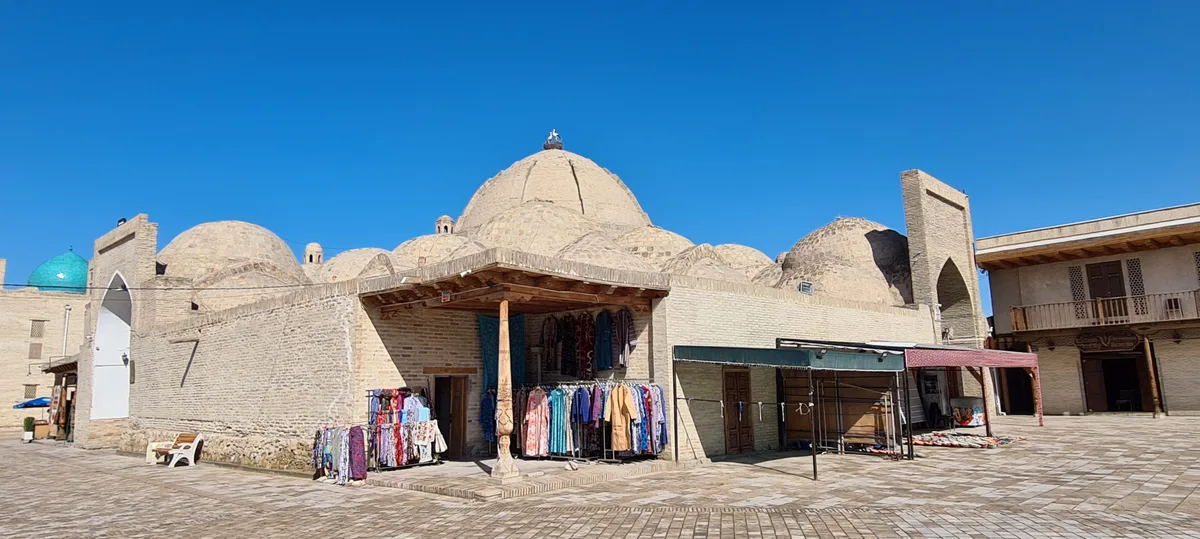
Why Toqi Zargaron matters
You come across it almost by accident, following the flow of the old bazaar streets. Suddenly the ceiling lifts into a cool brick dome pierced with small oculus windows, and the light falls in dusty shafts onto the stalls below. This is Toqi Zargaron, the Dome of the Jewelers, one of the last intact trading domes from Bukhara’s Silk Road heyday.
Built in the 16th century under the Shaybanid dynasty, it once housed the city’s goldsmiths and jewelers, hence the name. Unlike a museum piece behind glass, it’s still a working market. Merchants sell rings, embroidered suzani textiles, and lacquered miniature boxes under the same brickwork that sheltered traders four centuries ago.
Getting there and what you’ll find
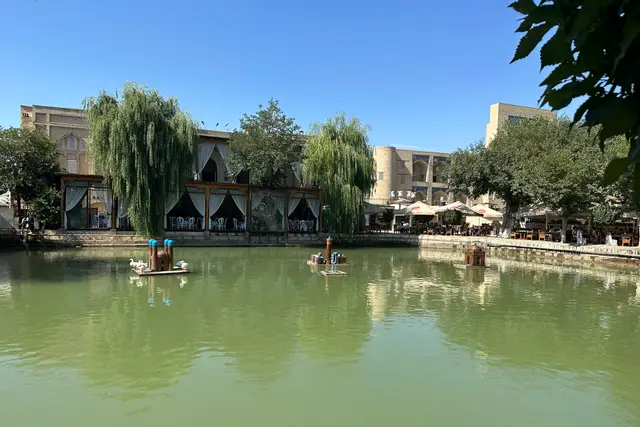
The dome sits at the junction of Bukhara’s historic covered bazaar streets, an easy walk from Lyabi-Hauz plaza. Most travelers reach it on foot as part of a loop through the old city, taxis and hotel shuttles can drop you within a few minutes’ walk since much of this core is pedestrianized.
Inside, the layout is simple: a raised central octagon under the dome, ringed by smaller shop cells and radiating corridors. Look up first. The brickwork ribbing and small skylights are the real architectural payoff, not the modern souvenir tables beneath them.
Give it 15 to 20 minutes if you’re moving through the bazaar quarter, longer if you want to browse or chat with a stallholder about a piece of jewelry.
What to see and buy
The dome connects directly to the wider bazaar network, so it’s worth treating as one stop on a longer stroll rather than an isolated sight.
- Filigree silver and gold jewelry, the market’s namesake craft
- Hand-embroidered suzani panels and scarves
- Lacquered papier-mâché boxes with miniature paintings
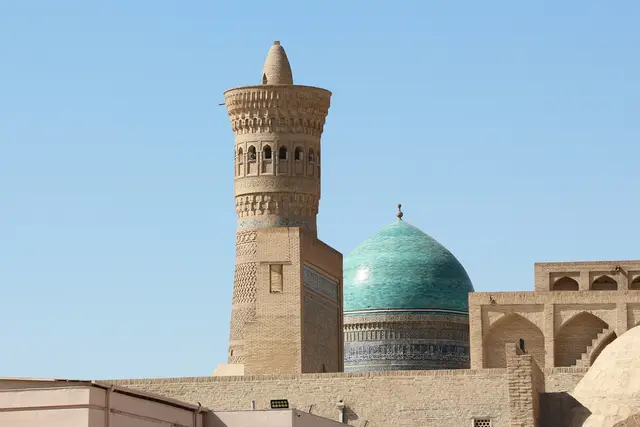
- A direct sightline toward the Kalyan Minaret rising just beyond the rooftops
Prices are rarely fixed, so treat the first number you hear as an opening offer rather than a final one.
When to go
Toqi Zargaron is open 24 hours every day, though the stalls themselves keep more normal shopping hours, roughly mid-morning to early evening. The structure itself, and its atmosphere, changes completely depending on when you arrive.
Early mornings tend to be the quietest window, with weekends staying calm from 8 until around 11am. As the day goes on, foot traffic tends to build, easing off again later.
If photographs of the empty dome interior matter to you, an early start is non-negotiable. By midday, tour groups moving between Lyabi-Hauz and the Kalyan complex fill the space.
How to visit like a local
Bukhara’s old city rewards a slow, early rhythm, and Toqi Zargaron is no exception. Arriving early, before the stalls are in full swing, tends to make for a quieter visit.
- Pay in Uzbek som, cash is still preferred at most stalls, though card readers are becoming more common for larger jewelry purchases
- Bargaining is expected and normal; a friendly, unhurried tone works better than a hard opening lowball
- Greet with “Assalomu alaykum” before diving into a price conversation. It’s a small courtesy that softens the negotiation
- Skip the urge to photograph vendors or their wares up close without asking first
- The most common mistake visitors make is treating this as a quick five-minute photo stop and missing the connected domes nearby (Toqi Sarrafon and Toqi Telpak Furushon), which together tell the fuller story of Bukhara’s covered trade routes
Because this spot stays under the radar compared to the big-ticket monuments nearby, you won’t find organized tour buses stopping here specifically. That’s exactly what makes an early, unhurried visit worth the effort, you get the architecture without the crowd noise, and a more genuine read on how the bazaar still functions today.
Pair it with a walk to Lyabi-Hauz for tea afterward, or continue toward the Kalyan Minaret and Mir-i-Arab Madrasa, both within easy walking distance and part of the same historic core.
Frequently asked questions
How do I get to Toqi Zargaron?
It's in Bukhara's pedestrianized old city core, within easy walking distance of Lyabi-Hauz plaza. Most visitors reach it on foot as part of a bazaar walking loop; taxis can drop you a few minutes away.
What are the quietest times to visit?
Weekdays between 8am and 9am, and weekends between 8am and 11am, are the calmest windows. Avoid weekend afternoons and evenings (1pm–10pm), when crowds peak.
How long should I spend here?
15 to 20 minutes covers the architecture and a browse through the stalls; longer if you want to shop for jewelry or textiles.
Is it open at night?
The structure itself is accessible 24 hours daily, but individual stalls keep more limited daytime-to-evening hours, so shopping is best done mid-morning to early evening.
What's nearby worth combining with a visit?
The Kalyan Minaret, Mir-i-Arab Madrasa, and the other covered bazaars, Toqi Sarrafon and Toqi Telpak Furushon, are all within a short walk.
Plan your trip to Bukhara
Some links above are affiliate links — if you book through them, Wander Atlas earns a small commission at no extra cost to you. It's how we keep every guide free.