Uzbekistan · Region
Bukhara
Bukhara is one of Central Asia's best-preserved Silk Road cities, its compact old town a dense cluster of sand-colored minarets, domed bazaars, and centuries-old madrasas built around ancient trading crossroads. Unlike more monumental Samarkand, Bukhara rewards slow wandering—its human-scaled streets and courtyards still feel lived-in rather than museum-like.
Top attractions
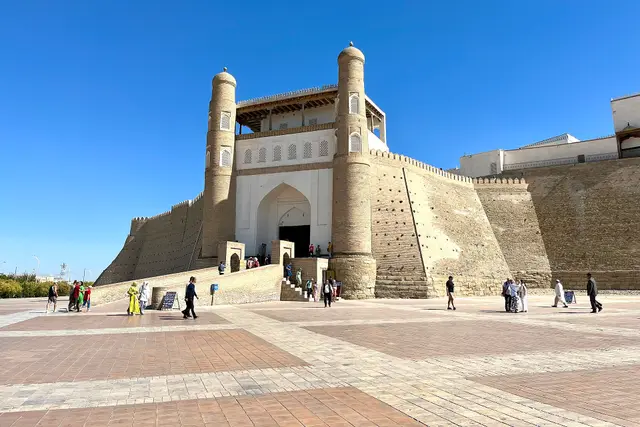 attraction
 Ark of Bukhara: Travel Guide (4.6★)
The Ark of Bukhara is open daily from 9am to 6pm, and the calmest time to explore its dusty ramparts is right at opening, between 9am and 10am. 4.6★ (4,888 reviews) — what visitors say, hours, and tips.
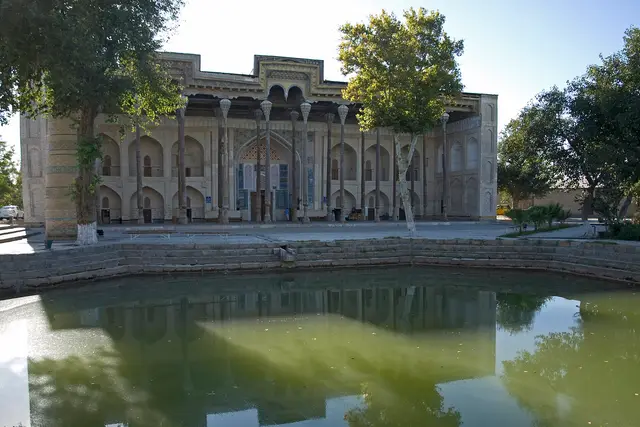 attraction
 Bolo Hauz Mosque: Bukhara Travel Guide (4.8★)
Bolo Hauz Mosque sits on the northwestern edge of Bukhara's Ark fortress, facing a long stone pool that gives the site its name ("bolo hauz" means "by the pool"). 4.8★ (872 reviews) — what visitors say, hours, and tips.
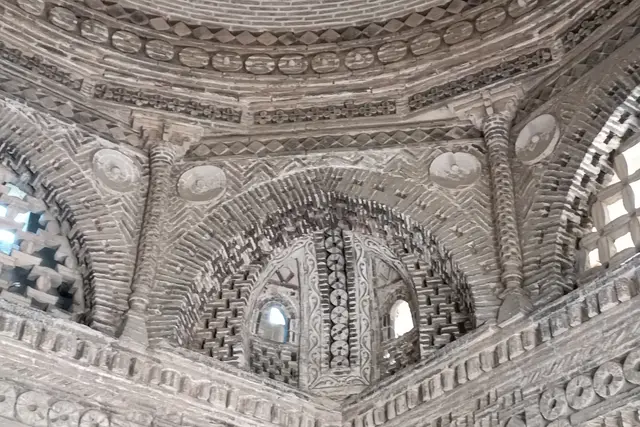 attraction
 Ismail Samani Mausoleum: Bukhara Travel Guide (4.7★)
The Ismail Samani Mausoleum sits in Bukhara's Samanid Park, open daily 8am–6pm, and takes only 20–30 minutes to see properly. 4.7★ (1,559 reviews) — what visitors say, hours, and tips.
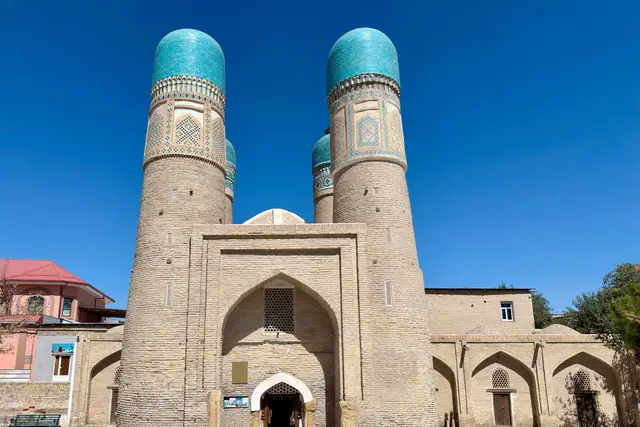 attraction
 Chor Minor Monument: Bukhara Travel Guide (4.6★)
Chor Minor is a small, four-turreted gatehouse tucked in a residential lane a few minutes' walk east of Bukhara's Lyabi-Hauz. 4.6★ (2,301 reviews) — what visitors say, hours, and tips.
 attraction
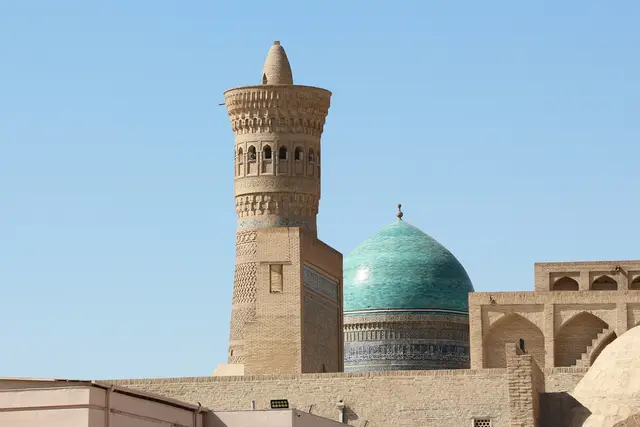
 Kalan Minaret: Bukhara Travel Guide (4.8★)
The Kalan Minaret rises 48 meters over Bukhara's old city at Khakikat Str. 9, next to the Kalan Mosque and Mir-i-Arab Madrasa. 4.8★ (2,004 reviews) — what visitors say, hours, and tips.
 attraction
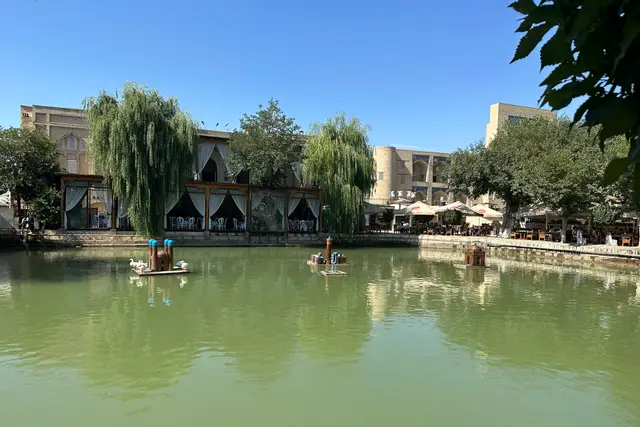
 Labi Hovuz: Bukhara Travel Guide (4.6★)
Labi Hovuz is Bukhara's old stone pool plaza, ringed by mulberry trees, a 16th-century madrasah, and the Nadir Divan-Beghi khanaka. 4.6★ (954 reviews) — what visitors say, hours, and tips.
 attraction
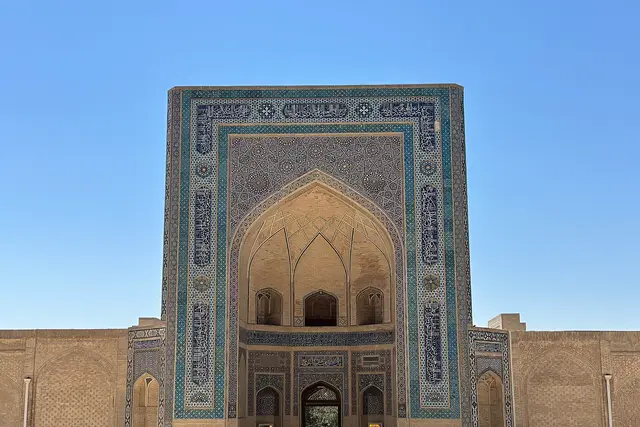
 Kalan Mosque: Bukhara Travel Guide (4.8★)
Kalan Mosque sits at the heart of the Po-i-Kalyan complex in central Bukhara, right beside the Kalyan Minaret and the Mir-i-Arab Madrasa. 4.8★ (1,531 reviews) — what visitors say, hours, and tips.
Hidden gems
 hidden gem
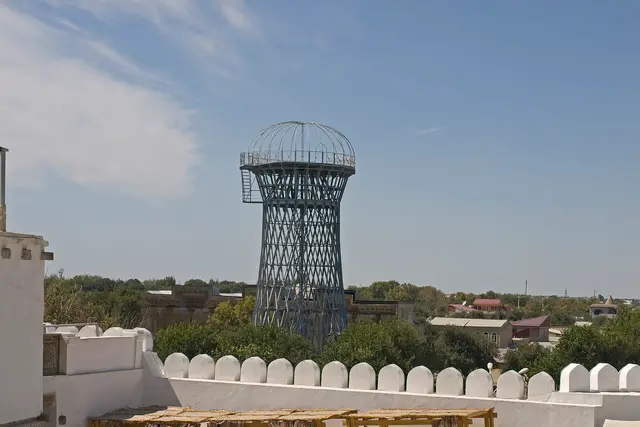
 Bukhara Tower: Travel Guide (4.1★)
Bukhara Tower is a modern observation/water tower on the edge of the old city, open daily 8am–10pm, and it's the easiest way to see Bukhara's mud-brick skyline and desert horizon from above. 4.1★ (206 reviews) — what visitors say, hours, and tips.
 hidden gem
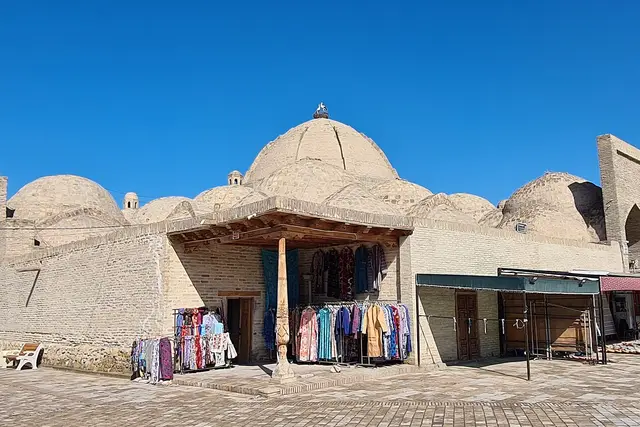
 Toqi Zargaron: Bukhara Travel Guide (4.5★)
Toqi Zargaron, the "Dome of the Jewelers," is one of Bukhara's four surviving domed trading arcades, tucked into the old city's covered bazaar circuit. 4.5★ (161 reviews) — what visitors say, hours, and tips.
Top-rated things to do in Bukhara
Live prices from Klook. Booking through these links supports our free guides at no extra cost to you.
Where to stay in Bukhara
Compare Bukhara hotels and stays at the lowest price — deals, ratings, and real traveler reviews.
Search hotels in Bukhara →Booking links are affiliate links — booking through them supports our free guides at no extra cost to you.
Plan your trip to Bukhara
Some links above are affiliate links — if you book through them, Wander Atlas earns a small commission at no extra cost to you. It's how we keep every guide free.
When to visit Uzbekistan: month-by-month weather, crowds and holidays →
Frequently asked questions about Bukhara
How do I get to Bukhara?
Bukhara has its own airport (BHK) with a handful of domestic and regional international flights, but most travelers arrive overland: the Afrosiyob high-speed train links Bukhara with Tashkent (~3.5-4 hours) and Samarkand (~1.5-2 hours), making rail the most practical and scenic route into the city.
How many days should I spend in Bukhara?
Most visitors budget ~2-3 days, enough to cover the old town's core monuments, the Ark fortress, and the covered bazaars at an unhurried pace.
What is Bukhara known for?
Bukhara is one of Central Asia's best-preserved Silk Road cities, its compact old town a dense cluster of sand-colored minarets, domed bazaars, and centuries-old madrasas built around ancient trading crossroads. Unlike more monumental Samarkand, Bukhara rewards slow wandering—its human-scaled streets and courtyards still feel lived-in rather than museum-like.