Why go
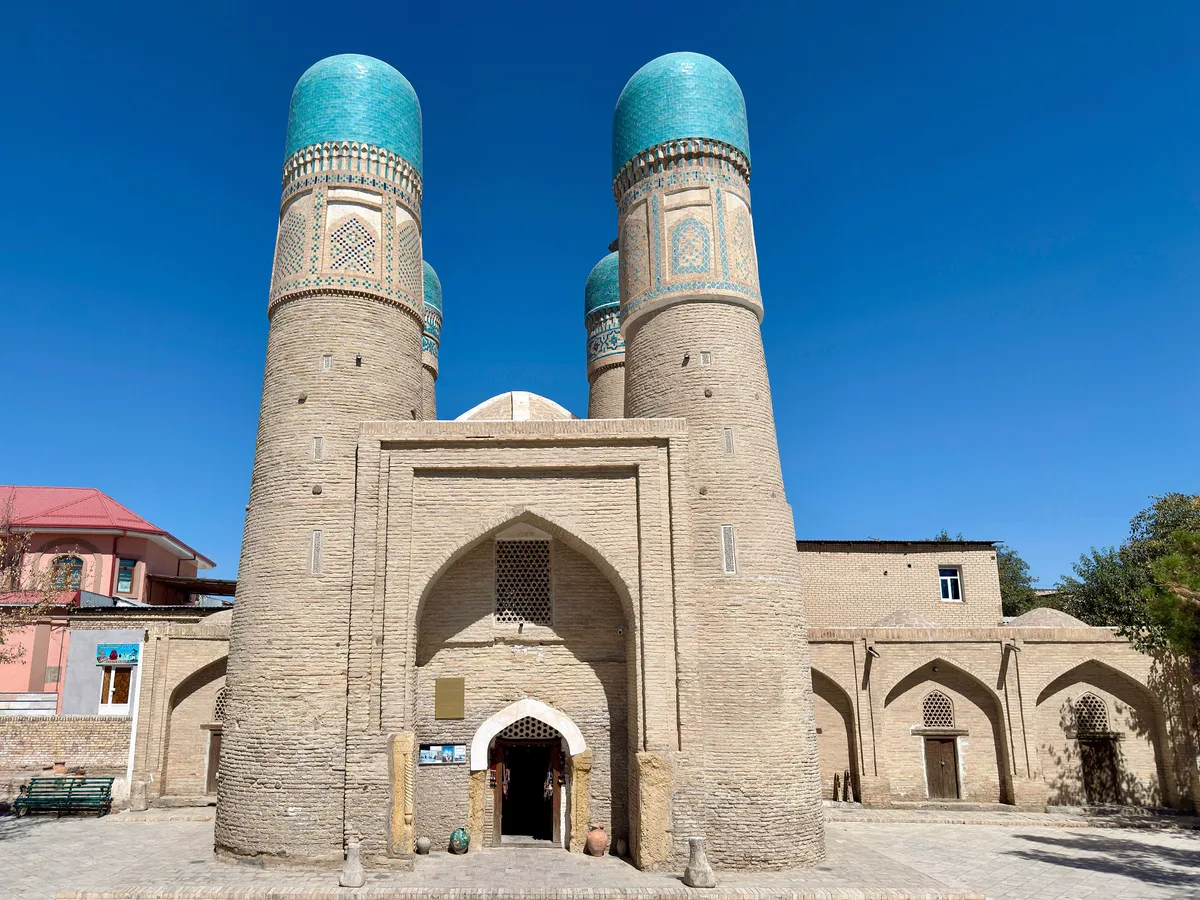
Chor Minor isn’t a mosque or a madrasa. It’s a doorway to one that no longer exists. Built in 1807, it once marked the entrance to a religious school that has since crumbled away, leaving this odd, top-heavy structure standing alone like a stage set with the play removed.
What you notice first is the mismatch. Four squat turrets, each capped with a different turquoise-tiled dome, rise from a boxy brick base that looks almost too plain to support them. No two domes are identical, locals have long debated what the four towers symbolize, from the four schools of Sunni thought to Bukhara’s Zoroastrian roots.
Getting there
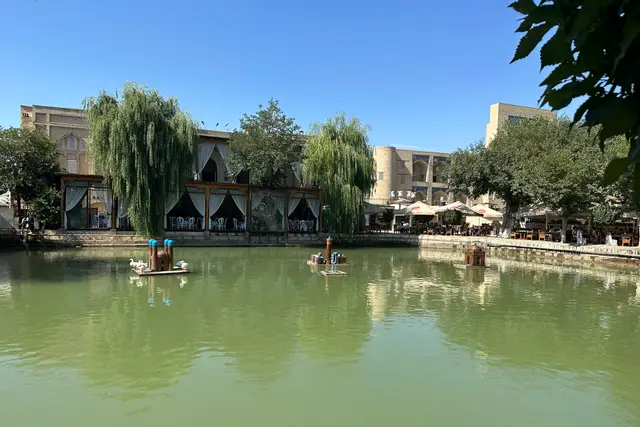
Chor Minor sits at Mekhtar Anbar Street 90, in a quiet residential quarter of central Bukhara. It’s an easy 10–15 minute walk east from Lyabi-Hauz, Bukhara’s shaded plaza with the mulberry trees and teahouses.
There’s no metro in Bukhara, so most visitors arrive on foot from the old city center. If you’re staying further out, a taxi or a short ride in a shared minivan will drop you within a couple of minutes’ walk. The last stretch is through narrow lanes cars can’t easily enter.
What you’ll actually see
You approach through a maze of mudbrick houses, and the monument appears almost suddenly at the end of a narrow street. There’s no grand plaza in front of it, just a small open pocket barely big enough to take in the whole facade.
Inside the base, a modest room now houses a handful of souvenir stalls selling miniature ceramics and embroidered suzani textiles. You can climb a narrow staircase partway up for a closer look at the tilework, though there isn’t much of an interior to explore beyond that.
Budget 15 to 20 minutes here. This isn’t a site you linger at for hours. It’s a striking photo stop and a piece of a bigger neighborhood story.
The vanished madrasa
The madrasa that Chor Minor once fronted was built by a wealthy Turkmen merchant named Khalif Niyazkul. Fire, earthquakes, and time took the rest of the complex over the 19th and 20th centuries, leaving only this gatehouse.
That history is easy to miss if you just snap a photo and move on. Look at the base of the structure and you can still make out where the surrounding walls of the madrasa once connected, a faint outline of a much larger building.
When to go
Chor Minor is open every day from 8am to 8pm, so there’s no risk of arriving to a locked gate. Crowd data shows the quietest window is 8am to 10am, on both weekdays and weekends, before the tour buses reach this side of the old town.
Midday brings the heaviest foot traffic, especially in the warmer months when Bukhara’s heat pushes visitors toward shaded, central attractions like this one. Early morning light also does the tilework more favors than the flat glare of noon.
How to visit like a local
Chor Minor gets a steady flow of visitors, it’s a well-known stop on the Bukhara circuit, so timing your visit matters more than seeking out a secret entrance.
- Arrive between 8am and 10am, when the lane is nearly empty and you can actually hear the pigeons that circle the domes
- Bring small cash (Uzbek som) if you want to buy anything from the stalls inside the base, card readers are unreliable here
- Don’t rush straight in and out. Walk the surrounding streets, where working mahalla life continues around a monument that draws visitors daily
- Skip the urge to just photograph the facade from the front; circle to the side streets for angles without the crowd of other visitors doing the same thing
- Dress modestly, as you would at any religious-heritage site in Uzbekistan, even though there’s no formal dress check here
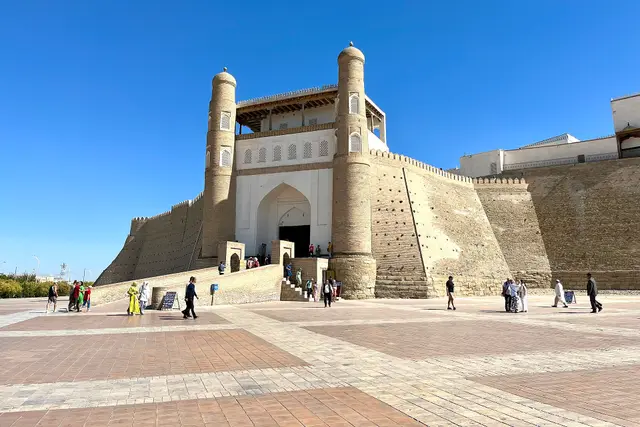
The mistake most visitors make is treating Chor Minor as a five-minute drive-by between bigger sites like the Ark Fortress or Poi Kalyan complex. Slow down instead, the surrounding neighborhood, with its courtyard houses and quiet lanes, is as much the experience as the monument itself.
Frequently asked questions
How do I get to Chor Minor?
It's about a 10–15 minute walk east from Lyabi-Hauz in central Bukhara. Taxis and shared minivans can drop you within a couple of minutes' walk, since the final stretch is through narrow residential lanes.
What are the opening hours?
Chor Minor is open daily from 8am to 8pm, with no variation across the week.
How long should I spend there?
Most visitors spend 15–20 minutes at the monument itself, though it's worth extending your visit to explore the surrounding mahalla.
When is it quietest?
Both weekdays and weekends are calmest between 8am and 10am, before tour groups arrive.
Is there an entry fee?
Small entry fees are common at Bukhara monuments and can change, so confirm the current price locally before you go.
Plan your trip to Bukhara
Some links above are affiliate links — if you book through them, Wander Atlas earns a small commission at no extra cost to you. It's how we keep every guide free.