Why go
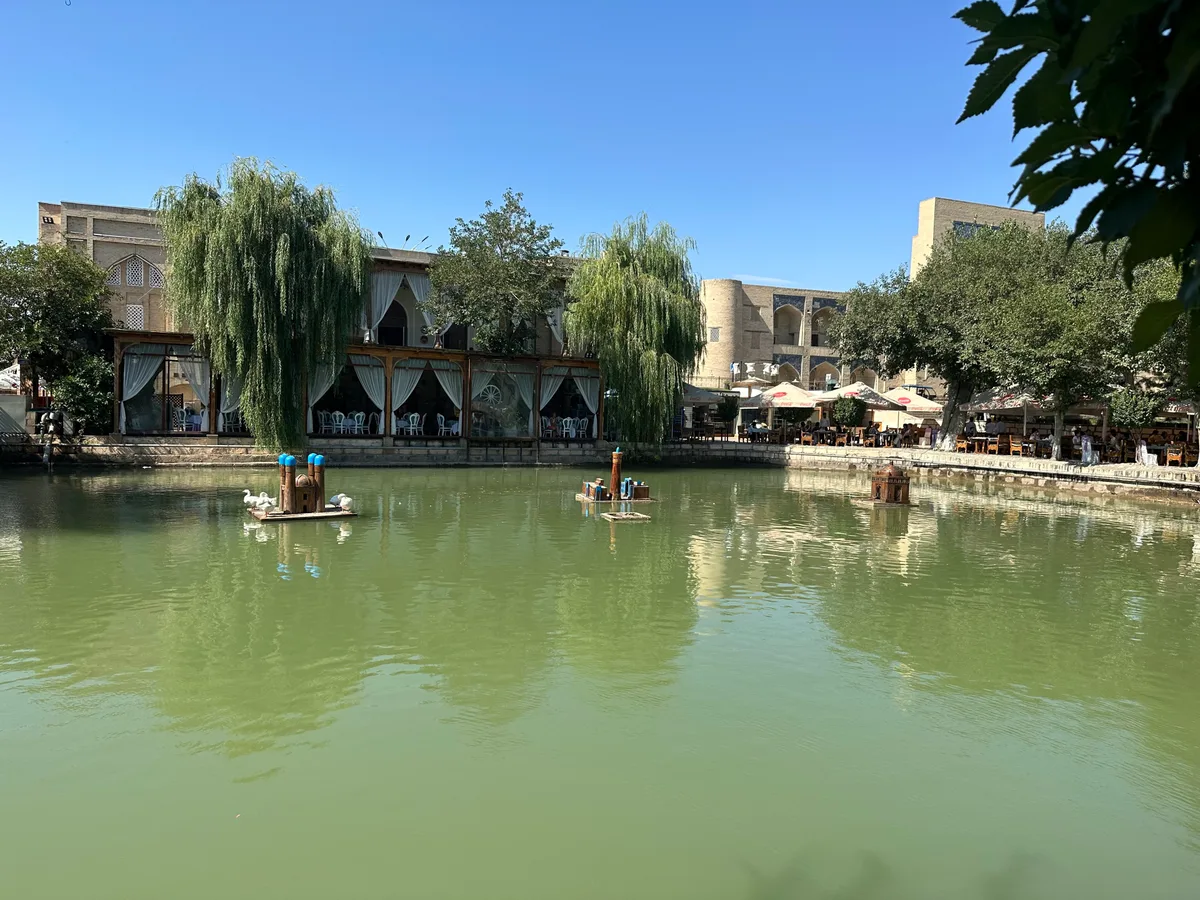
Labi Hovuz means “edge of the pool” in Tajik, and that’s exactly what you’re getting: a rectangular stone-lined basin dug in 1620, still the social heart of old Bukhara. Mulberry trees planted generations ago lean over the water, their shade dappling the surface where ducks paddle past reflections of carved wood balconies.
This isn’t a monument you view from behind a rope. Locals and travelers share the same benches, the same tea, the same slow afternoon.
What you’ll see
Three buildings frame the pool, each worth circling slowly.
- Nadir Divan-Beghi Madrasah (1622), its facade has a mosaic of two phoenix-like birds carrying deer, an unusual figurative image for Islamic architecture
- Nadir Divan-Beghi Khanaka (1620), originally a Sufi lodge, now a handicraft space with a soaring portal
- Kukeldash Madrasah (1568-69), one of Central Asia’s largest madrasahs, its plain brick bulk anchoring the square’s north side
Between them stands a bronze statue of Khoja Nasruddin, the trickster folk hero, perched on his donkey mid-punchline. Children climb onto the donkey for photos; nobody minds.
By evening, the madrasah facades pick up amber floodlighting and the pool turns the color of hammered pewter. That’s when the square earns its reputation as Bukhara’s unofficial living room.
Getting there
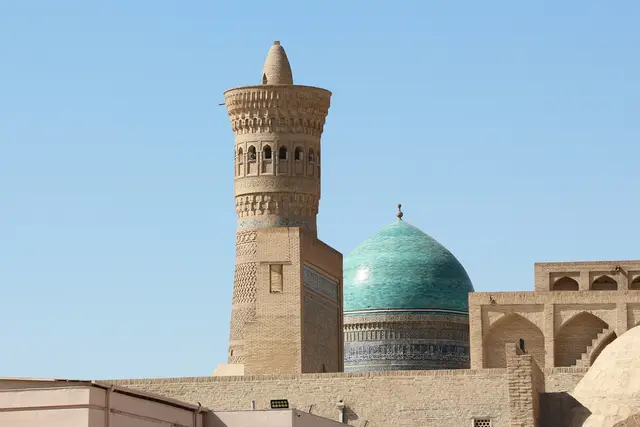
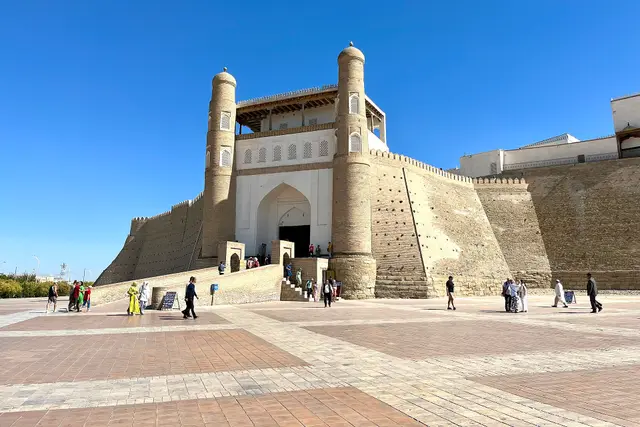
Labi Hovuz sits in the Divan-Beghi quarter, dead-center in Bukhara’s old city, so walking is realistic from almost any hotel in the historic core. It’s roughly a 10-minute walk from the Ark fortress and about 5 minutes from the Poi Kalyan complex with its towering minaret.
There’s no metro in Bukhara, taxis and foot traffic are how everyone gets around the old town. If you’re arriving from Bukhara train station, a taxi into the old city takes about 15-20 minutes depending on traffic.
The square is open 24/7 as public space, but the surrounding buildings and their courtyards run 8am to midnight daily, per posted hours. Confirm current hours locally since small seasonal shifts do happen.

When to go
Mid-morning, before the tour buses unload, is when the pool is quietest. You’ll get bench space and unobstructed photos of the phoenix mosaic without a dozen selfie sticks in frame. This is still an under-the-radar hour even by local standards; most visitors arrive from midday onward.
Come back after sunset if you can. The floodlit facades and the reflected light on the water give the square a completely different character than the flat daylight version, and the surrounding cafés fill with a low hum of conversation rather than camera shutters.
Spring (April-May) and autumn (September-October) bring mild temperatures for lingering; midsummer in Bukhara runs brutally hot by early afternoon, which is another reason the morning slot works.
Eating and lingering
The pool’s edge is lined with open-air restaurants and teahouses, several with elevated wooden platforms (tapchan) where you sit cross-legged around a low table. Order a pot of green tea and a plate of shashlik or plov, and you can watch the square without ever standing up.
Prices reflect the location rather than anything fancy on the plate. Nobody rushes you out; a two-hour tea stop is normal, not eccentric.
How to visit like a local
Skip the restaurant terraces immediately at the pool’s edge if you want a cheaper, quieter meal. Walk one block into the surrounding lanes and prices drop while the food stays the same.
- Sit on the public stone benches, not just restaurant seating, locals do this and it’s free
- Pay cash for street snacks and small vendors; cards work at the sit-down restaurants
- Visit the Nasruddin statue for photos in the morning light before it gets crowded with tour groups
- Don’t rush through the madrasah facades, the phoenix-and-deer mosaic on Nadir Divan-Beghi rewards a slow look, not a walk-by glance
- Evenings bring informal folk-music performances near the teahouses; hover at the edge rather than pushing to the front, which is how locals watch too
The most common tourist mistake is treating Labi Hovuz as a five-minute photo stop between bigger monuments. Locals treat it as a destination in itself. Budget real time to just sit.
Frequently asked questions
How long should I spend at Labi Hovuz?
Plan on 45 minutes to an hour to see the three surrounding monuments and the pool itself, but locals often linger an hour or two over tea at one of the terrace restaurants.
What is the quietest time to visit?
Mid-morning on any day, before tour groups arrive from the main sights nearby. Evenings are lively but far more crowded, especially around the floodlit facades.
Is Labi Hovuz free to visit?
The square and pool are open public space with no entry fee. The surrounding madrasah and khanaka buildings, now used as handicraft shops and cafés, are also generally free to walk into; only some interior exhibits may charge a small fee.
How do I get to Labi Hovuz from central Bukhara?
It's walkable from almost anywhere in the old city — about 10 minutes from the Ark fortress and 5 minutes from Poi Kalyan. Taxis from the train station take roughly 15-20 minutes.
What should I eat there?
Try shashlik (grilled skewers) or plov (rice pilaf) at one of the tapchan-style platform restaurants ringing the pool, paired with a pot of green tea.
Plan your trip to Bukhara
Some links above are affiliate links — if you book through them, Wander Atlas earns a small commission at no extra cost to you. It's how we keep every guide free.