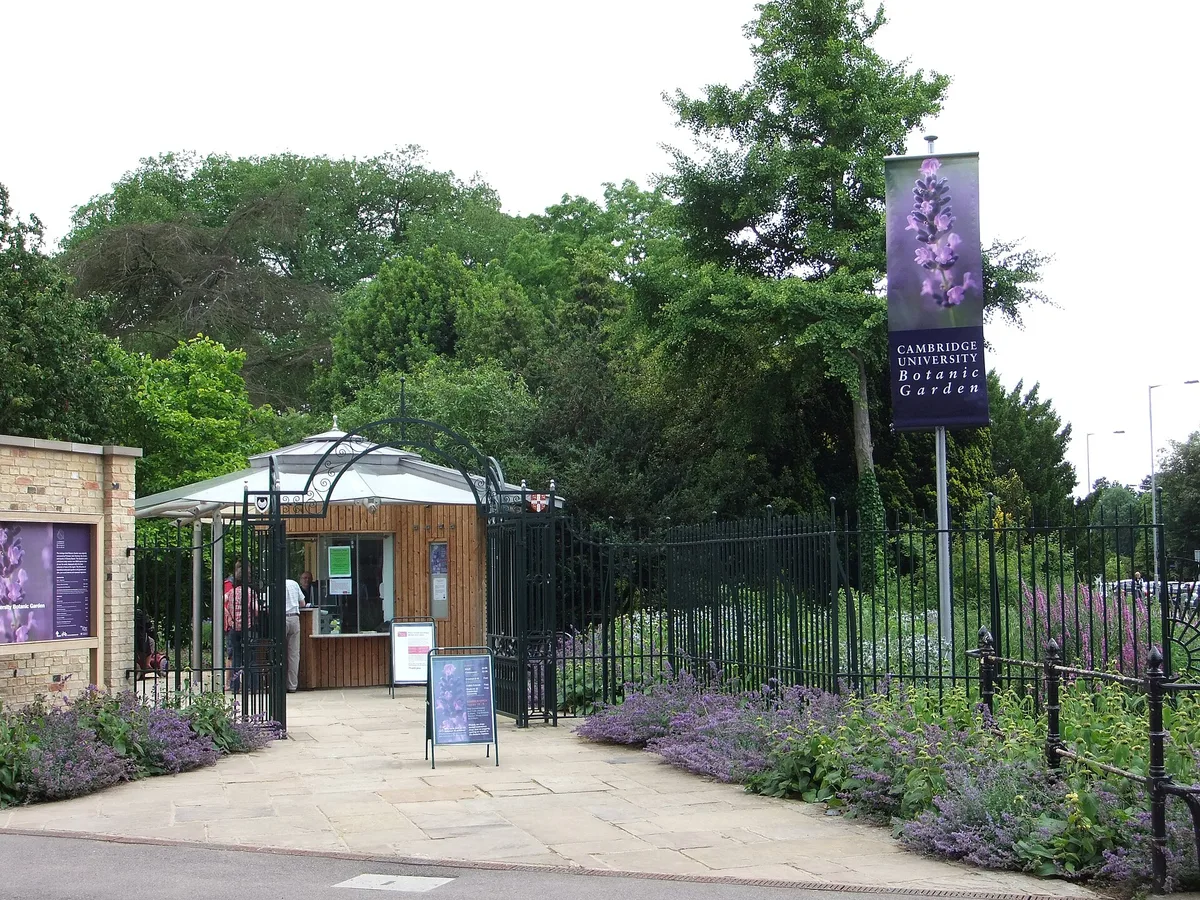
Forty acres between the station and the colleges
This is the University’s own garden. It sits on 40 acres along Brookside, where Hobson’s Brook runs in its stone channel beside the road. Behind the railings you get long walks under mature trees, a lake, a rock garden and a row of glasshouses. It feels a long way from the King’s Parade crowds, even though the city centre is a short walk north.
The garden moved to this site in 1846. The move was driven by John Stevens Henslow, the botany professor remembered as Charles Darwin’s mentor. Henslow planned it as a teaching garden laid out by plant family. That scientific purpose still shows in the labels and the layout, which is part of why it reads so differently from a park.
It is very popular with families, couples and day-trippers. Plan on 2–3 hours if you want to see the glasshouses properly. A shorter loop of the main walk and the lake takes about an hour.
Under glass
Start indoors if the weather turns. The glasshouse range runs as a long line of connected houses, so you walk from one climate straight into the next. Each house is set up for a different kind of plant life:
- Tropical houses: warm and humid, with dense foliage and big-leaved plants
- Arid lands: cacti and succulents in dry, gritty beds
- Alpine house: small mountain plants in pots and troughs, best in spring
The glass is also the best shelter on a cold or wet day. Expect the narrow paths to slow to a shuffle on busy weekend afternoons.
Henslow’s living catalogue
The Systematic Beds are the part of the garden that belongs to Cambridge alone. They are a large set of island beds, with plants grouped by family in the order botanists classified them. Wander through and you are walking through a textbook, one family per bed, each with its label.
It sounds dry, but in summer it is one of the most colourful parts of the garden. It also gets you comparing things you would never put side by side: a poppy relative next to a cabbage relative, say. Students still use the beds for teaching.
Look out too for the tree grown from Isaac Newton’s famous apple tree, near the Brookside side of the garden. In July 2019 the garden’s weather station recorded 38.7°C. For a while that stood as the highest temperature ever measured in the UK.
A garden built for the grey months
Winter is the season most gardens give up on. Here it has a section of its own. The Winter Garden is planted for bark, stems and scent rather than flowers. You will find coloured dogwood stems, pale birch trunks and shrubs that flower on bare branches, and it is at its best on low winter light.
Spring brings the species tulips. The garden holds several National Collections of plants, and its wild tulips are one of them. Summer is for the Systematic Beds and the lake margins. In autumn the tree collection colours up along the main walks.
Gates, trains and getting in
The garden has more than one entrance. The address is 1 Brookside, but there are also gates on Bateman Street and on Hills Road, close to the station. Coming by train, walk up Station Road and Hills Road: Cambridge station is about a 10–15 minute walk away. From the city centre, head south down Trumpington Street and turn along Brookside.
Driving into central Cambridge is slow and parking is limited. The Park & Ride buses, or a bike, make more sense. Cambridge is flat, and cycle racks near the gates fill up on sunny weekends.
Opening hours are currently 10am–5pm every day of the week. Botanic gardens change their hours with the seasons and close on some holidays, so check the official website for this month’s times. Admission prices are posted there and at the gates.
Beating the weekend crowd
Timing makes the biggest difference here. It’s calmest between 10am and 11am on weekdays: arrive at opening and you will have the Systematic Beds and glasshouses largely to yourself. Try not to come on a weekend between 11am and 5pm. That’s when families fill the lawns, the café queue grows and the glasshouse paths jam.
A few habits that help on any visit:
- Do the glasshouses first. They are the narrowest spaces and fill up fastest as the day goes on.
- Pay by card. Card payment is standard in Cambridge, and tipping at a counter café is not expected.
- Keep to the paths. Plants in the beds are labelled for research and teaching, and visitors are asked not to take cuttings.
- Bring a picnic only if you check the rules first. The garden’s website sets out what is allowed on the lawns.
If weekends are your only option, come right at 10am. Head straight for the glass, then save the open lawns and lake for later, when the crowd thins across the bigger spaces.
After the gates close
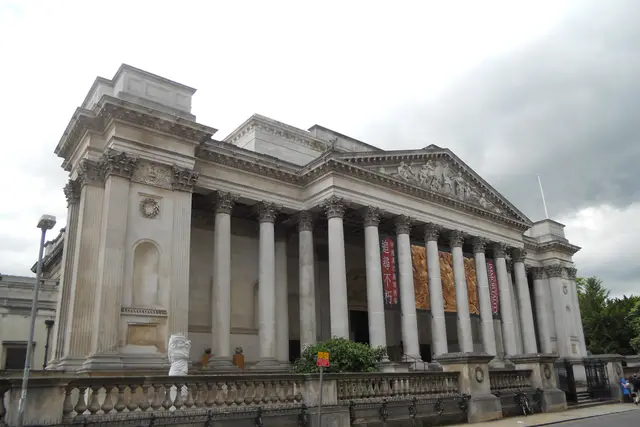
The garden pairs well with the south side of town. The Fitzwilliam Museum on Trumpington Street is about a 10-minute walk north, and it is free to enter. Carry on past it and you reach Peterhouse, the oldest college, then Pembroke and the start of the central college stretch.
Alternatively, follow Trumpington Road a little further to the Grantchester Meadows footpath. It’s a classic Cambridge walk along the river Cam, best in long summer evenings once the garden has shut at 5pm.
Frequently asked questions
When is the quietest time to visit Cambridge University Botanic Garden?
Weekdays between 10am and 11am are the quietest. Avoid weekends between 11am and 5pm, when it is at its busiest.
How do I get there from Cambridge railway station?
Walk up Station Road and Hills Road. It takes about 10–15 minutes to reach the Hills Road gate. The main address is 1 Brookside, CB2 1JE.
What are the opening hours?
At the moment it opens 10am–5pm every day. Hours change with the seasons and on some holidays, so check the official website before you go.
How long should I spend there?
Allow 2–3 hours to see the glasshouses, the Systematic Beds and the lake. A quick loop of the main walks takes about an hour.
Is it worth visiting in winter?
Yes. The dedicated Winter Garden is planted for coloured stems, bark and winter scent, and the glasshouses give you warm shelter.
Plan your trip to Cambridge
United Kingdom eSIM & staying connected →
Some links above are affiliate links — if you book through them, Wander Atlas earns a small commission at no extra cost to you. It's how we keep every guide free.
Related guides
 attraction
The Fitzwilliam Museum: Cambridge Travel Guide (4.7★)
 attraction
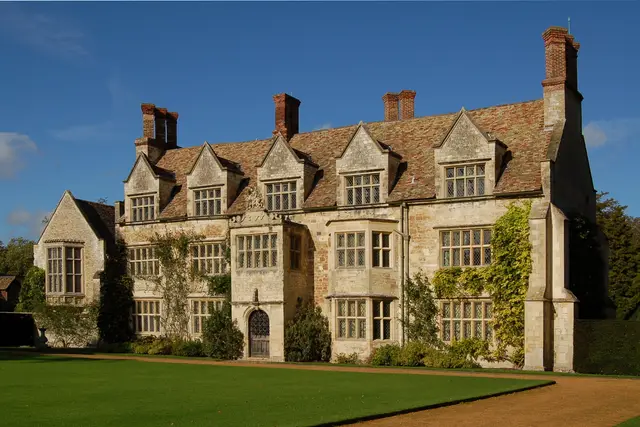
Anglesey Abbey: Cambridge Travel Guide (4.7★)
 hidden gem
Museum of Archaeology and Anthropology: Cambridge Travel Guide
 hidden gem