Five days, one rest day, 179 acts
There is a gap in the middle. Countdown Japan 26/27 runs on December 26, 27, 29, 30 and 31, 2026. The 28th has no show, so it works out as two days, then a day off, then three days into the new year.
Across those five days the bill holds 179 acts. That makes it Japan’s largest New Year’s Eve rock and pop festival. Each day stands alone, with its own lineup. Most people come for one or two days and choose them by the acts they want to see.
Inside Makuhari Messe in December
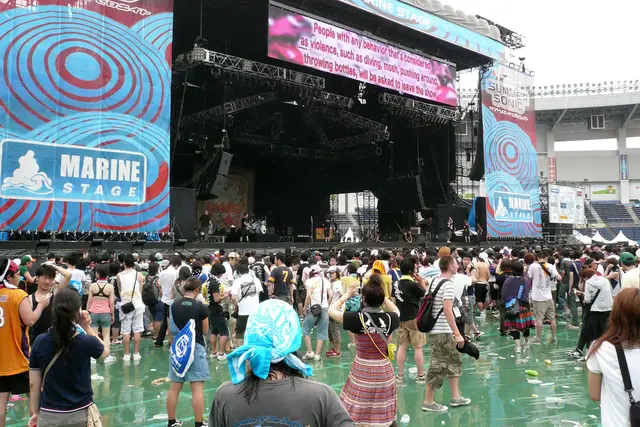
The festival doesn’t use a field. It fills Makuhari Messe, the huge convention centre on the Tokyo Bay shore of Chiba’s Mihama Ward. Its exhibition halls are long, flat spaces with high ceilings, and the festival splits them into separate stages, food areas and merch zones.
Being indoors matters a great deal in late December. Mud and rain don’t come into it. Outside, the wind off the bay is cold enough that people usually wear heavy coats on the walk in, then leave them at the cloakroom.
On a normal day the hall floors are concrete. After several hours of standing at the main stage, you notice that. Regulars usually wear trainers they’ve already broken in. Many bring a light layer for the queue outside.
Getting to Kaihin-Makuhari
Nearly everyone comes by train. The station for Makuhari Messe is Kaihin-Makuhari Station on the JR Keiyo Line. A covered walkway and a few wide crossings link it to the halls in roughly five to ten minutes.
From central Tokyo the usual route goes like this:
- From Tokyo Station: the Keiyo Line runs to Kaihin-Makuhari in about 30 minutes. Some rapid services also stop there. The Keiyo platforms are deep underground, a long walk from the main Tokyo Station concourse, so allow time for that.
- Passing Maihama: the same line stops at Maihama, the Tokyo Disney Resort station. Expect holiday crowds on the train in late December.
- From the Sobu Line side: Makuhari-Hongo Station on the JR Sobu Line has bus links to the Messe area. Most festival-goers still use the Keiyo Line.
The walk from the station takes you past the office towers and hotels of the Makuhari Shintoshin district. You will not get lost: the crowd all heads the same way.
Midnight on the 31st
The 31st is the day the festival is named for. December 31 is the closing day, and its schedule runs up to midnight. The headline acts at that point count the hall into the new year.
The day off on the 28th is easy to miss, and it catches people buying a run of tickets in date order. The 26th and 27th make a weekend-style pair. The 29th, 30th and 31st run straight into New Year.
After midnight on the 31st the trains are the main concern. Railways in the Tokyo area often add late or overnight services on New Year’s Eve. The schedules change from year to year, though, so many attendees who stay to the end book a room nearby instead.
Tickets, wristbands and where to find them
The festival is run by rockin’on, the Japanese music publisher that also produces Rock in Japan Festival. Dates, the lineup by day, timetables and ticket information are on the organiser’s official Countdown Japan site. Tickets are sold for a single day or for several days.
On the day, tickets are usually exchanged for a wristband at the entrance. You wear it for the whole visit and it gets you back in. Ticket prices and the sales channels are listed on the official site. This guide gives no figures, because none were given to us.
Festival manners inside the halls
Japanese festivals run on shared rules, and rockin’on events enforce them. Diving, crowd-surfing and moshing are banned, and staff watch for them at the front. You still get energetic crowds, but people keep their weight on their own feet.
What regulars usually do:
- Move with the flow. People change stages along marked routes through the halls, and staff with signs steer the crowd. Cutting across the lines slows everyone down.
- Use the cloakroom. Coats and bags go in early in the day. Then you can move between stages without carrying a winter jacket.
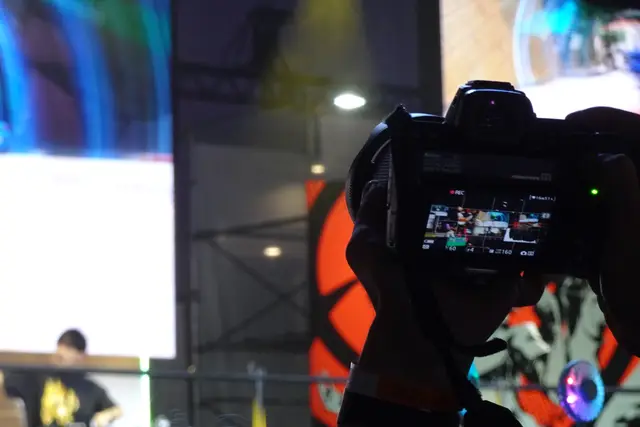
- Keep phones down during sets. Filming and photography of performances are normally not allowed, and the crowd mostly sticks to it.
- Take your rubbish to the sorting stations. The bins are split by type, and leaving cups on the floor is frowned on.
- Buy merch early in the day. Popular festival towels and T-shirts often have the longest queues once the halls fill.
Festival towels hung round the neck are the standard look. They are useful for sweat in the warm halls and for waving during sets.
Staying and eating around Makuhari
The Makuhari Shintoshin district is built around business. Hotel towers stand within walking distance of Kaihin-Makuhari Station, and these are what fill up first with festival-goers. Others stay along the Keiyo Line towards Shin-Kiba or in Chiba city, and some just go back to Tokyo.
Inside the venue, food areas are set up in the halls with stalls serving hot food and drinks. For a meal outside the festival, AEON Mall Makuhari Shintoshin is a short bus or taxi ride away. Next to the Messe is ZOZO Marine Stadium, home of the Chiba Lotte Marines. Behind it is the beach on Tokyo Bay, quiet and windswept in winter. It’s a good place to walk off a long day if you have the rest day on the 28th free.
Frequently asked questions
When is Countdown Japan 26/27?
It runs on December 26, 27, 29, 30 and 31, 2026. There is no show on December 28. The final day, December 31, runs to midnight on New Year's Eve.
Where is Countdown Japan 26/27 held?
At Makuhari Messe in the Makuhari Shintoshin district of Mihama Ward, Chiba. The festival is entirely indoors, inside the convention centre's exhibition halls.
How do I get to Makuhari Messe from Tokyo?
Take the JR Keiyo Line from Tokyo Station to Kaihin-Makuhari Station, which takes about 30 minutes. The halls are a 5–10 minute walk from the station. The Keiyo Line platforms at Tokyo Station are a long underground walk from the main concourse.
Where are tickets and the lineup published?
The organiser, rockin'on, has dates, the day-by-day lineup, timetables and ticket information on the official Countdown Japan site. Prices are listed there too.
What are the rules inside the festival?
Diving, crowd-surfing and moshing are banned. Filming performances is normally not allowed. Rubbish goes to sorting stations, and most attendees leave their coats in the cloakroom for the day.
Plan your trip to Chiba
Japan eSIM & staying connected →
Some links above are affiliate links — if you book through them, Wander Atlas earns a small commission at no extra cost to you. It's how we keep every guide free.