Chinatown Singapore: Travel Guide (4.4★)

When to visit Singapore: month-by-month weather, crowds and holidays →
✓ Facts verified via Google Places · Sep 23, 2026
At a glance
Opening hours
- Monday: 10:00 AM – 10:00 PM
- Tuesday: 10:00 AM – 10:00 PM
- Wednesday: 10:00 AM – 10:00 PM
- Thursday: 10:00 AM – 10:00 PM
- Friday: 10:00 AM – 10:00 PM
- Saturday: 10:00 AM – 10:00 PM
- Sunday: 10:00 AM – 10:00 PM
How this guide is made
Produced with AI assistance and reviewed against live data sources. Facts such as hours, ratings, and location come from Google Places; images are licensed or public domain. Details can change — please verify before visiting. Editorial policy
What you’re actually walking into
Chinatown Singapore is five linked neighborhoods, not one street. Pagoda, Trengganu, Temple and Smith Streets form the shopping spine; Ann Siang and Club Street sit uphill with restored shophouses.
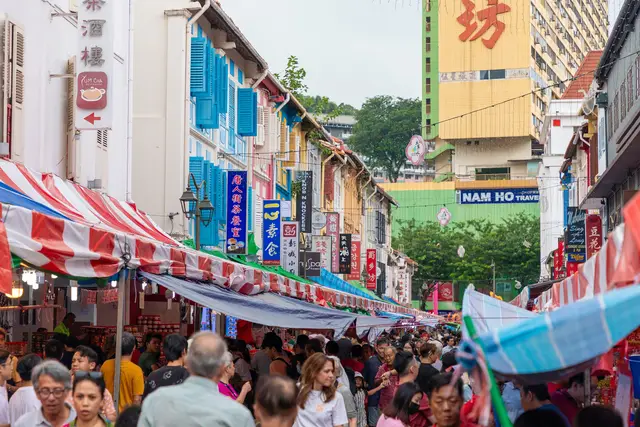
The whole district runs 10am to 10pm daily, every day of the week, no exceptions listed. Stalls along Pagoda Street sell fans, silk, lanterns and souvenir T-shirts under a covered walkway, so rain doesn’t stop the shopping.
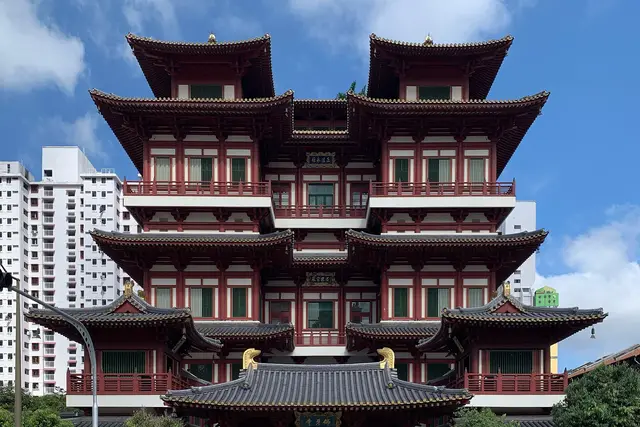
Anchor stops: Buddha Tooth Relic Temple on South Bridge Road, Sri Mariamman Temple (Singapore’s oldest Hindu temple) on the same street, and Thian Hock Keng on Telok Ayer Street, one of the city’s oldest Hokkien temples.
Getting there from Marina Bay
Chinatown MRT station (Downtown and North East lines) drops you at Pagoda Street’s doorstep via Exit A. From Marina Bay Sands or the waterfront promenade, it’s roughly a 20-minute walk or a five-minute taxi ride.
Telok Ayer MRT (Downtown Line) is the better exit if you’re heading straight for Thian Hock Keng or the Club Street cafe strip instead of the souvenir stalls.
Reading the crowds
This is a very-popular market district with well over 8,000 Google reviews, so don’t expect a quiet find. Weekday mornings right after the 10am opening are calmest, before tour groups and lunch-hour office crowds arrive.
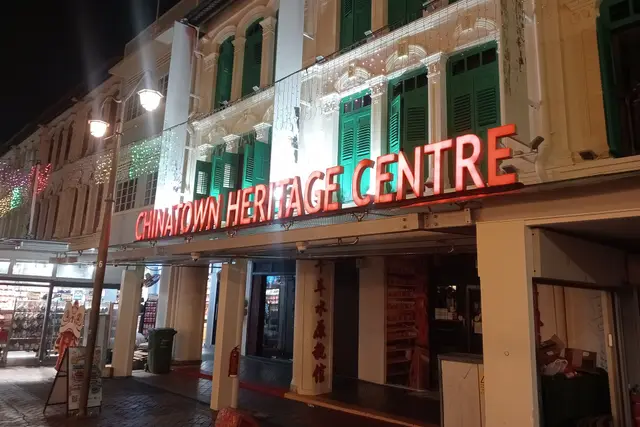
Evenings bring the district’s other identity: the hawker stalls along Smith Street (Chinatown Food Street) light up and the temples glow against the shophouse facades, but foot traffic peaks then too.
Weekends are busiest across the board, especially Trengganu and Pagoda Streets, where the covered market lanes narrow and fill fast.
Eating and shopping without wasting time
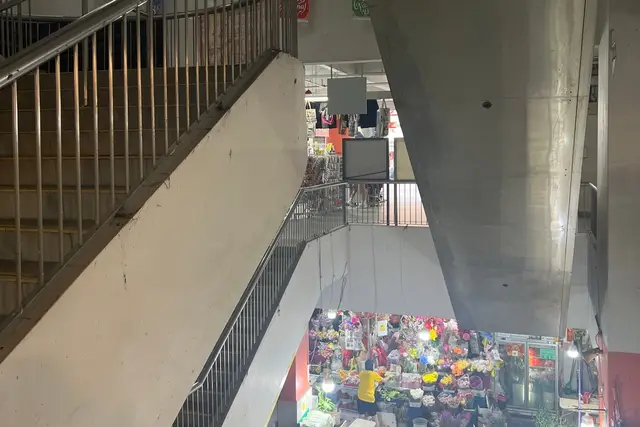
Skip the sit-down tourist restaurants lining the main drag; the better food is inside Chinatown Complex Market and Food Centre on Smith Street, a hawker hall with dozens of stalls under one roof.
Bargaining is normal at the souvenir stalls on Pagoda and Trengganu Streets, less so inside fixed-price shops. Cash still moves faster at hawker stalls, though most now take mobile payment or card.
- Buddha Tooth Relic Temple: check shoes-off, modest-dress norms before entering
- Sri Mariamman Temple: remove footwear at the entrance
- Chinatown Complex hawker centre: grab a table first, then order, stalls will find you
- Ann Siang Hill: quieter uphill detour with fewer stalls, more cafes
Give the district two to three hours minimum if you want temples, food and street shopping; half a day if you’re adding Ann Siang and Club Street’s bars.
Frequently asked questions
Where exactly is Chinatown Singapore in relation to Marina Bay?
It's at 75 Pagoda St, about a 20-minute walk or short taxi ride from Marina Bay Sands and the waterfront, and one stop on the MRT.
What's the best time to avoid crowds?
Weekday mornings shortly after the 10am opening are calmest; weekends and evenings draw the heaviest foot traffic, especially on Pagoda and Trengganu Streets.
How do I get there by MRT?
Take the Downtown or North East Line to Chinatown MRT station and use Exit A for Pagoda Street, or Telok Ayer station on the Downtown Line for Thian Hock Keng and Club Street.
How much time should I plan for a visit?
Budget two to three hours for the temples, market streets and a hawker meal; half a day if you're adding Ann Siang Hill and Club Street.
What should I eat there?
Head to Chinatown Complex Market and Food Centre on Smith Street, a hawker hall with dozens of stalls, rather than the tourist restaurants on the main street.
Plan your trip to Chinatown
Some links above are affiliate links — if you book through them, Wander Atlas earns a small commission at no extra cost to you. It's how we keep every guide free.