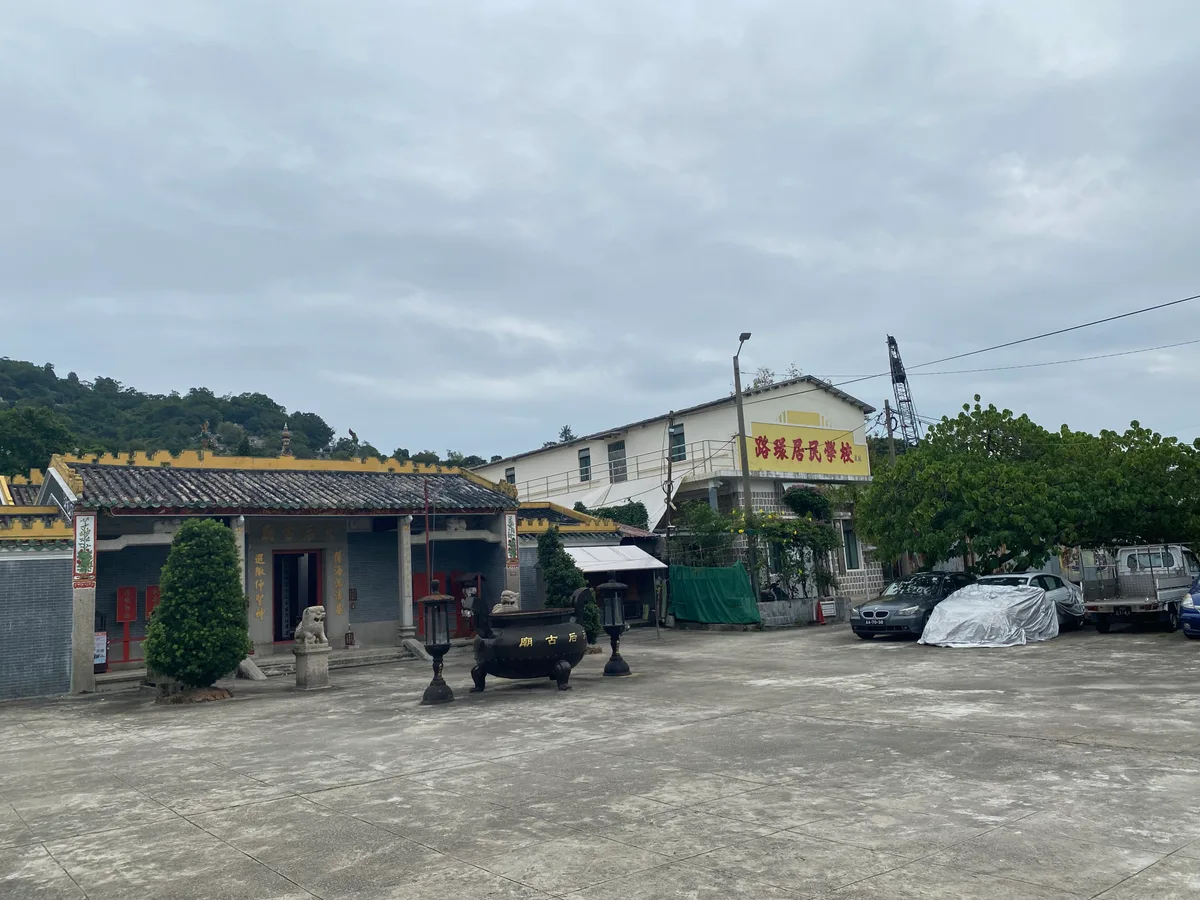
A goddess for a fishing village
Coloane was built by people who lived off the sea. Tin Hau, the Queen of Heaven, is the goddess Macau’s fishing families prayed to before a boat went out. In Macau she is better known as A-Ma, the same deity the city takes its name from.
This temple is her Coloane home, and it dates back to the Qing dynasty. It is far smaller than the A-Ma Temple on the peninsula. You won’t find a hillside complex of pavilions here: it is a single compact shrine tucked into the lanes of the old village.
What you find inside
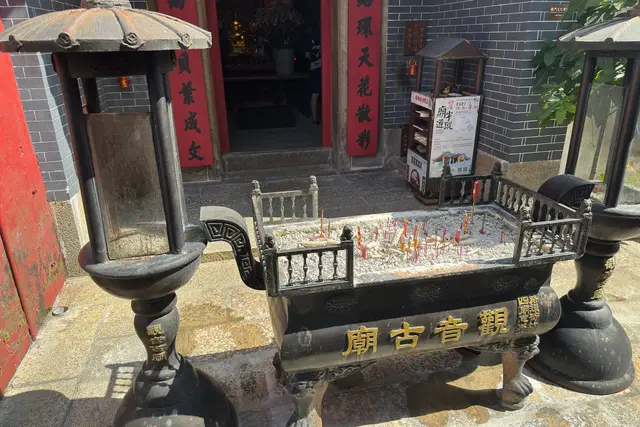
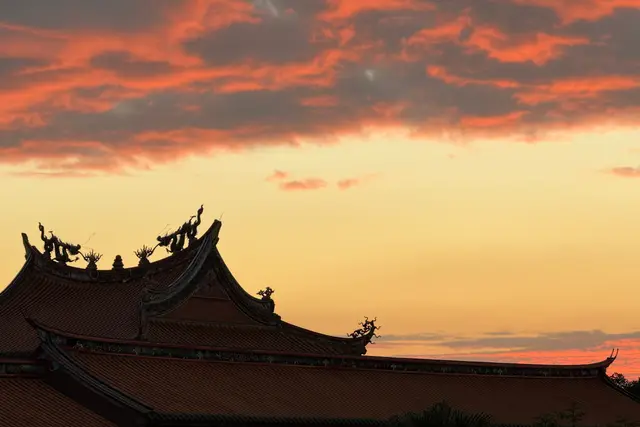
Compact doesn’t mean plain. The roofline has the curved ridges and ceramic ornament you see on southern Chinese temples. Inside, the space is dim, and the altar to Tin Hau sits at the back, facing the door.
Temples like this one usually have spiral incense coils hanging from the ceiling. Each coil is a prayer that burns slowly for days. Expect a smell of smoke and sandalwood, offerings of fruit on the altar, and red paper strips carrying worshippers’ names.
You’ll see what there is to see in 15–20 minutes. The temple works best as one stop on a slow walk through the village, not as a destination on its own.
Reaching Coloane Village
Coloane sits at the far southern tip of Macau, past the Cotai casino strip. Buses stop at Coloane Village, the stop beside the roundabout at the village edge. Routes 21A, 25 and 26A all run here, which makes it an easy add-on after a morning in Cotai.
From the stop, walk downhill towards the water. The temple sits in the lanes back from the seafront, so follow the alleys inland from Largo Eduardo Marques, the square in front of the chapel. Coloane’s lanes are short, and if you take a wrong turn you’ll be back on the promenade within a few minutes.
Taxis also run to the village. Ask for “Lou Wan” (路環), the Cantonese name for Coloane, if the driver doesn’t recognise the Portuguese.
Inside the shrine without causing offence
This is a working temple, not a museum. Locals still come here to burn incense and leave offerings, and a few habits keep you on the right side of them:
- Step over the threshold at the entrance. Don’t stand on it; in Chinese tradition the raised sill is not for treading on.
- Ask before photographing people who are praying. Pictures of the building and the incense coils are generally fine, but keep your flash off near the altar.
- Leave anything burning alone. Don’t touch offerings or incense, and don’t move them.
- Buy incense from the temple keeper if you’d like to light a stick. Any donation goes in the box near the altar. There is no set charge, so give what feels right.
- Dress modestly. It isn’t strictly enforced, but beachwear straight from Hac Sa looks out of place.
Go on the 23rd day of the third lunar month, usually April or May, and you’ll see a very different temple. That is Tin Hau’s birthday, and Macau’s sea-goddess temples fill with offerings, worshippers and sometimes lion dances. Check the lunar calendar for that year’s date.
The rest of the village in an hour
The temple is the start of a loop. Coloane Village is small enough to walk end to end, and its sights sit close together:
- Chapel of St Francis Xavier: a cream-and-white Baroque chapel on Largo Eduardo Marques. The mosaic square in front of it is the village’s centre.
- Tam Kong Temple: a second fishermen’s temple at the end of Rua dos Navegantes. It is known for a long whalebone carved into the shape of a dragon boat.
- The seafront promenade: banyan trees and a low sea wall look across a narrow channel to Hengqin in mainland China.
- Lord Stow’s Bakery: the original shop of the bakery that made Portuguese-style egg tarts famous in Macau. It sits a block back from the square.
- Old stilt-house lanes: you’ll find these along the waterfront towards Tam Kong, a reminder of the fishing settlement Tin Hau was meant to protect.
When to go
Weekday mornings suit the village. Day-trippers from Cotai tend to come later in the day, and the bakery queue builds through the afternoon. Macau’s summers are hot and humid, with typhoon season peaking from July to September. October to December brings drier air and makes the uphill lanes far more pleasant to walk.
The temple’s hours aren’t published in a reliable form. Small neighbourhood temples usually keep daytime hours, but arriving in the morning or early afternoon is your safest bet. Ask at the Macau Government Tourism Office if you are planning around a festival.
Frequently asked questions
How do I get to Tin Hau Temple Coloane?
Take bus 21A, 25 or 26A to the Coloane Village stop, then walk down towards the seafront and into the lanes behind Largo Eduardo Marques, the square in front of the Chapel of St Francis Xavier. A taxi to 'Lou Wan' (Coloane) works too.
How long should I spend there?
The temple takes 15–20 minutes. Give Coloane Village one to two hours in total so you can add the chapel, Tam Kong Temple, the promenade and Lord Stow's Bakery.
What are the opening hours?
They aren't reliably published. Small temples here usually keep daytime hours, so go in the morning or early afternoon, or check with the Macau Government Tourism Office before you set out.
Is there a special time to visit?
Tin Hau's birthday falls on the 23rd day of the third lunar month, usually April or May, when sea-goddess temples across Macau fill with worshippers and offerings. For a cooler, drier walk, go between October and December.
Can I take photos inside?
Photos of the building and the incense coils are generally fine. Don't use flash near the altar, and ask before photographing anyone who is praying.
Plan your trip to Coloane Village
Macau eSIM & staying connected →
Some links above are affiliate links — if you book through them, Wander Atlas earns a small commission at no extra cost to you. It's how we keep every guide free.