The goddess who gave Macau its name
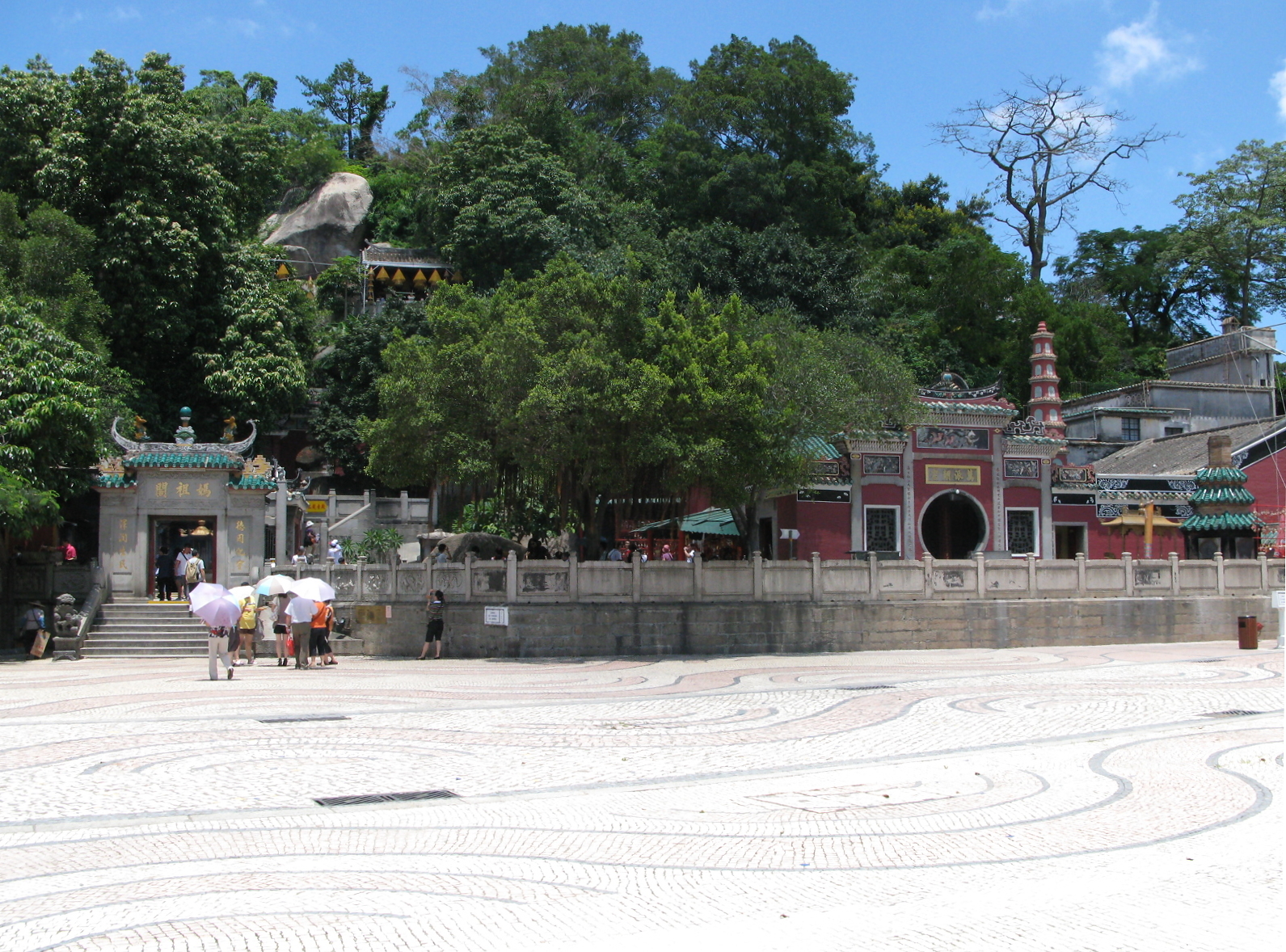
Start with the smoke. Giant incense coils hang from the eaves like copper lampshades, each burning slowly for days, and the air under them turns grey and sweet. This is A-Ma Temple, or Ma Kok Miu in Cantonese, built in 1488 and older than the Portuguese settlement around it.
The story locals tell is that Portuguese sailors landed here and asked the place’s name. They were told “A-Ma-Gau”, the Bay of A-Ma, and that became Macau. A-Ma is the Cantonese name for Mazu, protector of fishermen and seafarers. The temple is part of the Historic Centre of Macau, inscribed as a UNESCO World Heritage Site in 2005.
Climbing Barra Hill, hall by hall
This is a temple you walk up rather than walk through. Instead of one grand hall, small pavilions are stacked up the slope of Barra Hill, joined by stone steps and narrow terraces. Each level feels slightly quieter than the one below.
What you pass on the way up:
- The Gate Pavilion, with its granite frame and stone lions, facing the square
- The Memorial Arch, the formal entry to the sacred area
- The Prayer Hall and the Hall of Benevolence, the oldest part of the complex, low and dense with offerings
- The Hall of Guanyin, dedicated to the Buddhist goddess of mercy
- Zhengjiao Chanlin, the Buddhist pavilion higher up
Look at the boulders as you climb. Red and gold calligraphy is carved straight into the rock, along with a relief of a junk, the sailing boat linked to A-Ma’s legend. Plan 45 minutes to an hour if you go all the way up.
Getting to Barra
The temple stands at the foot of the peninsula, facing Largo da Barra. The square is paved in the wave-patterned black and white Portuguese stones you see all over the old city.
The Barra station on the Macau Light Rapid Transit links the area to Taipa. Many city bus routes also end at Barra, so check the stop board for one that passes through Barra. From Senado Square it’s a walk of about 25 to 30 minutes downhill through the old quarter. Going that way also takes you past Lilau Square and the Mandarin’s House.
Beating the crowds at a working temple
It’s open every day from 7am to 6pm, and the early hours matter. Weekdays are calmest from 7am to 10am. At weekends the quiet window is shorter, 7am to 9am, before the tour groups arrive.
Try not to come on a weekend between 11am and 5pm. That’s when the steps fill up, and the smaller shrines turn into a shuffle where you can’t stop to look. Arriving early also means you see the temple as worshippers use it, with offerings being laid and the first incense lit.
The busiest days of the year are Lunar New Year and the A-Ma Festival. The festival falls on the 23rd day of the third lunar month, usually April or May. Both are worth seeing if you don’t mind tight crowds and firecracker smoke.
Incense, thresholds and temple manners
Treat this as a place of worship first, because it is one. People come here to pray for safe voyages, good health and business luck. You will be standing right next to them.
A few things that help:
- Step over the raised wooden thresholds, never on them. Tradition says they keep bad spirits out.
- Don’t point at the deity statues with a finger; gesture with an open hand if you need to.
- Incense is sold on site if you want to make an offering. Light it from the existing flames, bow, then plant it in the urn.
- Photograph the architecture freely, but ask before photographing someone mid-prayer, and keep your flash off inside the halls.
- Keep shoulders covered out of courtesy, though there is no strict dress code at the gate.
Donation boxes sit near the main shrines. Giving is entirely optional and goes towards upkeep.
Lingering at Barra afterwards
Don’t head straight back to the casinos. The Macau Maritime Museum stands directly across Largo da Barra and tells the seafaring story behind the temple. It covers Chinese junks, Portuguese navigation and the fishing life A-Ma was meant to protect.
Walk a few minutes uphill to the Moorish Barracks. This pale yellow, arcaded building from the 1870s now houses the Maritime Administration, and you can usually walk along its verandah. Continue on to the Mandarin’s House, the large courtyard home of the thinker Zheng Guanying.
Barra is also a good place to eat Macanese food. The streets just back from the square have several Macanese and Portuguese restaurants, so a lunch stop fits in easily after an early temple visit.
Frequently asked questions
When is the quietest time to visit A-Ma Temple?
Weekdays from 7am to 10am and weekends from 7am to 9am. Avoid weekends between 11am and 5pm, when it is busiest.
What are A-Ma Temple's opening hours?
It is open daily, including weekends, from 7am to 6pm.
How do I get to A-Ma Temple?
Head for Barra, at the southern tip of the Macau Peninsula. The Barra station on the Macau Light Rapid Transit is nearby, many buses end at Barra, and Senado Square is about a 25 to 30 minute walk away through the old quarter.
How long should I spend there?
Allow 45 minutes to an hour to climb through all the pavilions. Add another hour or so if you visit the Maritime Museum across the square.
Is there a dress code or etiquette to follow?
There is no strict dress code, but modest clothing is courteous. Step over the raised thresholds rather than on them, don't point at deity statues, and ask before photographing people who are praying.
Plan your trip to Macau
Macau eSIM & staying connected →
Some links above are affiliate links — if you book through them, Wander Atlas earns a small commission at no extra cost to you. It's how we keep every guide free.
Related guides
 attraction
 Senado Square: Macau Peninsula Travel Guide (4.3★)
 attraction
 Ruins of Saint Paul's: St. Lazarus Quarter Travel Guide
 attraction
 Guia Fortress and Lighthouse: Travel Guide (4.5★)
 attraction