Between the cathedral and the river
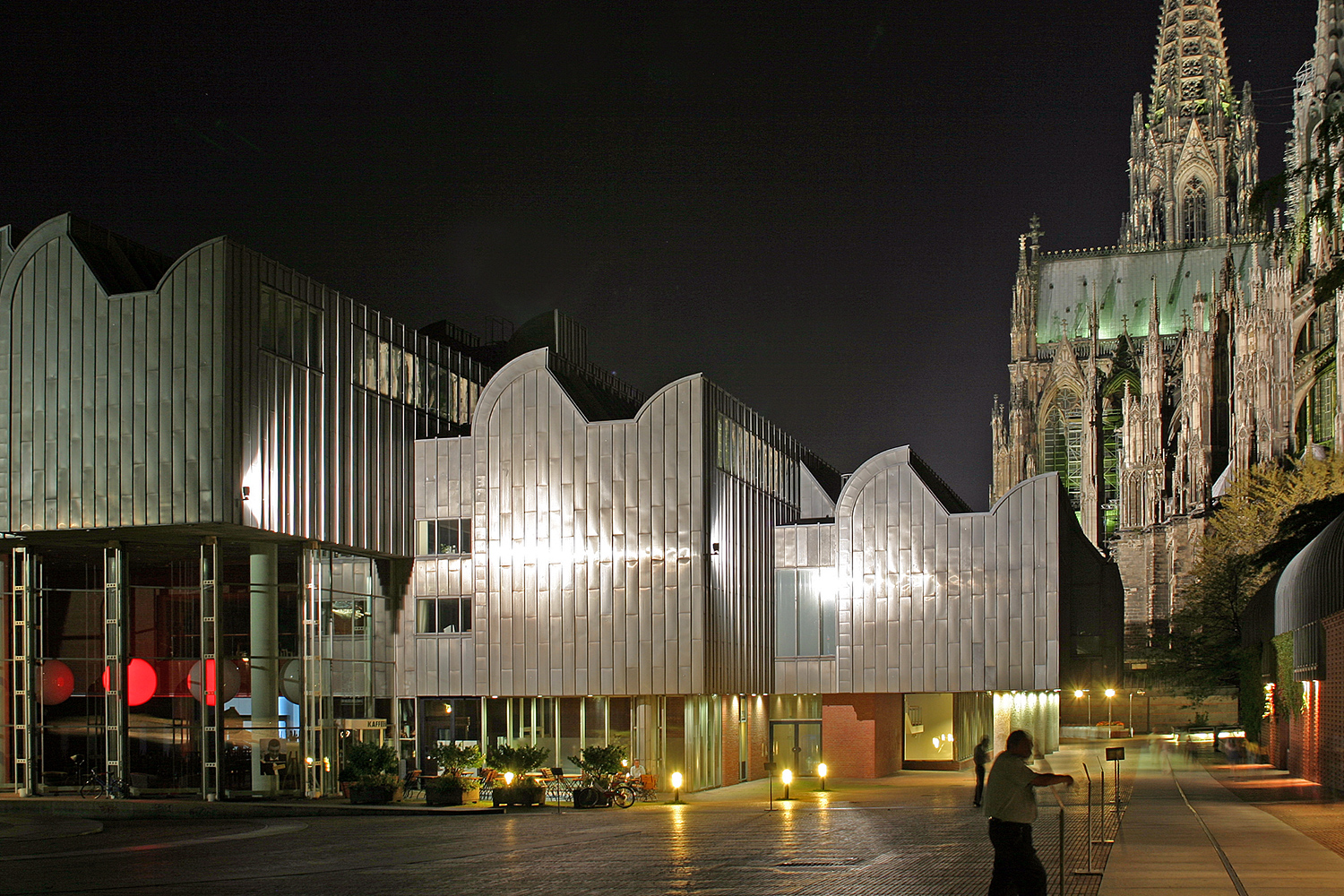
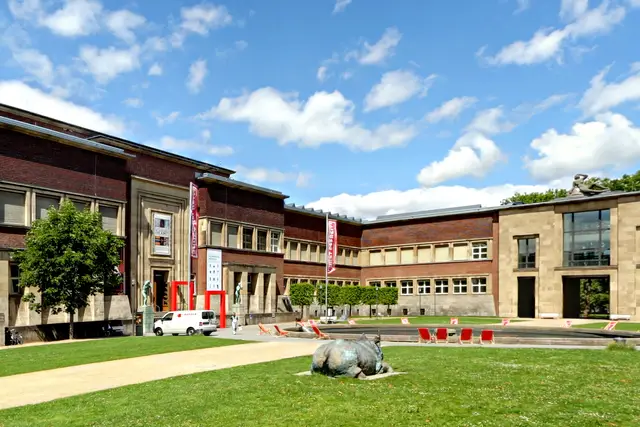
Look for the zinc roof. From the cathedral steps you see a row of jagged, saw-tooth skylights stepping down towards the Rhine. That’s Museum Ludwig, a brick-and-metal building by the architects Busmann and Haberer that opened in 1986.
It sits so close to the Dom that the two practically share a forecourt. The east side faces the Hohenzollern Bridge and the river. You can easily start your day under Gothic spires and be looking at Andy Warhol ten minutes later.
What hangs on the walls
The core is the collection that chocolate manufacturer Peter Ludwig and his wife Irene gave to the city in 1976. Over the years it has been added to and reorganised many times. Plan on two to three hours. Most first-time visitors look for these:
- Picasso: one of the largest Picasso collections in Europe, covering painting, prints and ceramics.
- American Pop Art: Warhol, Lichtenstein, Rauschenberg and their peers, in a concentration you rarely see outside the United States.
- Russian avant-garde: Malevich, Rodchenko, Popova and the circle around them.
- German Expressionism: largely from the Haubrich bequest, including painters of Die Brücke and Der Blaue Reiter.
Under the skylights, the upper galleries get soft daylight from overhead, which suits the large Pop canvases. Temporary exhibitions run alongside the permanent rooms and often take over a full floor. Check the museum’s website before you go to see what’s on.
Planning around the weekend crowds
Weekends are the problem. Our foot-traffic data shows Saturdays and Sundays stay busy from 10am to 6pm, the full opening day. There is no lull to aim for.
If your dates allow, come Tuesday to Friday instead. Mondays are no use: the museum is closed. Every other day it opens 10am to 6pm, so allow enough time before the doors shut at six. Cathedral tour groups also pass this square all day, which is one more reason to avoid Saturday.

Lockers, footsteps and the square above the concert hall
A few habits make the visit easier.
- Leave the bag downstairs. Like most German museums, it asks you to put backpacks and large bags in the lockers or cloakroom near the entrance before you go into the galleries.
- Watch the square. The Kölner Philharmonie concert hall sits directly under Heinrich-Böll-Platz. During rehearsals and performances, stewards close part of the square because footsteps carry into the auditorium. If someone in a vest waves you around, that’s why.
- Check the photo signs. Photography rules can vary between the collection and loan exhibitions. Look for signs at each gallery entrance and never use flash.
- Ask for the English booklet. Gallery labels are often in German first, and the front desk can tell you what English material is available.
In the galleries, people keep their voices low and stay back from the canvases. Attendants will step in quickly if you lean too close.
Getting there from Köln Hauptbahnhof
Arriving by train is the easy way. Leave Köln Hauptbahnhof by the main cathedral-side exit, climb the steps to the Dom forecourt and walk around the cathedral’s south side. The museum is on your left, roughly five minutes on foot.
By U-Bahn or tram, get off at Dom/Hbf, the stop under the station. Driving into the old centre isn’t worth the trouble. The streets around the cathedral are mostly pedestrianised, and the train station connects to almost everywhere in the region.
Before and after: Dom, Römisch-Germanisches Museum, the Rhine
Your next stops are all within a few minutes’ walk:
- Cologne Cathedral: you can see it from the museum door. Climb the south tower for the view back over the Ludwig’s saw-tooth roof.
- Römisch-Germanisches Museum: Cologne’s Roman history museum, next door on Roncalliplatz. Its Dionysus mosaic was found on this site.
- Hohenzollern Bridge: the railway bridge covered in love locks, reached by the steps behind the museum. Cross it to Deutz for the classic skyline view of the cathedral.
- Rheingarten: the riverside promenade below the museum, good for a sit-down after a long time on your feet in the galleries.
From there the Altstadt lanes and their Kölsch brewhouses begin a few streets south, along the river towards Groß St. Martin.
Frequently asked questions
When is the quietest time to visit Museum Ludwig?
Avoid weekends. Our crowd data shows Saturdays and Sundays are busy for the whole 10am–6pm opening day. Weekdays weren't measured, but Tuesday to Friday is the obvious alternative. The museum is closed on Mondays.
What are Museum Ludwig's opening hours?
Tuesday to Sunday, 10am to 6pm. It's closed every Monday.
How do I get to Museum Ludwig from Cologne's main station?
Walk. Leave Köln Hauptbahnhof on the cathedral side, cross the Dom forecourt and go around the cathedral's south side. The museum is on Heinrich-Böll-Platz, about five minutes away. The U-Bahn and tram stop is Dom/Hbf.
How long should I spend inside?
Allow two to three hours for the permanent collection: Picasso, Pop Art, the Russian avant-garde and German Expressionism. Add more time if a large temporary exhibition is on.
What else is nearby?
Cologne Cathedral, the Römisch-Germanisches Museum, the Hohenzollern Bridge and the Rheingarten riverside promenade are all within a few minutes' walk.
Plan your trip to Cologne
Some links above are affiliate links — if you book through them, Wander Atlas earns a small commission at no extra cost to you. It's how we keep every guide free.
Related guides
 attraction
 Cologne Cathedral: Travel Guide (4.7★)
 hidden gem
 Shrine of the Three Kings: Cologne Travel Guide (4.8★)
 attraction
 Hofgarten: Düsseldorf Travel Guide (4.6★)
 attraction