Behind the altar, past the crowds
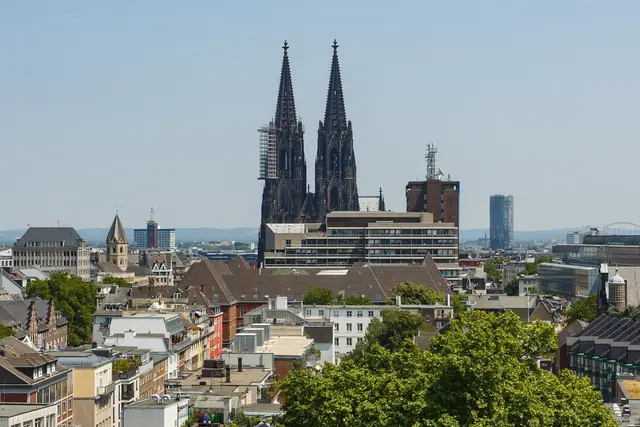
Most visitors stop in the nave. They look up at the vaulting, take a photo and leave. Keep walking east, past the crossing, and the gold is waiting behind the high altar in a glass case.
The shrine is the reason the cathedral exists. In 1164 Archbishop Rainald von Dassel brought relics said to be the bones of the Magi from Milan to Cologne, and pilgrims followed in such numbers that a new Gothic cathedral was begun in 1248 to hold them. The three crowns on Cologne’s coat of arms refer to these kings.
What you’re looking at
It is the largest reliquary in the Western world, built roughly between 1190 and 1225. The goldsmith Nicholas of Verdun led the early work. The form is a small basilica, made from three sarcophagi: two side by side, with a third resting on top.
Look closely for:
- Gilded silver figures of prophets and apostles seated around the long sides
- Enamel and filigree bands framing each arch
- Gemstones and antique cameos set across the surface, some carved centuries before the shrine was made
- The front end, showing the Adoration of the Magi, with the Virgin enthroned
Traditionally, the front panel is opened around the Feast of the Epiphany on 6 January so the crowned skulls inside can be seen. This draws pilgrims, so expect the choir area to be fuller then.
Moving through the cathedral
The building stands at Domkloster 4, immediately beside Köln Hauptbahnhof. The Dom/Hbf U-Bahn station is right below the cathedral square, so you can reach the shrine within minutes of stepping off a train.
You can get into the nave without paying. The treasury and the tower climb are ticketed separately, and prices are posted at their entrances. While you’re at the east end, two more major works are close by:
- The Gero Cross (around 970), one of the oldest large monumental crucifixes north of the Alps, in its own chapel off the choir
- Stefan Lochner’s Altar of the City Patrons in the Lady Chapel, which shows the Magi again
- The Domschatzkammer (cathedral treasury), entered from outside on the north side
Keeping to cathedral manners
This is a working church, not a museum. During Mass, parts of the building close to tourists, and stewards may stop you walking near the choir. If the ambulatory is roped off, wait for the service to end rather than trying to slip past.
- Men take hats off; nobody eats or drinks inside
- No flash, and no photos at all while a service is on
- Keep your voice low; sound carries under the vaults
- Leave large bags behind; stewards may check what you bring in
Sunday opens later, at 11am, because of morning services. Arriving soon after the 10am opening on a weekday usually puts you there before the tour groups reach the east end. People who want a closer view join a guided cathedral tour. These sometimes take you into areas of the choir you can’t enter alone, and details are on the cathedral’s official site.
Frequently asked questions
Where exactly is the Shrine of the Three Kings?
It is inside Cologne Cathedral (Domkloster 4), behind the high altar at the east end of the choir. Walk the full length of the nave and view it from the ambulatory.
What are the visiting hours?
10am to 7pm Monday to Saturday, and 11am to 7pm on Sunday. Services can close parts of the cathedral, so allow some flexibility.
How do I get there by public transport?
Take a train to Köln Hauptbahnhof or a tram to Dom/Hbf U-Bahn station. Both are directly beside the cathedral square.
How long should I allow?
20 to 30 minutes for the shrine itself. Allow an hour or more if you add the Gero Cross, the Lochner altarpiece and the cathedral treasury.
Can I see the skulls inside?
Usually not. Traditionally the front panel is opened around the Feast of the Epiphany (6 January), when the crowned skulls can be seen.
Plan your trip to Cologne
Some links above are affiliate links — if you book through them, Wander Atlas earns a small commission at no extra cost to you. It's how we keep every guide free.