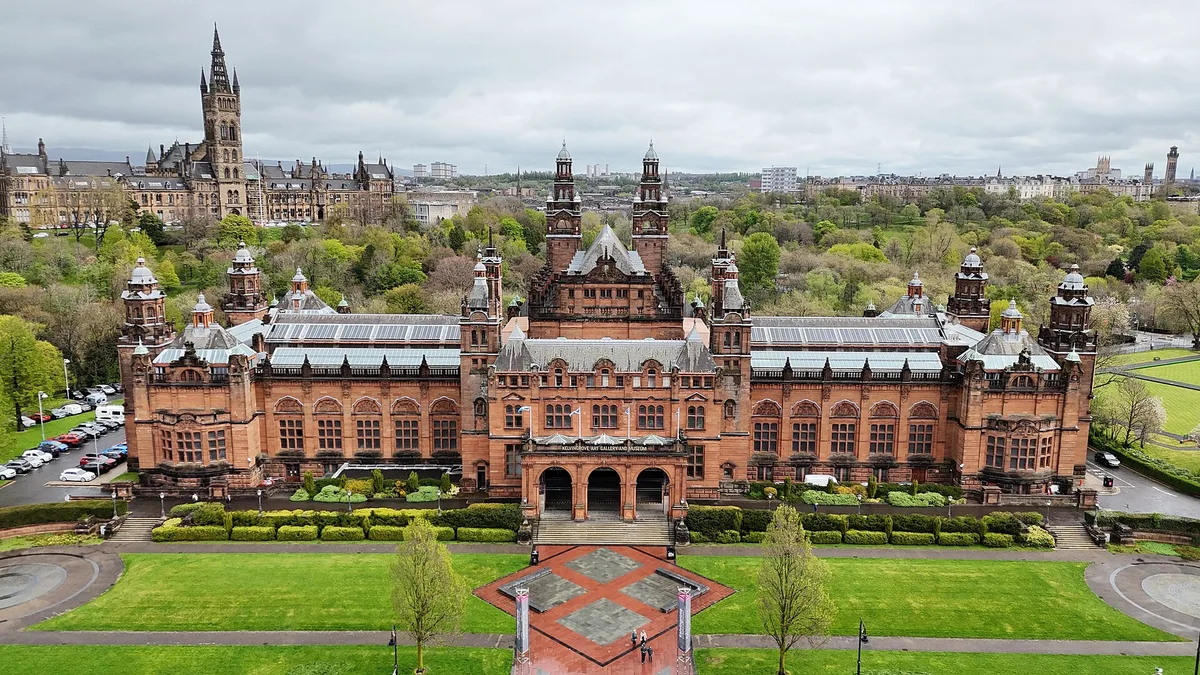
Red sandstone and a hall full of heads
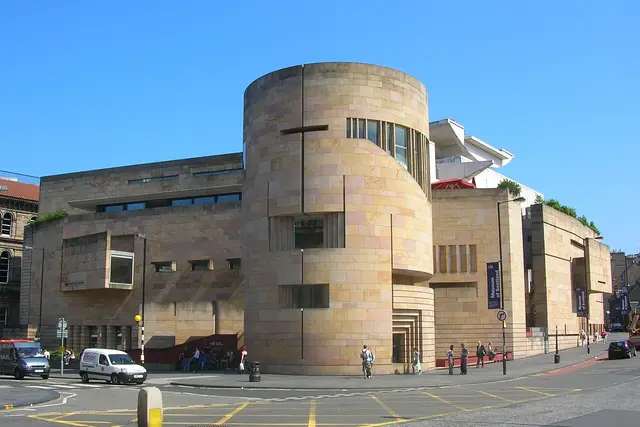
Start with the stone. Kelvingrove is built of deep red Locharbriggs sandstone in a Spanish Baroque style, all towers and carved figures. It opened in 1901 for the Glasgow International Exhibition, and from Argyle Street it looks more like a cathedral than a museum.
Go inside and the Centre Hall rises above you, with a huge pipe organ at one end. Off to the side, the East Court holds Sophie Cave’s Floating Heads: dozens of white faces hung on wires at different heights, wearing every expression from laughing to howling. Most people stop under them, look up and reach for their phones.
What to find first
The collection mixes art and natural history on purpose. Painting galleries sit next to rooms of animals, armour and Egyptian objects. That’s the whole idea, so don’t hunt for a strict route. Pick a few anchors and wander between them:
- Salvador Dalí’s Christ of Saint John of the Cross: the city bought it in 1952, and it gets its own dim, quiet space.
- The Spitfire: a real Second World War fighter hangs from the ceiling of the West Court, wings above the crowd.
- Sir Roger: a stuffed Asian elephant, a favourite with Glasgow children for generations.
- The Glasgow Boys and the Scottish Colourists: the best place in the city to see Scottish painting from around 1900.
- Charles Rennie Mackintosh and the Glasgow Style: furniture, metalwork and design from the city’s own Art Nouveau movement.
Beating the weekend crush
Timing makes a big difference here. The measured foot-traffic is clear: on weekdays it’s calmest between 10am and 12pm, and again from 4pm to 5pm. Try not to arrive on a Saturday or Sunday after 12pm, because from then until the 5pm close the halls fill with families and the Dalí room gets crowded.
Watch the opening times. At the moment it opens at 10am Monday to Thursday and on Saturday, but at 11am on Friday and Sunday. That makes a Tuesday or Wednesday at 10am the best slot for an empty Centre Hall. Hours can change around holidays, so check Glasgow Life’s official site before you go.

Moving through Kelvingrove like a regular
Glaswegians treat this place as a living room rather than a shrine. A few habits help:
- Entry is free, with a donation box by the door. Some special exhibitions charge; prices are on the Glasgow Life website.
- Use the cloakroom or lockers if you’re carrying a big bag. The galleries are tight in places.
- Ask about the organ recital. A lunchtime organ recital in the Centre Hall has run for years; the desk will have this week’s schedule. Find a spot on the balcony to hear it.
- Photography without flash is generally fine in the permanent galleries. Look for signs in special exhibitions.
- Pick the right door. The Argyle Street entrance is busier, while the park-side entrance leads straight to the trees.
You’ll hear people claim the building was put up back to front. It wasn’t: the grand entrance was meant to face the park. It’s still a story locals enjoy telling.
Getting to Argyle Street
The Glasgow Subway is the simplest way to get there. Get off at Kelvinhall, cross Argyle Street, and the museum is a few minutes’ walk east. Partick station, served by both the Subway and ScotRail trains, is a slightly longer walk.
From the city centre you can also walk west along Argyle Street through Finnieston in roughly half an hour. Buses run along the same road. Cycling along the Kelvin Walkway is another option for people coming from the north of the city.
Before and after
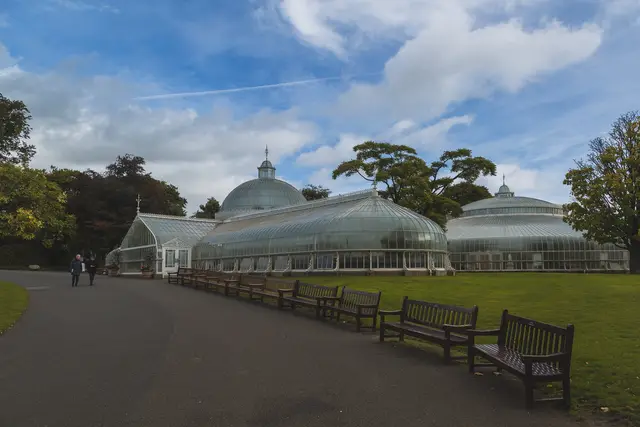
Kelvingrove Park starts at the museum’s back door. Climb the hill for a view of the University of Glasgow’s Gothic tower. Its Hunterian Museum, Scotland’s oldest public museum, is a short walk across Kelvin Way.
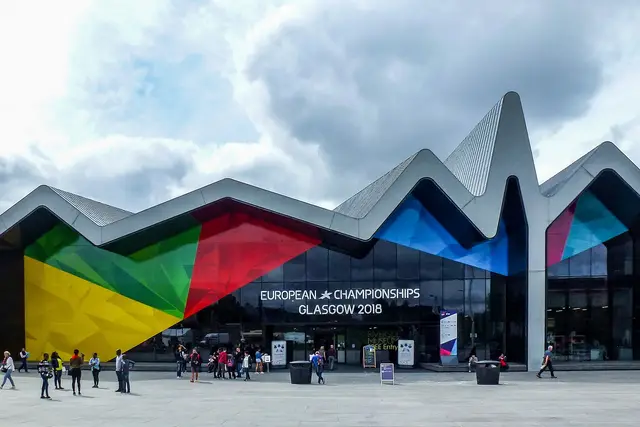
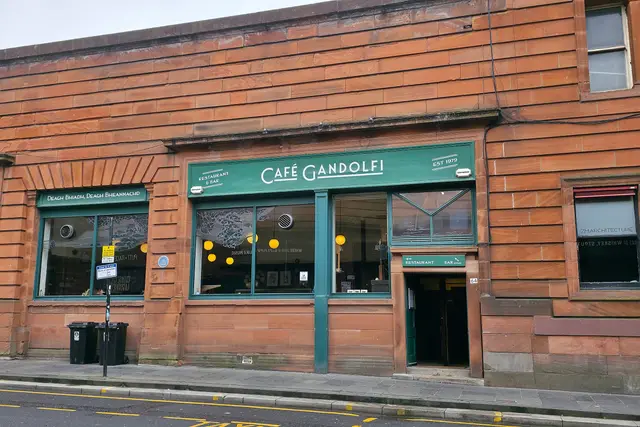
For food, the Argyle Street strip in Finnieston is lined with restaurants, bars and cafés. To fill a whole day, follow the River Kelvin south to the Riverside Museum and its transport collection, where the Tall Ship is moored beside it on the Clyde.
Frequently asked questions
When is the quietest time to visit Kelvingrove Art Gallery and Museum?
On weekdays it's calmest between 10am and 12pm and from 4pm to 5pm. Weekend afternoons, from 12pm to 5pm, are the busiest. Note that it currently opens at 11am on Fridays and Sundays.
How do I get to Kelvingrove by public transport?
Take the Glasgow Subway to Kelvinhall, then walk a few minutes east along Argyle Street. Partick station, served by both the Subway and ScotRail, is a slightly longer walk.
How long should I spend at Kelvingrove?
Two to three hours covers the main sights: the Floating Heads, the Dalí, the Spitfire, the Scottish painting galleries and the Mackintosh rooms. Allow longer if you want to catch the lunchtime organ recital or walk in Kelvingrove Park.
Do I need to book tickets?
No booking is needed for general entry, which is free and has a donation box. Some special exhibitions charge and may be timed; details and prices are on the Glasgow Life website.
What is near Kelvingrove Art Gallery and Museum?
Kelvingrove Park is right behind it, and the University of Glasgow and its Hunterian Museum are just up the hill. The Finnieston restaurant strip is on Argyle Street, and the Riverside Museum is a walk down the River Kelvin.
Plan your trip to Glasgow
United Kingdom eSIM & staying connected →
Some links above are affiliate links — if you book through them, Wander Atlas earns a small commission at no extra cost to you. It's how we keep every guide free.