A zinc roof folded like a pleat
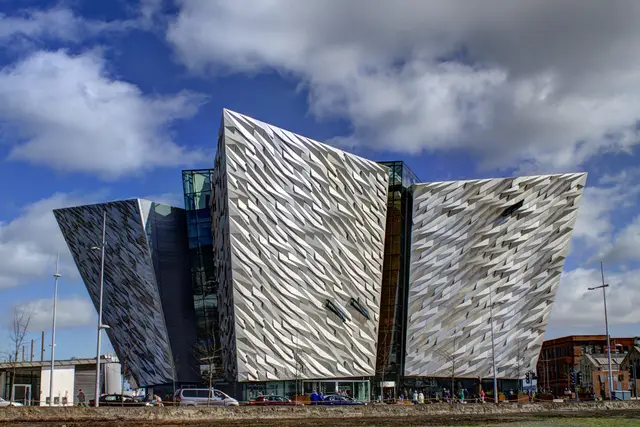
Walk along the quay and the building shows you a jagged edge. Zaha Hadid designed it, and it opened in 2011 as the new home for Glasgow’s transport collection. The zinc-clad roof zigzags in a series of peaks. From the side, it looks like a sawtooth or a folded sheet of metal.
Inside there are no columns. The hall runs as a single long tunnel from the city-facing end to a glass wall facing the Clyde, and the roofline curves overhead the whole way. In 2013 it was named European Museum of the Year. Even visitors with no interest in trams tend to stop and look up.
What fills the hall
The editorial shorthand is historic vehicles plus interactive displays, and that is accurate. What makes it work is the density. Objects are stacked up the walls, hung from the ceiling and parked in rows, so each turn gives you something new.
Look out for:
- The car wall, with vehicles shelved several storeys high like models in a display case
- Glasgow trams and a steam locomotive, which you can climb into or stand right beside
- The bicycle track, a banked loop with bikes mounted up near the ceiling
- The recreated streets, cobbled lanes lined with period shopfronts, a subway station and interiors you can walk through
- Old Glasgow Subway carriages, a draw for anyone who has just ridden the modern system
Touchscreens and short films sit among the objects, not in a separate gallery. Children tend to head straight for the streets.
The ship at the back door
Go through the glass wall at the river end and the Tall Ship Glenlee is moored right outside. She is a steel-hulled sailing ship built on the Clyde in 1896. You can go aboard and explore the decks, the hold and the crew quarters. Check the museum or ship website for the ship’s own opening times, since they are run separately.
The quayside between the museum and the ship is a good spot for photos. You get the zinc roof behind you and cranes along the far bank of the Clyde.
Getting to Pointhouse Road
The address is 100 Pointhouse Rd, G3 8RS, on the north bank of the Clyde. The nearest station is Partick, which is on both the Glasgow Subway loop and the suburban rail lines. From there it’s a 10 to 15 minute walk south towards the river.
A few other ways to get there:
- Walking from the centre: follow the Clyde Walkway west past the SEC and the OVO Hydro. It’s flat all the way.
- From Kelvingrove: Kelvingrove Art Gallery and Museum is about a 20 minute walk north. Doing both in a day works well.
- By bus: several city-centre routes run out to the quay. Check the current operator timetable before you go.
Working the galleries on a weekend
The timing is the main thing to get right. Weekdays stay quiet for the whole of opening, from 10am to 5pm. On Fridays the doors open at 11am, not 10. Weekends are busiest from 11am to 5pm, and the car wall and the recreated streets are where the crowds build up.
If a weekend is your only option, make it Saturday and be at the door for 10am. That gives you one clear hour before the rush. Sunday opens at 11am, which means it’s busy from the moment you walk in.
Some habits that help:
- Start at the river end and work back towards the entrance. Most people move the other way.
- Leave the ship until late afternoon. By then families are heading home.
- Use the donation boxes. General admission to Glasgow’s civic museums is free, and many regular visitors drop a donation on the way out.
- Bring a bag you can fold down. Space gets tight in the recreated street interiors.
Doors close at 5pm every day. Staff start moving people towards the exit a little before that, so don’t plan to arrive after about 3:30pm.
How long to give it
Two hours covers the main hall at a comfortable pace. Add another 45 minutes or so if you board the Glenlee. If you’re with children who find the interactive screens and the streets, three hours can go quickly.
Pair it with a walk along the Clyde, or with Kelvingrove for a full day in the West End. The two buildings make a strong contrast. Kelvingrove is red sandstone from 1901, and Riverside is folded metal from a century later.
Frequently asked questions
When is the quietest time to visit Riverside Museum?
Weekdays are quietest for the whole of opening, from 10am to 5pm. Note that Friday opens at 11am. Weekends are busiest from 11am to 5pm, so on a Saturday get there for the 10am opening.
What are the opening hours?
It's open 10am to 5pm Monday to Thursday and on Saturday, and 11am to 5pm on Friday and Sunday.
How do I get to Riverside Museum by public transport?
Take the Glasgow Subway or a suburban train to Partick. From there it's a 10 to 15 minute walk south to 100 Pointhouse Rd on the Clyde. You can also walk the Clyde Walkway west from the city centre.
How long should I spend there?
Allow about two hours for the main hall. Add around 45 minutes if you board the Tall Ship Glenlee moored outside, and more if you have children with you.
What else is nearby?
The Tall Ship Glenlee is at the back door. Kelvingrove Art Gallery and Museum is about 20 minutes' walk north, and the SEC and OVO Hydro are along the riverside towards the centre.
Plan your trip to Glasgow
Some links above are affiliate links — if you book through them, Wander Atlas earns a small commission at no extra cost to you. It's how we keep every guide free.