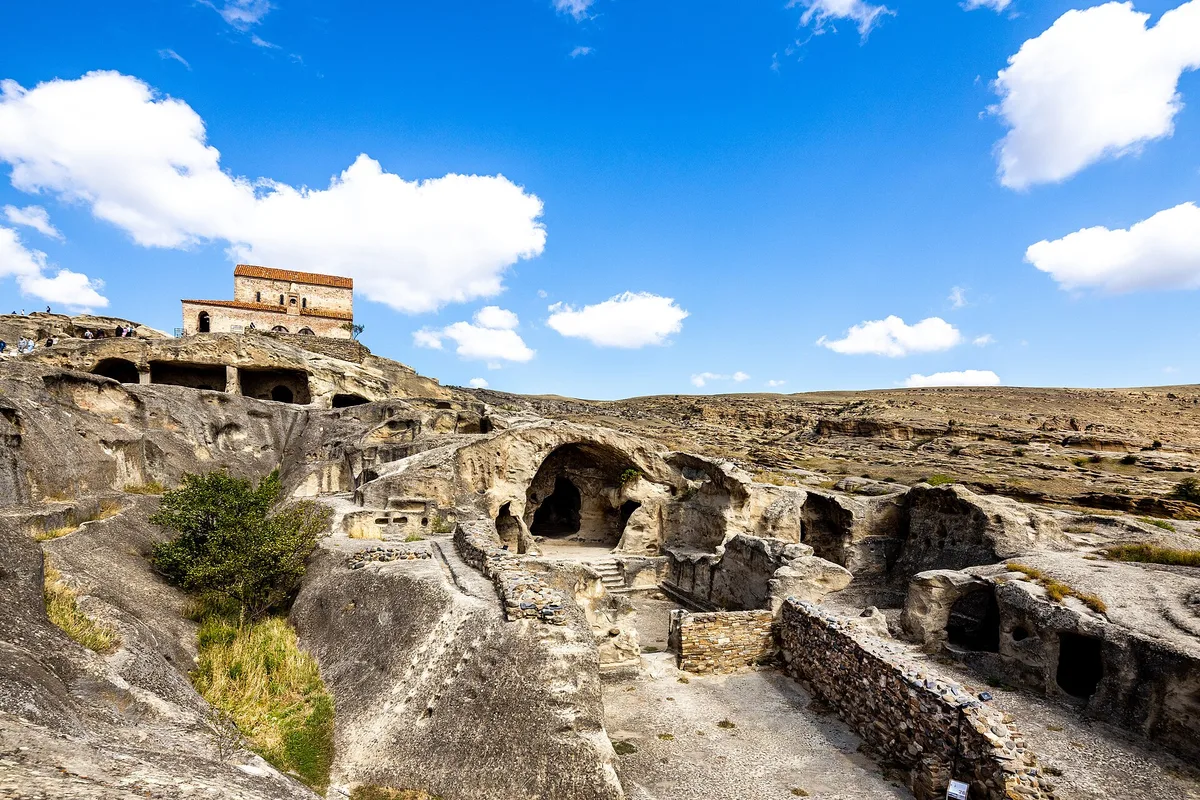
A town carved out of the cliff
The whole town is cut from one sandstone ridge. You walk up a slope of pale, wind-scoured rock, and the “buildings” are hollows chiselled straight into it: doorways, benches, niches, steps, all from the same stone you’re standing on.
People lived and worshipped here from the early Iron Age, and the site was in use for well over two thousand years. Before Christianity reached Georgia in the 4th century, Uplistsikhe was a major pagan religious centre. The name translates roughly as “fortress of the lord”.
Below you the Mtkvari River (the Kura) loops through a flat green valley. Above you there is mostly sky. The Shida Kartli plain spreads out in every direction, which explains why anyone chose to build here: the ridge sees everything coming.
Getting out from Gori and Tbilisi
The site is on the left bank of the Mtkvari, outside the village of Kvakhvreli. The access road is signed Uplistsikhe Complex Road. Public transport doesn’t go the whole way, so most visitors use one of these options:
- From Tbilisi: a marshrutka (shared minibus) to Gori from Didube bus station, then a taxi from Gori for the last stretch.
- From Gori: a taxi straight there. Agree a return or a waiting time with the driver, because cabs don’t hang around the car park.
- Day tour: many Tbilisi tours bundle Uplistsikhe with Gori and sometimes Mtskheta.
- Self-drive: about an hour or a little more from Tbilisi along the main east–west highway. There’s parking near the entrance.
What you’re actually walking through
Start at the visitor centre near the entrance. Then climb the main path, a worn street that winds up through the old town. Signboards along the way name the chambers, and the most striking ones are near the middle of the climb.
- The Hall of Queen Tamar: a large chamber with columns and an arch cut from the rock. It’s named after Georgia’s medieval queen, although the hall itself is much older than her reign.
- The theatre hall: a room with a carved coffered ceiling that imitates timber beams, built entirely in stone.
- Wine cellars: pits and storage hollows that show how central wine already was here.
- Pagan temple halls: the larger ritual spaces from the pre-Christian centuries, with altars and niches.
At the summit stands the Uplistsuli church, often called the Prince’s Church. It’s a small brick-and-stone basilica from around the 9th–10th century. That’s where the Christian era sits, right on top of the pagan one.

The tunnel to the river
Most guides skip the best exit. A long rock-cut passage drops from the town down towards the Mtkvari. It was the escape route and the water supply: in a siege, people could reach the river without being seen from the plain.
You can walk it. The passage is narrow, steep and dim in places, and the floor is uneven stone. Coming down this way gives you a completely different view of the ridge. You walk out at the bottom of the cliff you were just standing on, so you see its full height above you.
Reading the rock: when it was abandoned
Uplistsikhe’s decline came in stages. Once Christianity took hold, Mtskheta and later Tbilisi took over its role, and the town lost its religious importance. It came back as a trading stop on routes across the Caucasus. Then Mongol invasions in the 13th century wrecked it, and it never recovered.
Earthquakes and centuries of wind have done the rest. That’s why so many rooms have lost their front walls, and why the roofs look open to the sky. The ruin you see today is what was left after the town was abandoned, not what it looked like when people lived there.
Timing your climb on the ridge
The site is popular and well-visited, so beating the crowds is the main tactic. Day tours from Tbilisi need over an hour just to drive out. That means arriving at the 10am opening usually puts you on the summit before the vans pull in. Late afternoon has the same advantage, and the low sun brings out the rock’s colour.
- Footwear: the sandstone is polished smooth by centuries of feet and gets slippery when wet. Wear shoes with real grip.
- Shade: there’s almost none. Bring water and a hat in summer, and expect the rock to throw the heat back at you.
- Wind: it blows hard across the exposed top in any season. Bring a layer.
- Church etiquette: the Prince’s Church is a Christian building. Cover your shoulders, and women may want a headscarf if they go inside.
- Payment: pay at the ticket office by the entrance, where the current price is posted. Carry some Georgian lari in cash for the taxi back.
Try to stay on the marked routes. Some chamber edges drop off with no railing, and the cliff fall towards the river is real.
Pairing it with Gori
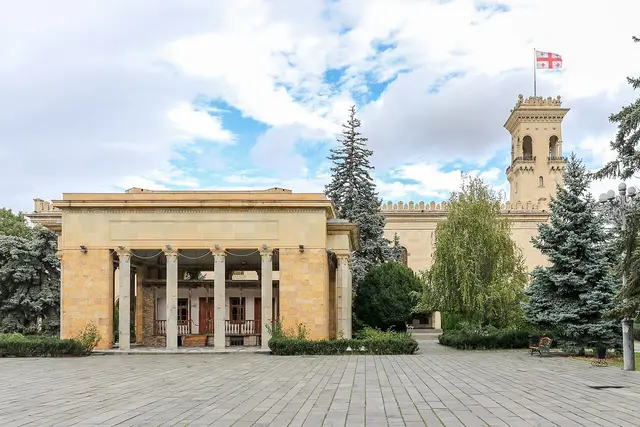
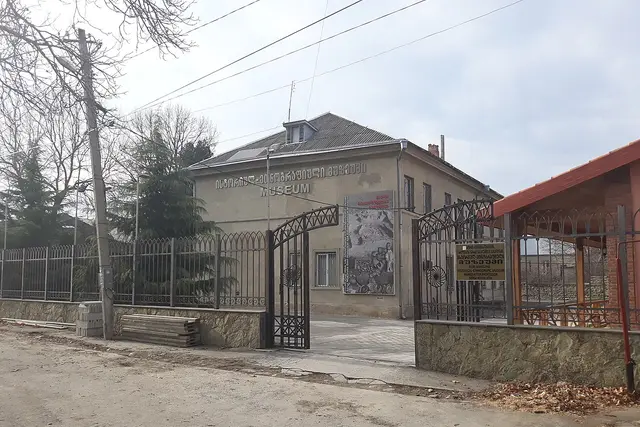
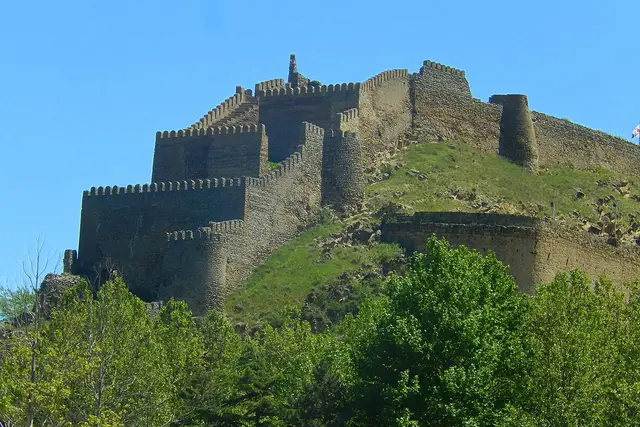
Most people combine the cave town with Gori itself. The Stalin Museum is in the town centre, in the dictator’s birthplace, and Gori Fortress sits on the hill above the centre. Both are a short taxi ride back from Uplistsikhe, which makes for a full, easy day.
If you’re coming from Tbilisi with a driver, Mtskheta’s Svetitskhoveli Cathedral and Jvari Monastery are on the way. Going from a pagan rock temple to the early heart of Georgian Christianity in one afternoon shows you the same history Uplistsikhe records in its own layers.
Frequently asked questions
How do I get to Uplistsikhe from Gori?
Take a taxi from Gori. The site is roughly 10–15 km east, near the village of Kvakhvreli. Arrange a waiting time or return trip with the driver, because taxis don't wait at the site.
Can I visit Uplistsikhe as a day trip from Tbilisi?
Yes. Take a marshrutka from Didube bus station to Gori, then a taxi. You can also drive about an hour or more, or join a tour that combines Uplistsikhe with Gori and Mtskheta.
How long should I spend at Uplistsikhe?
Allow 1.5–2 hours to climb the main path, see Queen Tamar's Hall and the Prince's Church, and walk down the tunnel to the river. Add more time for the visitor centre.
What are the opening hours?
At the moment it opens 10am–7pm every day. Hours change through the year and on some holidays, so check the official site for this month's times.
When is the best time to visit?
Arrive right at the 10am opening or come in late afternoon. Both usually miss the Tbilisi tour groups. Avoid wet days if you can, because the polished sandstone gets slippery.
Plan your trip to Gori
Georgia eSIM & staying connected →
Some links above are affiliate links — if you book through them, Wander Atlas earns a small commission at no extra cost to you. It's how we keep every guide free.