Cheomseongdae Observatory: Gyeongju Travel Guide (4.5★)
When to visit South Korea: month-by-month weather, crowds and holidays →
✓ Facts verified via Google Places · Sep 21, 2026
At a glance
Opening hours
- Monday: 9:00 AM – 10:00 PM
- Tuesday: 9:00 AM – 10:00 PM
- Wednesday: 9:00 AM – 10:00 PM
- Thursday: 9:00 AM – 10:00 PM
- Friday: 9:00 AM – 10:00 PM
- Saturday: 9:00 AM – 10:00 PM
- Sunday: 9:00 AM – 10:00 PM
Live foot-traffic data via BestTime.app
How this guide is made
Produced with AI assistance and reviewed against live data sources. Facts such as hours, ratings, and location come from Google Places; images are licensed or public domain. Details can change — please verify before visiting. Editorial policy
What you’re actually looking at
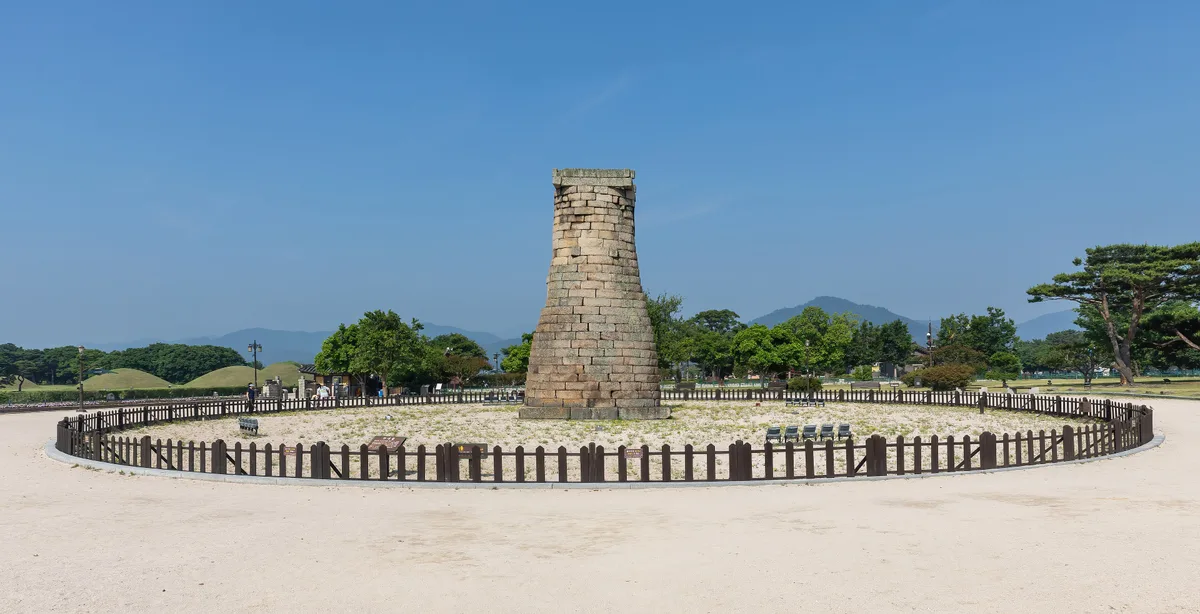
Cheomseongdae is a stone tower a little over nine meters tall, built from 362 stones stacked into a bottle shape that narrows toward a square opening near the top. That stone count isn’t decorative: it matches the days in a lunar year, and the structure is arranged in 27 rows, said to mark the fact that Queen Seondeok, under whose reign it was built in the 7th century, was the 27th ruler of Silla.
It’s one of the oldest surviving astronomical structures in East Asia. There’s no staircase you can climb and no interior to enter; you view it from the surrounding lawn, walking a full loop to see how the base squares off before the cylinder rises.
Why it looks smaller than the photos suggest
Most photos crop out how open the site is, which makes the tower look monumental. In person it’s modest, roughly the height of a three-story building, set in the middle of a wide grassy field with no other structures crowding it.
The scale is part of the point: this was a working instrument, not a monument built to impress from a distance. Give it ten to fifteen minutes unless you’re combining it with the wider park, which most visitors do.
Getting there and timing your visit
Cheomseongdae sits at 839-1 Inwang-dong, an easy walk from central Gyeongju and from the burial mounds of Tumuli Park. It’s open daily from 9am to 10pm, which means it’s one of the few historic sites in the city you can visit after dark.
- Weekday mornings, 9am to noon, are the quietest stretch
- On weekends, arrive right at 9am; the calm window closes fast, lasting only until about 10am
- Avoid weekend afternoons from 1pm onward, when it’s busiest
- Evening visits after the dinner crowd thins out give you the tower lit against a dark sky, a genuinely different experience from the daytime version

Seeing it after dark without the crush
The floodlit night view is Cheomseongdae’s signature experience and a reason to build it into an evening walk rather than a rushed daytime stop. The stone glows pale gold against the sky, and the surrounding field, unlit itself, makes the tower the only bright thing in view.
Because it’s open until 10pm daily, you can pair it with dinner in town and still make it here before closing. Weekend evenings still draw crowds for the same reason, so a weekday night visit gets you closer to having the field to yourself.
Combining it with the rest of Wolseong
Cheomseongdae is rarely visited alone. It sits within walking distance of Gyeongju’s other major Silla-era sites, making it a natural midpoint on a longer walk rather than a destination requiring its own trip.
- Tumuli Park (Daereungwon), with its grass-covered royal tombs, is a short walk away
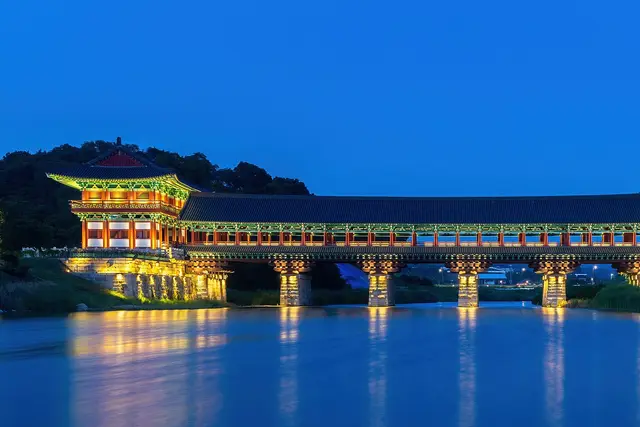
- Donggung Palace and Wolji Pond, especially striking lit up at night, sit further along the same corridor
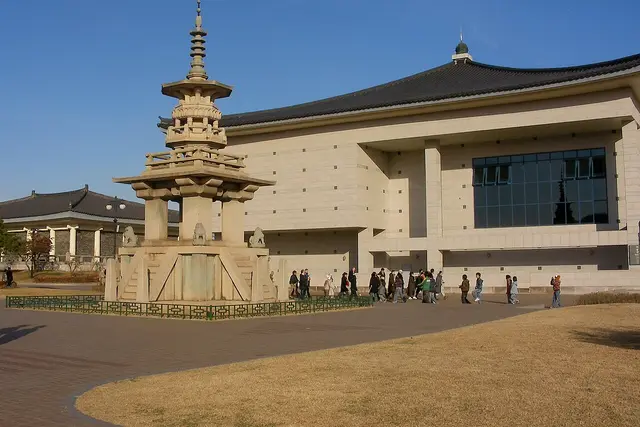
- Gyeongju National Museum is within reasonable walking or a short ride
Most visitors string these together into a single afternoon-into-evening loop, ending at the pond after dark.
Reading the site without a guide
There’s no ticket booth at the tower itself and no barrier stopping you from getting close to the base, so people tend to walk the full circumference rather than viewing it from one angle and moving on. Information panels near the site explain the stone counts and rows in English and Korean, worth reading before you loop around so you know what you’re looking at.
Given how popular the site is, the practical local move is timing rather than seeking out a secret entrance: come at opening, or come at night, and skip the one to two hours after weekend lunch when tour groups and day-trippers converge. Locals treat this less as a lingering destination and more as a ten-minute stop woven into a longer walk through the old Silla core, so don’t feel obligated to spend more time here than the site itself warrants.
Frequently asked questions
Where exactly is Cheomseongdae Observatory located?
It's at 839-1 Inwang-dong in Gyeongju, in the open parkland between Tumuli Park and Donggung Palace / Wolji Pond, easily reached on foot from central Gyeongju.
What is the quietest time to visit?
Weekday mornings between 9am and noon are calmest. On weekends the quiet window is shorter, lasting only from 9am to about 10am before crowds build.
How long should I plan to spend here?
Most people spend ten to fifteen minutes at the tower itself, since it's viewed from the outside only, then continue on to nearby sites like Tumuli Park.
Can you go inside the observatory?
No. Cheomseongdae has no public interior access; visitors walk the surrounding lawn and view the stone structure from ground level.
What else should I see nearby?
Tumuli Park's royal burial mounds, Donggung Palace and Wolji Pond (especially at night), and Gyeongju National Museum are all within easy walking or short-ride distance.
Plan your trip to Gyeongju
Some links above are affiliate links — if you book through them, Wander Atlas earns a small commission at no extra cost to you. It's how we keep every guide free.