Yangdong Folk Village: Gyeongju Travel Guide (4.1★)
When to visit South Korea: month-by-month weather, crowds and holidays →
✓ Facts verified via Google Places · Sep 3, 2026
At a glance
Opening hours
- Monday: 9:00 AM – 5:00 PM
- Tuesday: 9:00 AM – 5:00 PM
- Wednesday: 9:00 AM – 5:00 PM
- Thursday: 9:00 AM – 5:00 PM
- Friday: 9:00 AM – 5:00 PM
- Saturday: 9:00 AM – 5:00 PM
- Sunday: 9:00 AM – 5:00 PM
How this guide is made
Produced with AI assistance and reviewed against live data sources. Facts such as hours, ratings, and location come from Google Places; images are licensed or public domain. Details can change — please verify before visiting. Editorial policy
Why Yangdong is worth the detour
Most visitors to Gyeongju stop at Bulguksa and the tumuli park and call it a day. Yangdong Folk Village sits further out, and that’s exactly why it rewards the trip.
This isn’t a reconstruction. Families from the Yeogang Yi and Wolseong Son clans have lived here for roughly 500 years, and many still do. UNESCO listed it as a World Heritage Site in 2010, alongside the similar village of Hahoe.
You’re walking through someone’s actual neighborhood, not a museum set. Laundry lines and vegetable patches sit beside 16th-century wooden gates.
Getting there
Yangdong sits in Gangdong-myeon, about 16km northeast of central Gyeongju. There’s no direct subway, Gyeongju itself has no metro line, so most visitors come by bus or taxi from the city center or the KTX station at Singyeongju.
Local buses run from Gyeongju’s intercity bus terminal, though schedules are infrequent and worth checking the day before. A taxi from central Gyeongju takes about 25-30 minutes and is the easiest option if you’re short on time or traveling with family.
Some visitors combine it with Oksan Seowon, a Confucian academy a short drive away, making a half-day loop out of the two sites.

What you’ll actually see
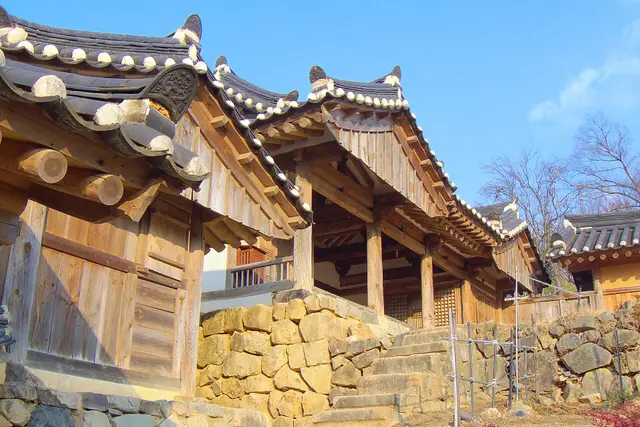
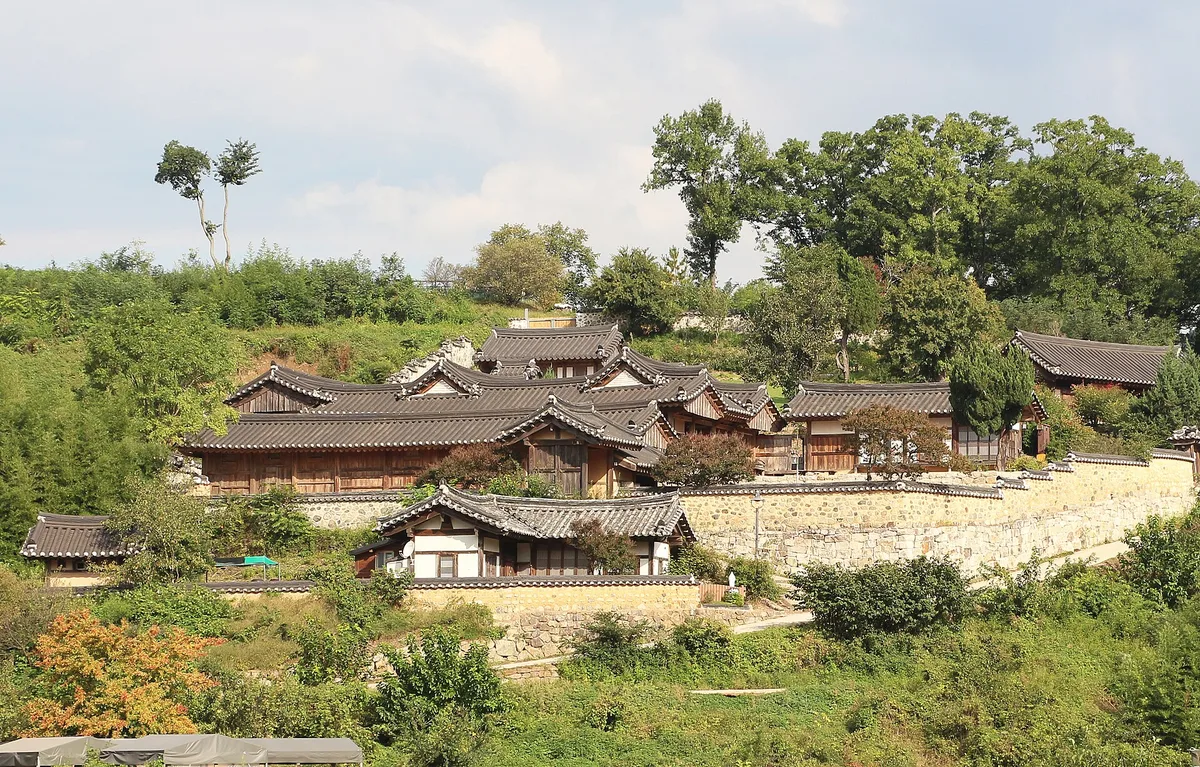
The village climbs a low ridge shaped like the Chinese character for “mountain” or “hill,” depending on which slope you’re facing. That layout puts grand tile-roofed hanok belonging to yangban (aristocratic) families up top, with thatched-roof homes of servants and tenant farmers lower down.
Key structures to look for:
- Gwangajeong, a pavilion-style house with a commanding hillside view, one of the village’s oldest and most photographed buildings
- Hyangdan, a well-preserved tile-roofed residence with distinctive wooden latticework
- Seobaekdang, the birthplace of a famous Joseon-era Confucian scholar, Yi Eon-jeok
- Numerous thatched huts, still thatched by hand, still lived in
Paths are unpaved dirt and gravel, sloped in places, so wear shoes you don’t mind getting dusty. There’s no single “main street”, you wander a network of lanes between compounds, most of which are private homes you view from outside rather than enter.
When to go
The village keeps regular daytime visiting hours; it’s worth checking current opening times before you set out. Spring (April–May) and autumn (October–November) are the most comfortable seasons, with mild temperatures and good light for the thatched roofs and rice paddies below.
Summer brings heat and humidity with little shade on the open ridge paths. Winter is quiet and stark, thatch and bare persimmon trees against grey hills, but some interiors and paths are less appealing in the cold.
Arrive by mid-morning if you want the place at its calmest, since tour groups tend to build through early afternoon.
How to visit like a local
Come on a weekday morning rather than a weekend. This is a well-known stop on the Gyeongju circuit, and weekend afternoons bring the heaviest bus traffic. Weekday mornings, right after opening, are noticeably quieter.
A few practical notes:
- Admission is a modest, separate small fee at the entrance gate. Bring cash, as card acceptance at rural ticket booths can be inconsistent.
- A shuttle cart sometimes runs from the entrance up to the main viewpoints; ask at the visitor center if walking the full loop isn’t for you.
- Remember residents actually live here, stay on marked paths, don’t peer into open doorways, and keep voices down near homes.
- The village name, 양동마을 (Yangdong-maeul), is worth knowing if you’re asking bus drivers or taxi dispatchers for directions.
- Pair your visit with the small folk village exhibit hall near the entrance, which gives context on the clan lineages before you start walking, it makes the houses easier to place in their history once you’re on the paths.
Give yourself at least two hours, three if you want to walk the full ridge and stop at Oksan Seowon afterward.
Frequently asked questions
How do I get to Yangdong Folk Village without a car?
Take a local bus from Gyeongju's intercity bus terminal (check schedules the day before, as service is infrequent) or a taxi, which takes about 25-30 minutes from central Gyeongju.
How long should I spend at Yangdong?
Plan for 2-3 hours to walk the main ridge paths and see the key houses like Gwangajeong and Hyangdan. Add extra time if you're pairing it with nearby Oksan Seowon.
What are the opening hours?
The village is open daily from 9am to 5pm, year-round. Aim to arrive by mid-morning to avoid the heavier afternoon tour bus crowds.
Is Yangdong Folk Village free to enter?
No, there's a small entrance fee at the gate. Bring cash, since card payment isn't always reliable at the rural ticket booth.
Can you go inside the houses?
Most buildings are private residences still lived in by local families, so you generally view them from the outside rather than entering. A few structures near the entrance may be open for closer viewing.
Plan your trip to Gyeongju
Some links above are affiliate links — if you book through them, Wander Atlas earns a small commission at no extra cost to you. It's how we keep every guide free.