Gyeongju National Museum: Travel Guide (4.6★)
When to visit South Korea: month-by-month weather, crowds and holidays →
✓ Facts verified via Google Places · Sep 3, 2026
At a glance
Opening hours
- Monday: 10:00 AM – 6:00 PM
- Tuesday: 10:00 AM – 6:00 PM
- Wednesday: 10:00 AM – 6:00 PM
- Thursday: 10:00 AM – 6:00 PM
- Friday: 10:00 AM – 6:00 PM
- Saturday: 10:00 AM – 8:00 PM
- Sunday: 10:00 AM – 6:00 PM
Live foot-traffic data via BestTime.app
How this guide is made
Produced with AI assistance and reviewed against live data sources. Facts such as hours, ratings, and location come from Google Places; images are licensed or public domain. Details can change — please verify before visiting. Editorial policy
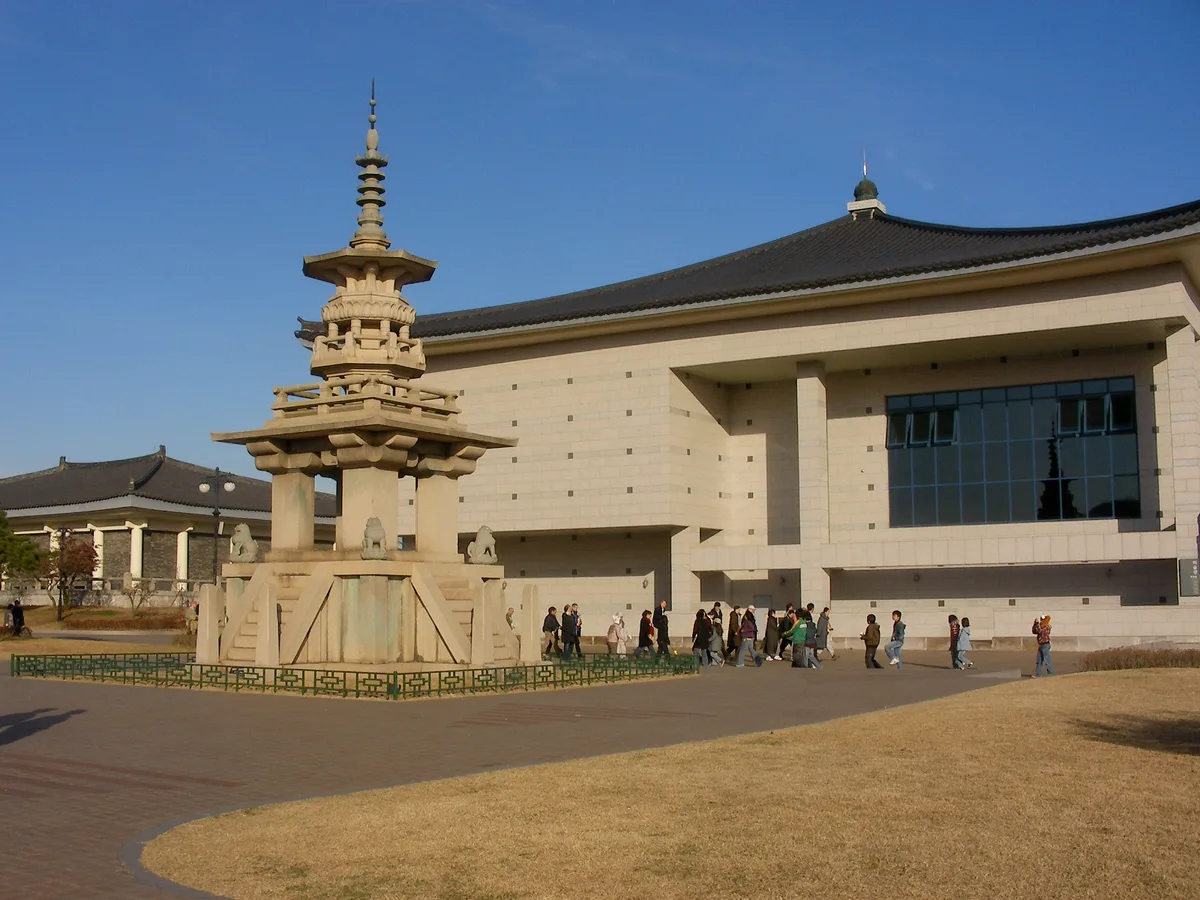
You come up the long approach road off Iljeong-ro and the first thing that registers is how much space the museum gives itself, lawns, pine trees, a reflecting pond, and low stone-and-glass pavilions arranged so no single building dominates. That restraint is deliberate. Everything here exists to point back to Silla, the kingdom that ruled from Gyeongju for close to a thousand years, and the museum treats its objects like the relics of a still-living capital rather than dusty curiosities in glass boxes.
Why go
Gyeongju itself is often called a museum without walls, dotted with royal tombs and temple ruins, but the National Museum is where the loose ends get tied together. It holds the gold crowns, girdles, and earrings pulled from the nearby tumuli, the enormous Bell of King Seongdeok, one of the largest bronze bells in East Asia, and room after room of Buddhist sculpture, roof tiles, and Silla pottery.
Walking the halls in order gives you a chronology that the tomb parks and temple sites alone can’t: you see where the gold jewelry you’re about to spot at Daereungwon actually came from, and why Bulguksa’s stonework looks the way it does.
Getting there
The museum sits an easy walk or short bus ride from the Daereungwon tomb complex and Cheomseongdae observatory, in the historic core of Gyeongju rather than out near the modern bus terminals. Most visitors base themselves in the Hwangnam-dong guesthouse area and either walk the twenty-odd minutes past the tomb park or hop one of the local city buses that loop through the heritage district. Ask your accommodation which number currently stops closest, since Gyeongju’s bus routes get renumbered more often than you’d expect.
There’s no KTX or subway station in old Gyeongju itself; travelers arrive via Gyeongju or Singyeongju train stations and then bus or taxi in.

What to see and how much time to give it
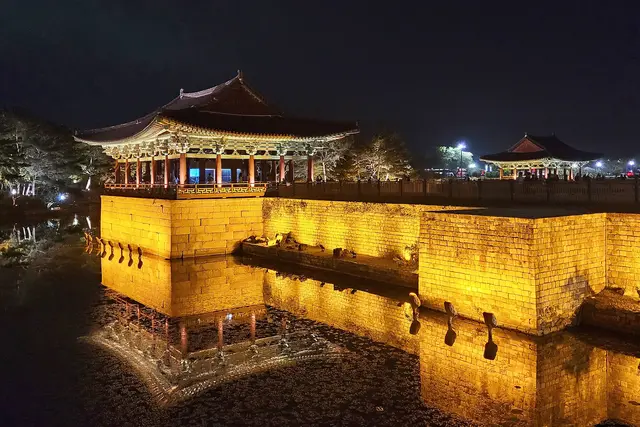
Budget two to three hours minimum. The Silla History Gallery is the spine of the collection, start there for context before the crowns and jewelry make sense, then move to the Wolji (Anapji) Gallery, which pulls artifacts straight from the pond ruins behind Donggung Palace, and the outdoor lapidary yard, where stone pagodas, lanterns, and Buddha figures sit in the open air under the pines.
Save time for the bell pavilion: the Bell of King Seongdeok, sometimes called the Emille Bell, is cast with a legend about its own casting, and its surface carving rewards a slow walk around it rather than a glance. The building layout is spread across multiple wings connected by courtyards, so don’t rush the transitions, some of the best sightlines, especially toward the reflecting pond, are between galleries rather than inside them.
When to go
Late morning through mid-afternoon on weekends is when the museum feels busiest, school groups, tour buses, and day-trippers from Busan and Daegu tend to converge on Saturdays and Sundays. If a weekday is possible, it tends to run noticeably quieter and you can linger over the gold crowns without shuffling past someone’s shoulder. If a weekend is your only option, aim for after 6pm, when the galleries thin out considerably before closing.
Spring cherry blossoms and autumn foliage along the approach road make either season worth timing your trip around, but confirm current opening hours before you go, since museum schedules shift seasonally.
How to visit like a local
Treat the museum as a companion piece to the tomb parks rather than a standalone stop, locals and repeat visitors typically walk it as part of a loop with Daereungwon and Cheomseongdae, seeing the artifacts either right before or right after the sites they came from. Entry to the main exhibition halls has historically been free, though special exhibitions sometimes carry a separate fee, so check the day’s signage at the entrance rather than assuming.
There’s rarely a ticket queue to worry about, so the real trick is timing: come on a weekday if you can, or visit later in the day on weekends. Signage is bilingual throughout in Korean and English, and borrowing the audio guide or joining a scheduled docent tour (ask at the information desk) gets you far more out of the crown and bell galleries than reading labels alone.
Frequently asked questions
How much time should I budget for the museum?
Two to three hours covers the main indoor galleries and the outdoor lapidary yard at a comfortable pace; add more if you want to watch the docent tours or linger over the gold crown displays.
When is it quietest?
Weekdays from 10am to 7pm are consistently calmer. On weekends, avoid 11am–6pm when day-trippers and tour groups peak, and aim instead for after 6pm.
Is admission free?
The permanent collection has traditionally been free to enter, though special or touring exhibitions sometimes charge separately — check the entrance signage or official notices on the day.
How do I get there without a car?
Base yourself in the Hwangnam-dong area near Daereungwon tomb park; the museum is an easy walk from there, or a short local bus ride from Gyeongju or Singyeongju train stations.
What else is nearby to combine with a visit?
Daereungwon tomb complex, Cheomseongdae observatory, and Donggung Palace/Wolji pond are all within walking distance, making a natural half-day loop with the museum.
Plan your trip to Gyeongju
Some links above are affiliate links — if you book through them, Wander Atlas earns a small commission at no extra cost to you. It's how we keep every guide free.