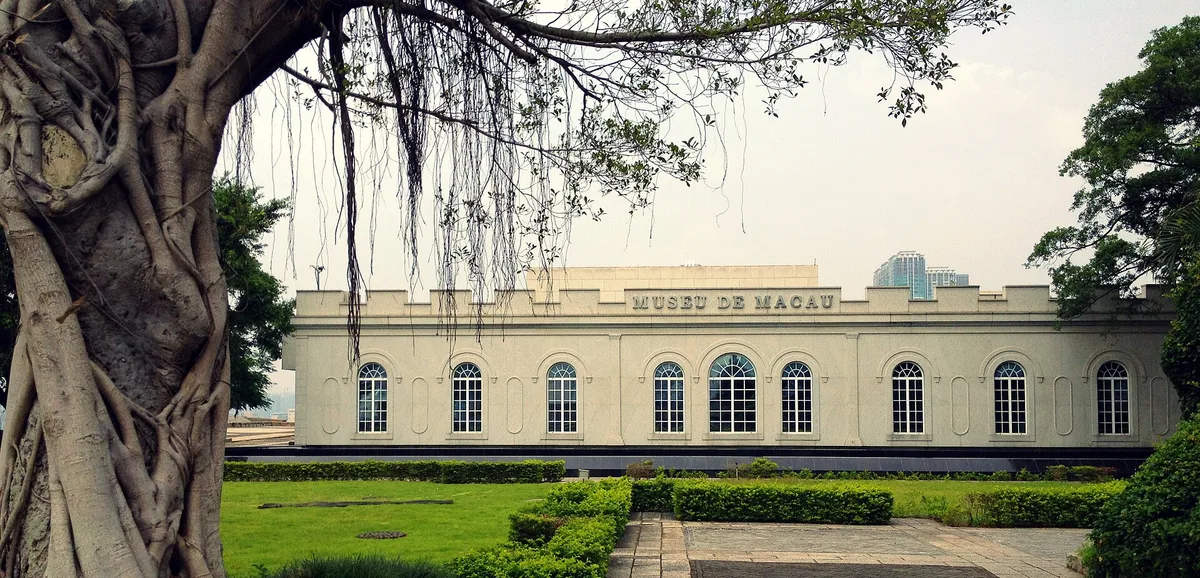
A museum built into a fortress
The Macao Museum is underground. Most of its galleries are cut into the hill beneath Mount Fortress, the Jesuit fort built in the early 1600s above what is now the Ruins of St. Paul’s. You go in at the foot of thick stone ramparts and walk down into cool, low-lit rooms that run back into the slope.
It opened in 1998, the year before Macau’s handover from Portugal to China. You can feel that timing in the exhibits. The whole museum is an attempt to explain what this place was before the handover, and what it might keep afterwards.
About that “Hac Sa” label
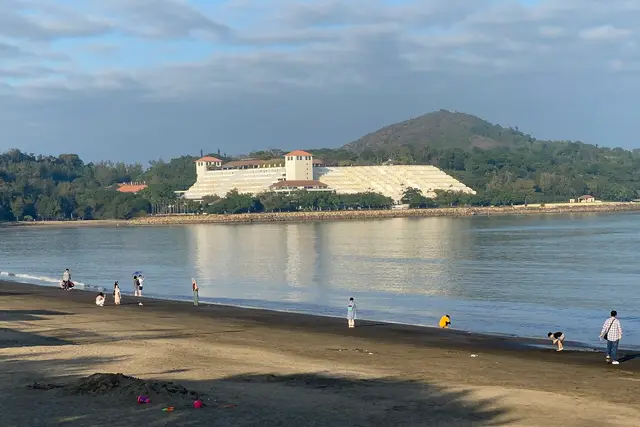
Some listings file the museum under Hac Sa. Don’t let that send you to the wrong island. Hac Sa is the black-sand beach on Coloane, at the southern end of Macau. The museum’s address, 112 Praceta do Museu de Macau, is in the old centre of the peninsula.
That address puts it inside the Historic Centre of Macao, the UNESCO World Heritage Site listed in 2005. The fortress itself is one of the listed monuments. So the museum gives you a reason to climb the hill most visitors only photograph from below.
Three floors, three versions of Macau
The galleries are stacked in three levels, and each one covers a different Macau. Taking them in order makes the visit hang together.
- First level: origins. Early Chinese settlement in the Pearl River Delta, then Portuguese traders arriving in the 16th century. Displays cover the meeting of the two cultures through trade, religion and a scholarly exchange that ran in both directions.
- Second level: popular arts and traditions. This is the floor people remember. It rebuilds the street life of old Macau: traditional trades, festivals, shopfronts and domestic interiors, with Chinese and Portuguese customs shown side by side.
- Top level: contemporary Macau. Architecture, urban growth and the city’s modern identity. It ends with you stepping back out into daylight on top of the fort.
The middle floor rewards slow walking. The re-created streets come close to scale, so you can stand at a counter or look into a shopfront and get a sense of how tight the old lanes were. The top-floor windows look out over the actual city that the models represent.
The cannons on the roof
When you leave the galleries you are inside Mount Fortress. Its walls form a rough square on the summit, and old cannons still point out across the peninsula. The fort is best known for helping turn back a Dutch attack on Macau in 1622, while it was still being built.
On the terraces you get one of the clearest views in the old city. Below you is the stone facade of St. Paul’s. Beyond it, the Grand Lisboa’s gold tower stands among the casino hotels, with low tiled rooftops packed in between. Leave time up here. For many visitors the view is as good as anything inside.
Getting up Mount Fortress
You have two ways up. From the Ruins of St. Paul’s, stairs and a path to the right of the facade climb to the fort’s gate. A set of outdoor escalators on the eastern side of the hill makes the climb easier if stairs are a problem.
From Senado Square, the walk to St. Paul’s along Rua de São Paulo and the lanes near it takes about ten minutes. The lanes are lined with almond cookie and jerky shops. Bus stops on Avenida de Almeida Ribeiro, beside Senado Square, are the usual drop-off. Taxis can drop you near the ruins, but not at the top of the hill.
Slipping past the St. Paul’s crowd
Most tour groups stop at the ruins, take their photos and turn back down the hill. The museum, a few minutes’ climb higher, gets a fraction of that traffic. That makes it one of the quieter cultural stops in the historic centre. Here is how to make the most of the gap:
- Go in the morning. Doors open at 10am. Arriving at opening usually puts you ahead of the midday rush on the steps below.
- Skip Mondays. The museum is closed all day Monday. It is open the same hours, 10am to 6pm, every other day, weekends included.
- Do the museum first, the ruins second. Afterwards, walk down past the facade instead of fighting your way up through it.
- Have the right money. Macau’s currency is the pataca, but Hong Kong dollars are widely accepted. Current ticket details are posted at the entrance counter and on the official museum website. Check there before you go and don’t rely on figures you’ve read elsewhere.
- Keep your voice down underground. The galleries are enclosed and sound carries, so people tend to talk quietly.
Leave by around 5pm if you want time on the terraces. A late arrival can leave you rushing the top floor.
Pairing it with a trip to Hac Sa
If Hac Sa brought you here, the two make a good day together. Spend the morning at the museum and the fort, then cross to Coloane in the afternoon. Buses run from the peninsula through Taipa down to Hac Sa beach. Check the route boards at the stop for current numbers.
The contrast is the point. The museum explains the trading port and its dense Sino-Portuguese streets. Hac Sa shows the quieter, greener side of Macau, with dark sand, pine trees and open water. Seeing both on the same day gives you a better feel for the territory than staying in the casino districts.
If you have more time on the peninsula, these are all within walking distance of the fort:
- St. Dominic’s Church, the yellow Baroque church on the way down to Senado Square.
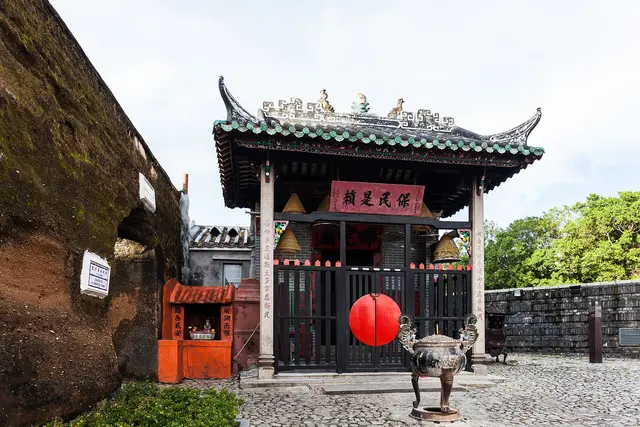
- Na Tcha Temple, the small Chinese temple pressed against the old city wall beside St. Paul’s.
- The Leal Senado Building, the old municipal chambers with a tiled courtyard, facing Senado Square.
Frequently asked questions
Is the Macao Museum actually at Hac Sa beach?
No. Some listings put it under Hac Sa, but it is at 112 Praceta do Museu de Macau, inside Mount Fortress on the Macau Peninsula, beside the Ruins of St. Paul's. Hac Sa beach is in Coloane, a bus ride south through Taipa.
When is the Macao Museum open?
Tuesday to Sunday, 10am to 6pm. It is closed all day Monday. Arriving at 10am usually puts you ahead of the midday crowds at St. Paul's below.
How long should I spend there?
Allow 1.5 to 2 hours for the three gallery levels. Add 20 to 30 minutes for the cannon terraces and views on top of Mount Fortress.
How do I get to the museum?
Walk from Senado Square to the Ruins of St. Paul's in about ten minutes, then climb the path to the fort's gate. Escalators on the eastern side of the hill make the climb easier. Buses on Avenida de Almeida Ribeiro stop near Senado Square.
What else is nearby?
The Ruins of St. Paul's and Na Tcha Temple are at the foot of the hill. St. Dominic's Church, Senado Square and the Leal Senado Building are a short walk downhill.
Plan your trip to Hac Sa
Macau eSIM & staying connected →
Some links above are affiliate links — if you book through them, Wander Atlas earns a small commission at no extra cost to you. It's how we keep every guide free.