Five lakes, one easy loop
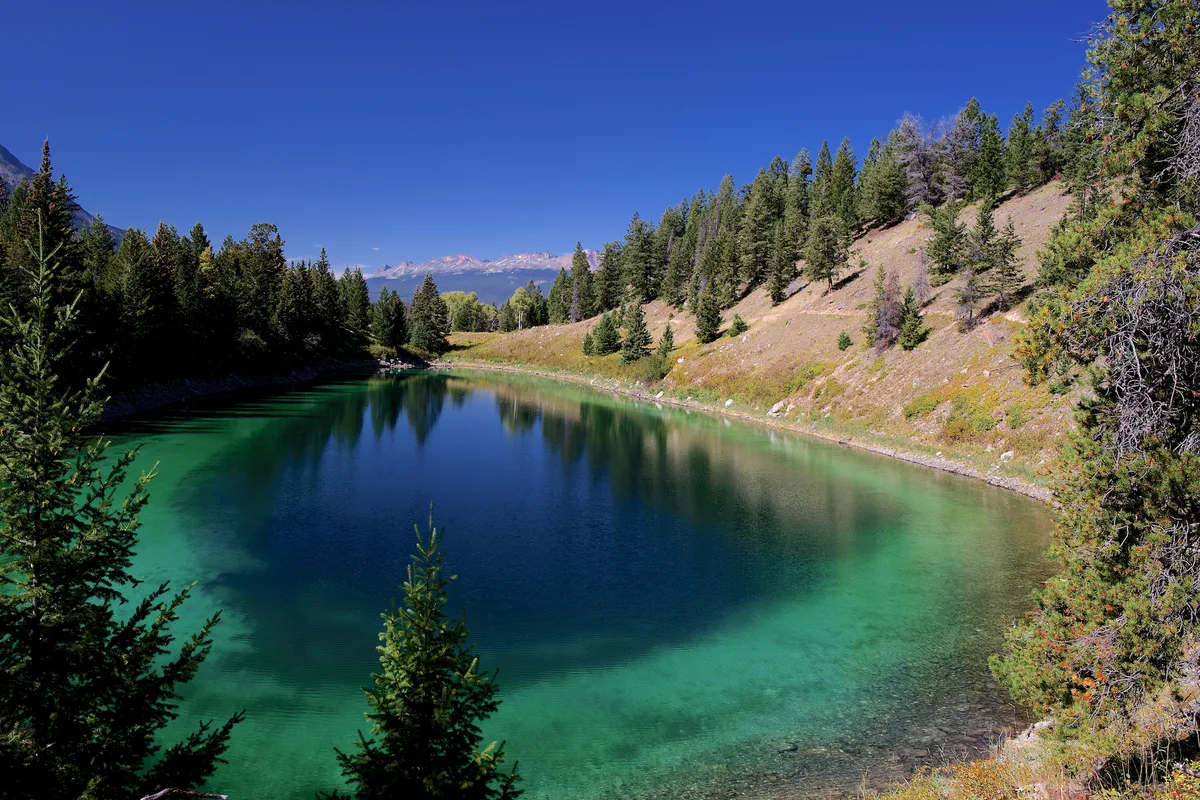
The colour is the reason you come. Valley of the Five Lakes is a chain of small, clear lakes in a forested hollow south of Jasper townsite. They are named in plain order: First Lake through Fifth Lake. Each one shows a different shade, from pale jade in the shallows to a deep blue where the water drops off.
The classic loop runs roughly 4.5 km with only modest climbing. That makes it one of the easiest ways in Jasper National Park to get real mountain-lake scenery without committing a whole day. It is a short hike that rewards you in proportion to how slowly you walk it.
It also stays relatively low-key. The big-name stops on the Icefields Parkway draw the tour coaches, and this trail sits a little apart from them. On most days it feels more like a neighbourhood walk than a headline attraction.
Finding the trailhead on Highway 93
The trailhead is a signed parking lot on the east side of the Icefields Parkway (Highway 93). It’s roughly a 10-minute drive south of Jasper townsite. There is no public transit to it, so plan on a car, a bike, or a shuttle or tour that stops there.
A few things to sort before you leave town:
- Park pass: you need valid Parks Canada admission to be inside Jasper National Park. Current fees are posted on the Parks Canada website and at the park gates.
- Trail status: the 2024 Jasper wildfire burned large areas of forest around the townsite. Check Parks Canada’s trail conditions page for closures or changes before you drive out.
- Fuel and food: buy both in Jasper. There’s nothing to buy at the trailhead.
Google currently lists the site as open 24 hours. That means the trail itself, though, not any staffed facility. Daylight and conditions decide when it’s sensible to go.
Reading the colours
The colours change as you walk. Leaving the parking lot, the path drops through lodgepole pine and crosses a boardwalk over the wetland along Wabasso Creek. Then it climbs gently onto a ridge above the lakes.
The lakes are fed from beneath, and that is where the colour comes from. Shallow edges over pale lake-bottom sediment glow green. Deeper centres go dark blue. The water is clear enough that you can often see logs lying on the bottom from the shore.
Light matters more than anything else here. With the sun higher in the sky, the greens get brighter and the contrasts between lakes are sharpest. In flat, overcast light the five tend to look more alike. If colour is the point of your visit, a bright day is worth waiting for.

How long to give it
Budget about two hours. Fast walkers can do the loop in an hour and a half. But the whole appeal is stopping at each shoreline, so most people take longer.
Rough planning guide:
- Loop only, few stops: 1.5 hours
- Loop with time at each lake: 2–2.5 hours
- Loop plus a picnic or a swim: half a day
The terrain is mostly packed dirt and roots with short rises between lakes. Sturdy trainers are fine in dry summer conditions. After rain the low sections get muddy, and in shoulder season they can stay icy well after town has thawed.
Bear country manners on the loop
Out here, the etiquette has more to do with wildlife than with people. This is bear habitat, and elk move through the valley too. Hikers in Jasper follow a fairly settled set of habits:
- Carry bear spray where you can reach it, on a hip belt or chest strap, not buried in a pack. It’s sold in outdoor shops in Jasper townsite.
- Make noise on blind corners. Talking normally as you walk is usually enough. Locals tend to find bear bells less useful than voices.
- Hike together. Parks Canada sometimes puts group-access restrictions on trails when bears are active. Trailhead signs will tell you.
- Keep dogs on a leash. That’s the rule throughout Canadian national parks, and it protects your dog as much as the wildlife.
- Give elk and bears plenty of room. Never approach for a photo. Parks Canada asks visitors to keep well back, and to stay in their vehicles at roadside sightings.
- Pack everything out, fruit peels included. Food left on shorelines teaches animals to seek out people.
On the trail itself, the usual courtesy is that hikers heading uphill get the right of way on narrow sections. People also step aside at viewpoints so others can take their turn at the shore.
When the valley is at its best
Summer is the main season, roughly June to September. The trail is snow-free and the lakes show their full colour. July and August bring the warmest days and the most hikers, and the lakes stay bracingly cold even then. Hardy swimmers do go in, but expect a short, sharp dip rather than a leisurely swim.
Early autumn is a strong alternative. The aspens on the slopes turn yellow against the green lakes, and the trail is usually quieter once school holidays end.
The parking lot is small. Going early in the morning or later in the afternoon usually beats the midday rush of people working their way down the Parkway. Evening also tends to bring wildlife out, so keep your bear spray handy as the light fades.
In winter the lakes freeze and the loop can be walked or snowshoed when conditions allow. Ice safety is never guaranteed, though. Check with the Jasper Visitor Centre before you step onto a frozen lake.
Pairing it with the rest of the Parkway
Since you’re already on Highway 93, it’s easy to build a half-day around the hike. Combine it with stops further south:
- Wabasso Lake: reachable on a longer trail connection from the same area, if you want more distance.
- Athabasca Falls: a short drive further south, where the Athabasca River forces its way through a narrow limestone gorge.
- Old Fort Point: back near town, a short, steep climb to views over the Athabasca valley and Jasper townsite.
- Lac Beauvert and Lake Annette: flat lakeside strolls on the east side of town, good for a slow evening.
An easy rhythm is to do the lakes first, while you’re freshest and the lot has space. Then drive south to Athabasca Falls and loop back into Jasper for dinner.
Frequently asked questions
Where is the Valley of the Five Lakes trailhead?
It's a signed parking lot on the east side of the Icefields Parkway (Highway 93), about a 10-minute drive south of Jasper townsite. You'll need your own transport, a bike, or a tour that stops there.
How long does the Valley of the Five Lakes hike take?
The classic loop is roughly 4.5 km with modest climbing. Most people take about two hours including stops at the lakes. Allow longer if you plan a picnic or a swim.
Do I need a pass to hike the Valley of the Five Lakes?
Yes. The trail is inside Jasper National Park, so you need valid Parks Canada admission. Current fees are posted on the Parks Canada website and at the park gates.
Is the trail open after the 2024 Jasper wildfire?
The 2024 wildfire burned large areas around Jasper and affected trails near town. Check Parks Canada's trail conditions page for the current status before you go.
What's the best time of year to see the lake colours?
June to September, ideally on a bright day. Sunlight brings out the green and blue shades, while overcast light flattens them. Early autumn adds yellow aspens and usually fewer hikers.
Plan your trip to Jasper
Canada eSIM & staying connected →
Some links above are affiliate links — if you book through them, Wander Atlas earns a small commission at no extra cost to you. It's how we keep every guide free.