Gyeonggijeon Shrine: Jeonju Travel Guide (4.3★)
When to visit South Korea: month-by-month weather, crowds and holidays →
✓ Facts verified via Google Places · Sep 5, 2026
At a glance
Opening hours
- Monday: 9:00 AM – 6:00 PM
- Tuesday: 9:00 AM – 6:00 PM
- Wednesday: 9:00 AM – 6:00 PM
- Thursday: 9:00 AM – 6:00 PM
- Friday: 9:00 AM – 6:00 PM
- Saturday: 9:00 AM – 6:00 PM
- Sunday: 9:00 AM – 6:00 PM
Live foot-traffic data via BestTime.app
How this guide is made
Produced with AI assistance and reviewed against live data sources. Facts such as hours, ratings, and location come from Google Places; images are licensed or public domain. Details can change — please verify before visiting. Editorial policy
Why Gyeonggijeon matters
You step through the outer gate and the noise of the hanok village drops away. Gravel crunches underfoot instead of pavement. Pine trees, some centuries old, lean over stone paths that lead toward a compound built in 1410 to house a single object: a portrait of King Taejo, founder of the Joseon Dynasty.
This isn’t a reconstructed stage set. The shrine has been rebuilt and repaired across six centuries, but its purpose never changed, a place to venerate a royal ancestor’s image.
What you’ll actually see
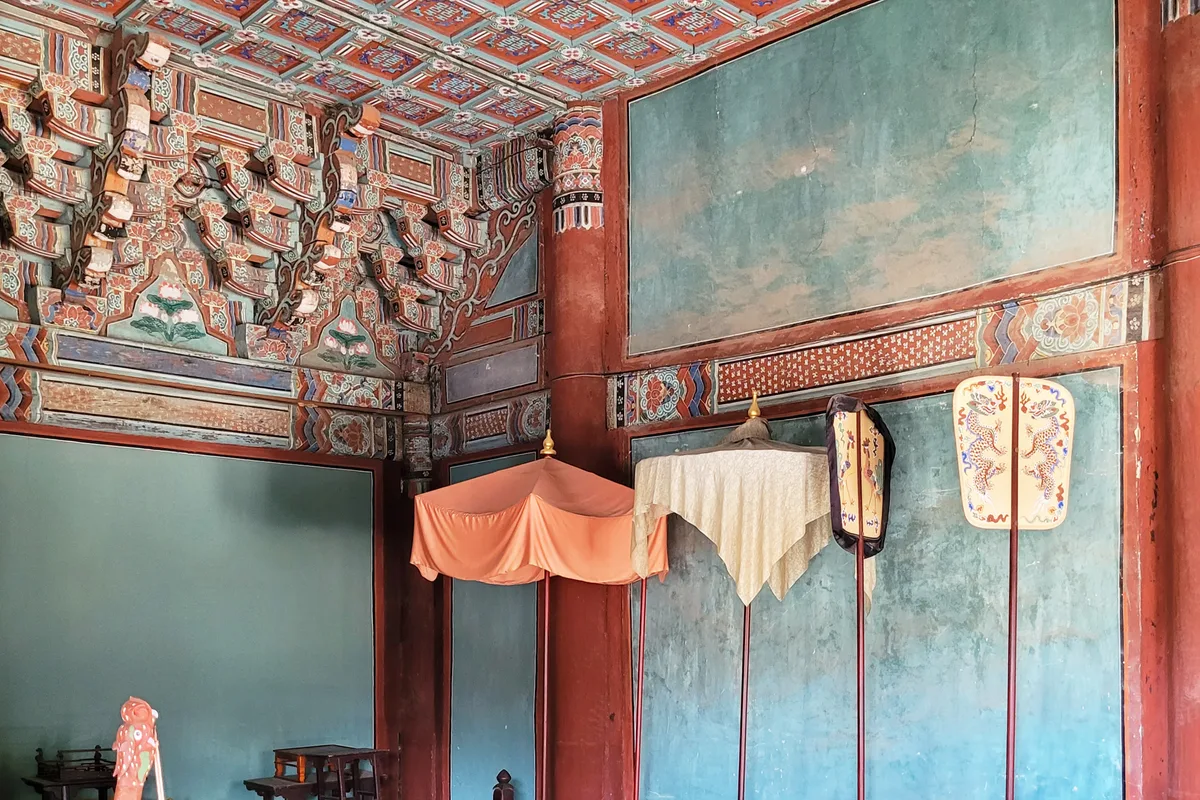
The main hall holds a replica of Taejo’s portrait, the original now kept in the National Museum of Korea for preservation. Red-and-white dancheong paintwork covers the eaves in geometric patterns.
Side buildings house rotating history exhibits explaining Joseon royal ritual and the shrine’s own restorations. Give yourself time to wander past the ancestral tablets hall and the quieter side courtyards, where the crowds thin out fast.
Don’t rush the grounds themselves:
- The bamboo grove behind the main hall, planted for wind and privacy
- Stone-walled inner courtyards connecting the halls
- Old pine trees with trunks bent from age, framing the main gate
Getting there
Gyeonggijeon sits at 44 Taejo-ro in Wansan-gu, right at the edge of Jeonju Hanok Village. Most visitors walk in from the village’s main pedestrian streets. It’s a five-minute stroll from the Jeonju Hanok Village entrance near Pungnammun Gate.
If you’re coming from Jeonju Station, a taxi ride takes about 15 minutes. City buses also run toward the hanok village area, though walking from most downtown guesthouses is just as fast.

When to go
The shrine is open every day, 9am to 6pm, with no weekday variation. Foot-traffic data shows weekdays stay calm right through those hours, a rare case where there’s no single bad hour to avoid.
Weekends are different. Crowds build steadily from 11am onward and stay heavy the rest of the day. If you’re visiting on a Saturday or Sunday, aim to arrive right at 9am, before the tour groups and hanbok-clad crowds arrive for photos.
Spring and autumn bring the best light for photos against the pine trees and tiled roofs. Summer is humid; winter is quiet but cold, with fewer blossoms or foliage in the courtyards.
How to visit like a local
Gyeonggijeon is well-known and draws heavy weekend traffic, so timing matters more than secrecy here. Locals and repeat visitors treat weekday mornings as the sweet spot, calm courtyards, easier photos, no waiting to get a clear shot of the main hall.
- Entry fee: small and paid in cash or card at the gate; confirm the current amount before you go, as it can change
- Hanbok wearers get in free at many similar sites in the village. Check signage at the ticket booth, since rules can shift
- Pace yourself: 45 minutes covers the highlights, but an hour lets you sit in the side courtyards without feeling rushed
- Avoid weekend afternoons, especially after 11am, when tour groups and hanbok rental crowds peak
- Combine it with nearby Jeondong Catholic Church and the Hanok Village’s food streets, both a short walk away
The biggest mistake visitors make is treating Gyeonggijeon as a five-minute photo stop before rushing back to the food stalls. The shrine rewards a slower pace, sit on the wooden platforms, read the exhibit placards, and notice how the roofline changes from building to building depending on its rank in the royal hierarchy.
Bring small bills for entry, wear shoes you can slip off if any hall requires it, and check official hours before visiting since holiday schedules occasionally shift the routine.
Frequently asked questions
How much time should I plan for Gyeonggijeon Shrine?
About 45 minutes to an hour is enough to see the main hall, portrait exhibit, and side courtyards without rushing.
When is the quietest time to visit?
Weekdays between 9am and 6pm stay calm throughout the day. Weekends get busy from 11am onward, so arrive right at opening if you're going on a Saturday or Sunday.
How do I get to Gyeonggijeon Shrine?
It's a five-minute walk from the main entrance of Jeonju Hanok Village, near Pungnammun Gate. From Jeonju Station, a taxi takes roughly 15 minutes.
Is Gyeonggijeon Shrine open every day?
Yes, it's open daily from 9:00 AM to 6:00 PM with no weekday closures, though it's worth confirming hours before a special-holiday visit.
What's nearby worth combining with a visit?
Jeondong Catholic Church and the hanok village's food and craft streets are both within walking distance, making it easy to build a half-day loop.
Plan your trip to Jeonju
Some links above are affiliate links — if you book through them, Wander Atlas earns a small commission at no extra cost to you. It's how we keep every guide free.