Why go
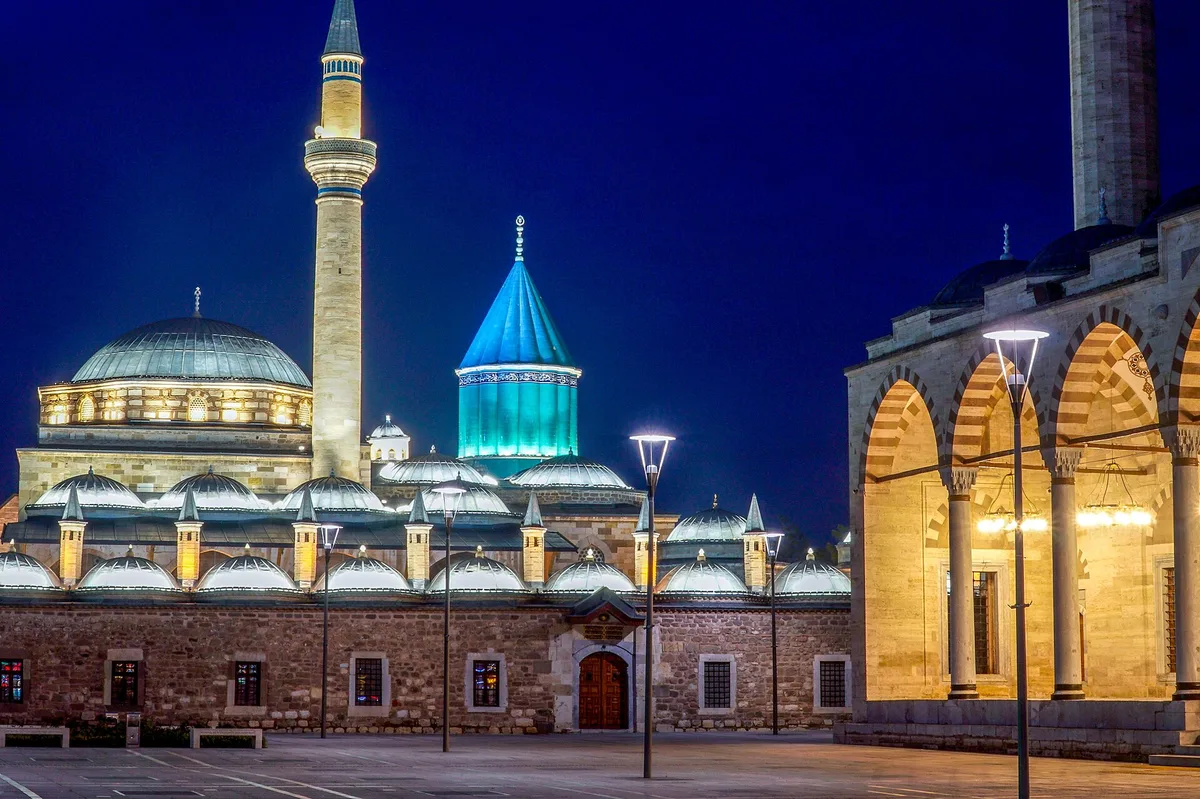
You come to Konya for one building, and this is it. The Mevlana Museum houses the tomb of Jalal ad-Din Muhammad Rumi, the 13th-century poet and mystic whose verses on love and divine union still shape Sufi thought worldwide.
The turquoise-tiled dome is visible from blocks away, a beacon over the low rooftops of Karatay district. Step inside and the noise of the street drops away almost instantly.
What you’ll see
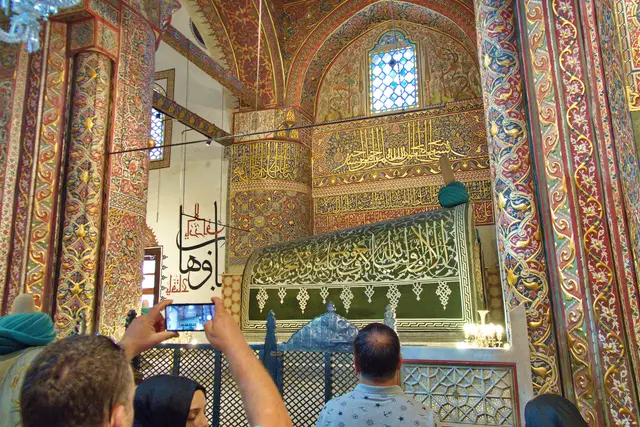
The complex began as a dervish lodge before becoming Rumi’s final resting place, and it still feels like both. Green silk-draped sarcophagi belonging to Rumi and his family sit beneath the fluted dome, ringed by silver grilles worn smooth by centuries of hands.
Side galleries hold the real texture of the place:
- Illuminated manuscripts of the Masnavi, Rumi’s six-volume poem
- Robes, turbans, and prayer rugs once used by whirling dervishes
- A rock crystal and gold reliquary said to contain a hair of the Prophet
- Ornate ney flutes and other instruments tied to the Mevlevi Sema ceremony
Wooden cells that once housed dervishes now display wax figures recreating lodge life, cooking, chanting, meditating. It’s a small museum by international standards, but dense with detail, so give it a genuinely unhurried 45 to 90 minutes.
Getting there
The museum sits on Mevlana Caddesi in Karatay, central enough to walk from most of old Konya. Trams run along this corridor, get off at the Mevlana stop and it’s a two-minute walk to the entrance gate.
If you’re coming from the otogar (bus station) or the high-speed train station, a taxi or tram connection into the centre is straightforward and inexpensive. Once you’re near Alaeddin Hill, everything (the museum, the mosque, the old bazaar streets) is within easy walking distance.

When to go
Mornings right at opening, 9am, are consistently the calmest window, and that holds true on both weekdays and weekends. The crush builds toward midday.
Avoid arriving between 12pm and 5pm on weekends if you can. That’s when tour groups and domestic visitors stack up hardest at the entrance and around the main tomb chamber. Late afternoon, after 5pm, is a good fallback since the museum stays open until 6:30pm daily.
December is worth knowing about separately: the Şeb-i Arus commemoration around December 17, marking the anniversary of Rumi’s death, draws large crowds for whirling dervish ceremonies across the city. Beautiful to witness, but expect the museum itself to be packed that week.
How to visit like a local
This is a functioning shrine as well as a museum, and Konya is a conservative city, dress and behave accordingly.
- Cover shoulders and knees; women may want a scarf handy, though it’s not strictly required in the museum itself
- Remove your shoes at the marked point before entering the mausoleum hall
- Keep voices low near the tombs. Many visitors are there to pray, not sightsee
- Photography is generally allowed in the galleries but avoid using flash near the sarcophagi and manuscripts
Because this is one of Turkey’s most-visited museums, don’t expect a quiet, undiscovered spot. Plan around the crowds rather than hoping to avoid them entirely. Buy your ticket at the gate; there’s rarely a need to book ahead, but the queue for security screening can be the real bottleneck on busy afternoons, more than the ticket line itself.
Most locals and repeat visitors treat the visit as a loop: mausoleum first while your attention is freshest, then the artifact galleries, finishing outside in the small garden courtyard where the crowd noise fades and you can actually look back at that dome.
Pair the trip with the Selimiye Mosque directly across the square and the Konya Bazaar a short walk north, both fit naturally into the same morning or late-afternoon outing.
Frequently asked questions
What are the opening hours?
The Mevlana Museum is open daily from 9:00 AM to 6:30 PM, with no weekly closing day.
When is the quietest time to visit?
Right at opening, 9am, is calmest on both weekdays and weekends. Try to avoid weekends between 12pm and 5pm, when it's busiest.
How long should I plan for the visit?
Most visitors spend 45 to 90 minutes, enough to see the mausoleum and the artifact galleries without rushing.
How do I get there?
Take the tram to the Mevlana stop on Mevlana Caddesi in Karatay district; the entrance is a two-minute walk from there.
Is there a dress code?
Yes — cover shoulders and knees, and remove your shoes before entering the mausoleum hall. It's a working shrine as well as a museum.
Plan your trip to Konya
Some links above are affiliate links — if you book through them, Wander Atlas earns a small commission at no extra cost to you. It's how we keep every guide free.
Related guides
 attraction
 Tomb of Mevlana Rumi: Konya Travel Guide (4.9★)
 attraction
 Alaaddin Hill Park: Konya Travel Guide (4.4★)
 hidden gem
 Konya Tropical Butterfly Garden: Travel Guide (4.6★)
 attraction