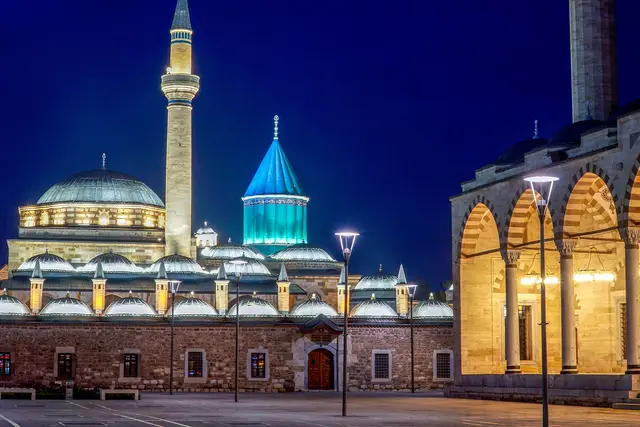
You spot the dome before you spot the entrance (a ribbed cone of turquoise tile rising above Karatay’s rooftops, catching the light differently depending on whether it’s 9am haze or late-afternoon sun. That’s the Kubbe-i Hadra, the “Green Dome,” and it marks the resting place of Jalal ad-Din Muhammad Rumi, the 13th-century poet and mystic whose followers founded the Mevlevi order) the “whirling dervishes.”
Why go
This isn’t just a tomb; it’s the former lodge (dergah) of the Mevlevi order, converted into a museum but still functioning, in spirit, as a pilgrimage site. Turkish and international visitors alike arrive quietly, some in tears, some just curious about the whirling ceremony’s origins.
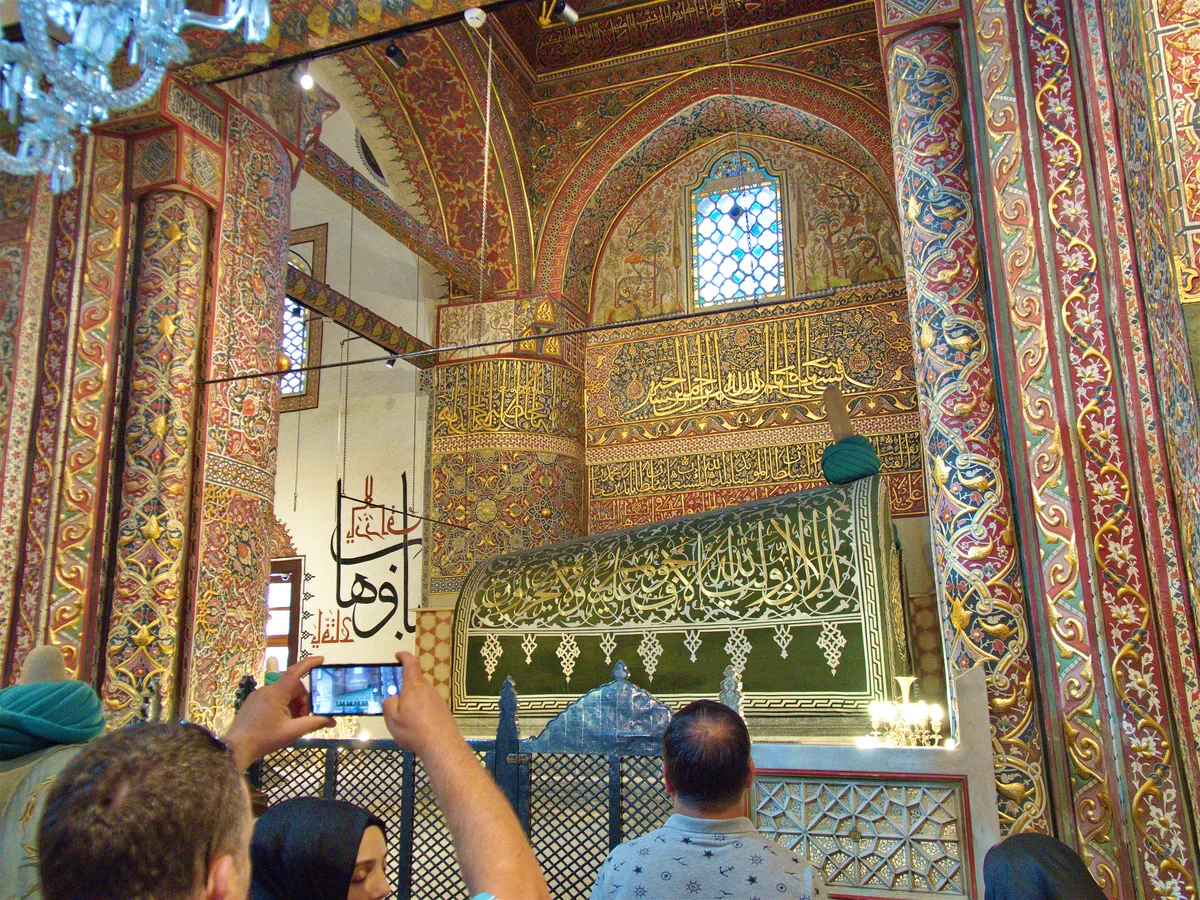
Inside, silver-railed sarcophagi belonging to Rumi, his father, and other key Mevlevi figures sit beneath painted ceilings and gilded calligraphy panels. Adjoining halls display dervish cells, musical instruments like the ney flute, illuminated manuscripts of the Masnavi, and robes and relics tied to the order’s ceremonies.
Getting there and what to expect
The address is Aziziye, Şehit Nazım Bey Caddesi No:2, in Karatay, central Konya, walkable from most of the old city’s hotels and from the Alaeddin Hill area. Tram lines running through the city center stop within a short walk; ask your hotel for the nearest stop, as routes get renumbered.
Budget 60–90 minutes: 20–30 minutes for the mausoleum itself, the rest for the surrounding museum halls and gardens. Expect to remove your shoes before entering the tomb chamber, and to see visitors covering their heads out of respect even where it isn’t strictly required.
When to go
- Opening hours: Tuesday–Sunday 9:00am–4:40pm; Monday 10:00am–4:40pm
- Best window: first hour after opening, before tour groups arrive from other Anatolian cities
- Best season: spring or autumn, Konya’s summer sun turns the courtyard stone into a griddle by midday
- Seasonal bonus: if you’re here in mid-December, the Şeb-i Arus commemorations mark Rumi’s death anniversary with citywide dervish ceremonies
Because it closes at 4:40pm daily, don’t plan this as a dusk visit. Arrive with real daylight left.
What to see inside
Beyond the main sarcophagus hall, slow down in these spots:
- The Semahane, the former ceremonial hall, where whirling rituals once took place, now displaying instruments and dervish artifacts
- The dervish cells, small rooms furnished to show how Mevlevi initiates actually lived
- The manuscript hall, illuminated copies of the Masnavi and Divan-i Kebir, Rumi’s major poetic works
- The garden courtyard, a good spot to pause and look back up at the tiled dome before you leave
How to visit like a local
Come right at opening on a weekday rather than midday or weekend, this site sees far fewer international tourists than Istanbul’s major sights, so an early slot often means having whole rooms to yourself. Dress modestly: shoulders and knees covered, and a headscarf for women is respectful, though enforcement varies.
Move quietly near the sarcophagus chamber. This is an active site of reverence, not purely a museum stop, and you’ll notice locals praying or reciting quietly beside the railings. Photography is generally tolerated in the outer halls but be discreet and avoid flash near the tomb itself.
Most visitors pair this with a walk through Karatay’s old quarter or the nearby Karatay Medrese, so there’s no need to rush straight back out. If you want context beforehand, reading even a short primer on Rumi’s poetry and the Mevlevi order’s history transforms the visit from “nice old building” into something considerably more affecting.
Cash and card are both commonly accepted for any museum admission fee, but confirm current pricing and hours locally before you go, since both can shift.
Frequently asked questions
How long should I spend at the Tomb of Mevlana Rumi?
Plan on 60–90 minutes to see the mausoleum, the Semahane, dervish cells, and manuscript hall without rushing.
What are the opening hours?
Tuesday through Sunday it's open 9:00am–4:40pm; on Mondays it opens later, at 10:00am, closing at the same 4:40pm.
When is the best time to visit to avoid crowds?
Arrive right at opening on a weekday morning. The site is still relatively under-the-radar for international visitors, so early hours are typically calm.
How do I get there and is it far from central Konya?
It's in the Karatay district at Şehit Nazım Bey Caddesi No:2, an easy walk from most old-city hotels and reachable by Konya's central tram stops.
Is there a dress code?
Yes — dress modestly with shoulders and knees covered, and it's respectful for women to bring a headscarf. You'll also remove your shoes before entering the tomb chamber.
Plan your trip to Konya
Some links above are affiliate links — if you book through them, Wander Atlas earns a small commission at no extra cost to you. It's how we keep every guide free.
Related guides
 attraction
 Mevlana Museum: Konya Travel Guide (4.7★)
 attraction
 Alaaddin Hill Park: Konya Travel Guide (4.4★)
 hidden gem
 Konya Tropical Butterfly Garden: Travel Guide (4.6★)
 event
event