A dome made of night sky
Look up before you look at anything else. The main hall of Karatay Madrasa is a square room under a single brick dome. Almost every inch of that dome is covered in tile mosaic: turquoise and deep blue-black pieces cut and fitted into interlocking star patterns.
At the centre is an open oculus, a round hole straight through to the sky. Directly beneath it sits a pool set into the floor. The Seljuk builders meant the two to work together: the sky in the opening, its reflection in the water, the tiled stars in between.
The building dates to 1251. It was commissioned by Celaleddin Karatay, a powerful vizier of the Seljuk Sultanate of Rum, which had made Konya its capital. It opened as a madrasa, a college teaching religious law and the sciences. Since the 1950s it has been the city’s museum of tilework.
The portal on the way in
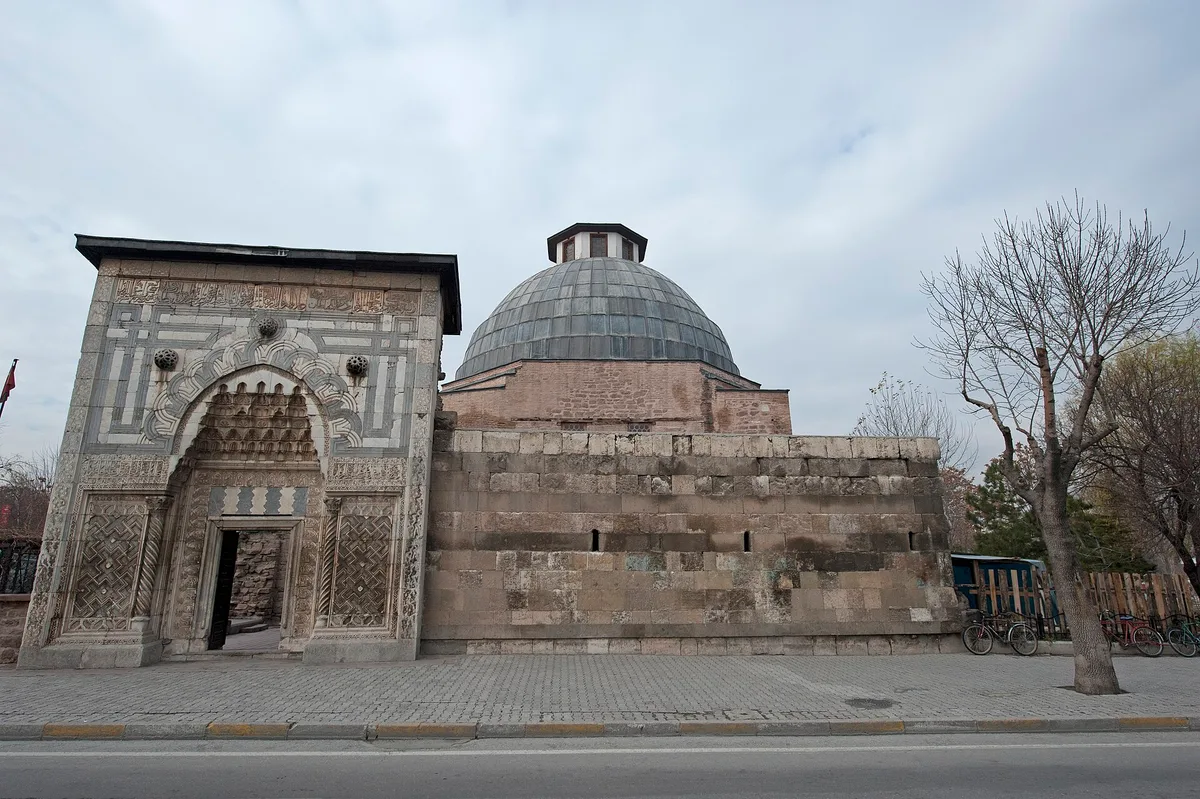
Slow down at the entrance. The façade is a tall stone portal carved from pale and grey marble, with bands of knotted geometric ornament and calligraphy running up both sides.
It looks almost plain next to the colour inside, and that contrast is deliberate. Seljuk buildings often save their richest surfaces for the interior. Spend a minute on the interlace before you step through. The way the bands cross over and under each other repays a close look.
Reading the tiles under the dome
This is the part most visitors rush. The corners of the hall, where the square room turns into a round dome, are filled with “Turkish triangles”: folded, fan-like transitions that are tiled too.
Look for the calligraphic panels set into them. They carry the names of prophets and early caliphs in angular Kufic script, worked in the same dark-on-turquoise palette as the stars. Below them, a long band of inscription circles the room.
Things to find while you stand by the pool:
- The oculus and its reflection in the water beneath
- The star-and-polygon mosaic radiating out from the oculus
- The Kufic name panels in the corner triangles
- The inscription band around the base of the dome
Off to one side is a small domed room holding the tomb of Celaleddin Karatay himself. It is a quiet corner of the building, and a reminder that this was his personal foundation.
The Kubadabad tiles
The cases around the hall are the museum’s second reason to come. Many hold tiles excavated from Kubadabad Palace, a Seljuk summer palace on the shore of Lake Beyşehir, south-west of Konya.
These are a different world from the abstract dome. Eight-pointed star tiles alternate with cross-shaped ones, and many show figures: seated rulers, double-headed eagles, sphinxes, hunting animals, fish. They are some of the clearest surviving images of Seljuk court taste.
Other cases carry ceramics from later Anatolian periods, plus archaeological finds. Labels are generally in Turkish and English, but the objects carry most of the story on their own. Give the figurative tiles your attention. The plain glazed pieces can be a quick walk-past.
Ferhuniye and Alaeddin Hill
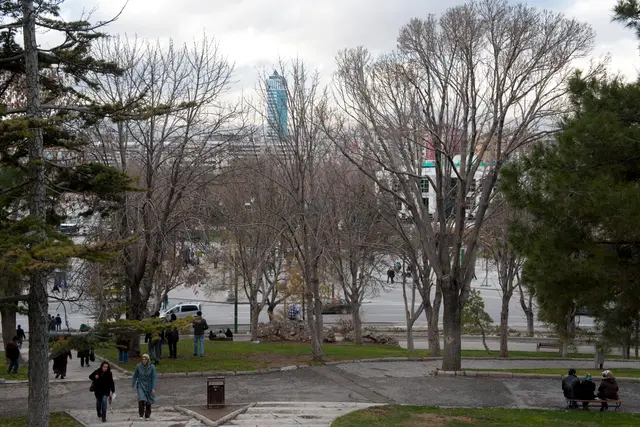
The madrasa sits in Ferhuniye, on the north side of Alaeddin Hill. The hill is a green, landscaped mound in the middle of the city, and it was the site of the Seljuk citadel.
On top stands the Alaeddin Mosque, the great Seljuk congregational mosque of Konya. Its plain courtyard and forest of reused columns make a good follow-up to the madrasa. On the hill’s western side is the İnce Minareli Madrasa, known for its astonishing carved portal and home to the Museum of Stone and Wood Arts.
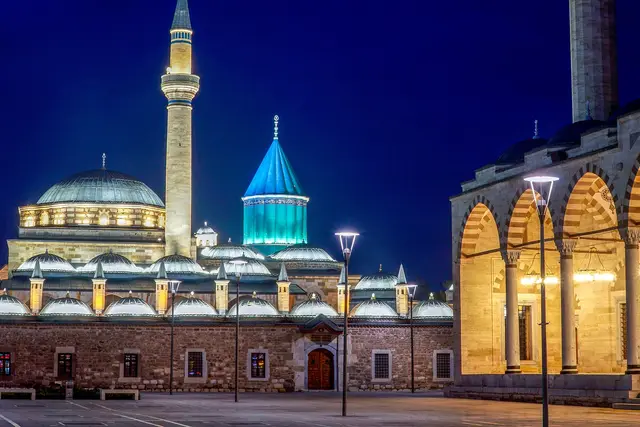
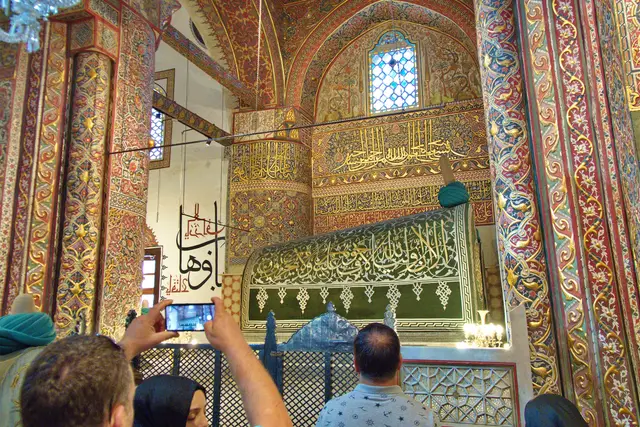
Konya’s tram runs around the hill, with a stop at Alaaddin a short walk from the entrance. The Mevlana Museum, with its turquoise conical dome over Rumi’s tomb, is roughly 20 minutes’ walk east along Mevlana Caddesi. You could cover all four in a full day without hurrying.
Moving through a Seljuk college
This is a well-known stop, and tour groups doing the Seljuk circuit often take it in alongside the Mevlana Museum. The main hall is a single room, so a group of thirty fills it quickly. Arriving right at opening usually puts you ahead of buses that start their day at Mevlana.
At the moment it opens at 9am Tuesday to Sunday and at 10am on Mondays, closing at 4:40pm. State museums in Turkey adjust their hours seasonally and on some religious holidays. Check the official Ministry of Culture museum site for this month’s schedule before you plan around an evening.
A few things that make the visit smoother:
- Buy your ticket at the entrance desk; the current price is posted there and on the official site. Museum Pass Türkiye cards are normally valid at Ministry museums like this one, so ask at the desk if you hold one.
- Photography without flash is generally fine. Tripods in a room this size will not make you friends.
- Do not sit on the rim of the pool or lean into it. It is part of the original design, not a seating ledge.
- Stand still under the oculus for a minute. The best views of the dome come from the centre of the floor, not the edges.
Konya is one of Turkey’s more conservative cities. Dress that covers shoulders and knees attracts no attention here, and you will need it for the Alaeddin Mosque next door anyway. Women should carry a scarf for the mosque, and everyone removes shoes at its door. Skip the mosque during Friday midday prayers.
Lunch after the tiles
The streets below the hill are a good place to try Konya’s own dishes. Look for etli ekmek, a very long, thin flatbread topped with minced meat and baked in a wood oven, cut into strips and eaten by hand.
The other local name to know is fırın kebabı, slow-roasted lamb served on thin bread. Both are everyday food in Konya rather than special-occasion dishes, so any busy local lokanta near the tram line is a fair bet. Order with ayran, the salty yoghurt drink, as most people at the next table will.
Frequently asked questions
Where is Karatay Madrasa and how do I get there?
It is in the Ferhuniye quarter of Selçuklu, Konya, on the north side of Alaeddin Hill and facing the Alaeddin Mosque. Konya's tram stops at Alaaddin, a short walk away, and the Mevlana Museum is about 20 minutes' walk east along Mevlana Caddesi.
What are the opening hours?
Currently it opens 9am–4:40pm Tuesday to Sunday and 10am–4:40pm on Monday. Hours for Turkish state museums change with the season and on some holidays, so confirm on the official Ministry of Culture museum site before you go.
How long should I spend inside?
Allow 45 minutes to an hour. That gives you time under the tiled dome and around the cases of Kubadabad Palace tiles. Add a couple of hours if you're combining it with the Alaeddin Mosque and the İnce Minareli Madrasa on the same hill.
What is Karatay Madrasa famous for?
Its dome, from 1251. It is covered in turquoise and dark-blue tile mosaic star patterns around an open oculus, with a pool on the floor beneath. The building also houses Konya's tile museum, including figurative tiles from the Seljuk Kubadabad Palace on Lake Beyşehir.
How do I avoid the tour groups?
Arriving right at opening usually beats the groups doing the Seljuk circuit from the Mevlana Museum. The main hall is a single room, so even one large group fills it, and it pays to be there first.
Plan your trip to Konya
Turkey eSIM & staying connected →
Some links above are affiliate links — if you book through them, Wander Atlas earns a small commission at no extra cost to you. It's how we keep every guide free.