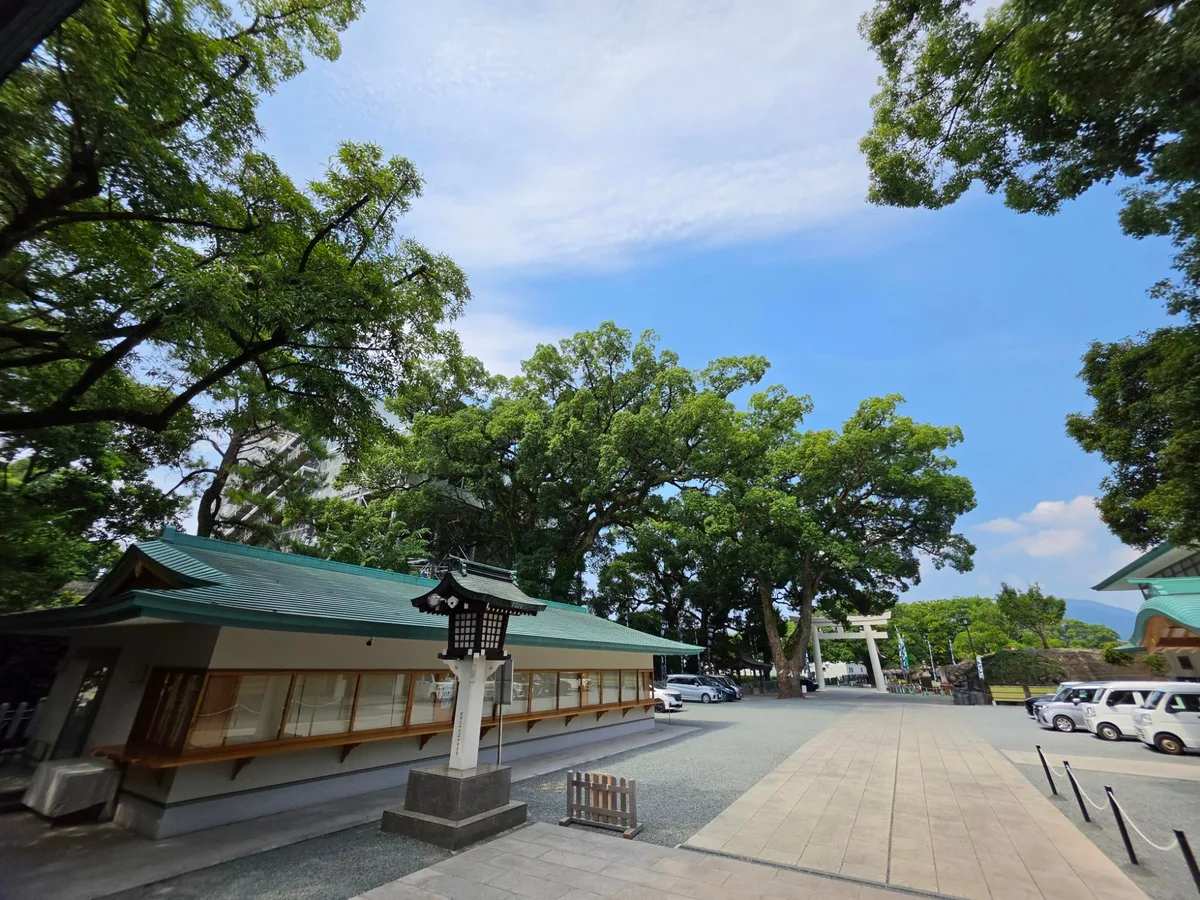
Why go
You come to Katō Shrine for one specific reason: the view.
From the shrine’s inner grounds, the black-and-white keep of Kumamoto Castle rises directly ahead, framed by pine and stone walls that Katō Kiyomasa himself had built over 400 years ago. It’s a tighter, more dramatic angle than the postcard shots from the castle park below, and far fewer people bother to walk up for it.
The shrine itself is compact. This isn’t a sprawling complex like Dazaifu or Fushimi Inari. You’ll spend maybe 20 to 30 minutes here, but it’s a dense 30 minutes.
Who it’s dedicated to, and why that matters
Katō Kiyomasa built Kumamoto Castle in 1607 and is still regarded locally as the city’s founding figure. After his death, he was enshrined as a protective deity, and this shrine, inside the castle’s original Honmaru (inner bailey) grounds, is where that veneration happens.
That history explains the layout: torii gates lead you up through stone steps that were once part of the castle’s defensive approach, so you’re literally walking a samurai-era route to reach a Shinto shrine.
Getting there
The shrine sits at 2-1 Honmaru, Chuo Ward, inside the Kumamoto Castle grounds.
- Nearest stop: Kumamotojōmae/Shiyakusho-mae tram stop (Kumamoto City Tram), about a 10-minute walk uphill
- From JR Kumamoto Station, a taxi takes roughly 15 minutes; the tram takes about 20
- Access is via the castle’s Sakuranobaba Josaien entrance area, following signs toward Honmaru
- Expect uneven stone steps and slopes. Wear shoes with grip, especially after rain
Most visitors combine it with a castle walkthrough, since the paths overlap.
What to see once you’re there
Beyond the castle view, look for:
- The main hall (honden), rebuilt in a style echoing Kiyomasa-era architecture
- Ema boards covered in wishes, many written by visitors hoping for success in work or exams, Kiyomasa is associated with victory and achievement
- Omamori (protective charms) and goshuin (shrine stamps) available near the entrance, if you collect them
- Quiet side paths where the castle’s massive curved stone walls (musha-gaeshi) are visible up close
Because it sits within the castle complex, a separate castle admission ticket may be required to access some connecting routes, confirm current pricing at the entrance gate rather than assuming it’s free.
When to go
The shrine keeps steady hours, open daily from 8am to 5pm, with no midweek closures.
If you want it close to empty, arrive right at 8am on a weekend. That’s the quiet window before day-trippers arrive. Weekday mornings and afternoons stay calm throughout the full 8am–5pm stretch.
Avoid weekend late-mornings and afternoons, roughly 10am to 5pm, when tour groups and families heading to the castle funnel straight past the shrine’s approach.
Spring brings cherry blossoms along the stone steps; autumn brings maple color against the black castle walls. Both seasons draw bigger crowds, so lean on that early-morning window even more.
How to visit like a local
Treat this as a quick, respectful stop, not a photo-only detour.
- Bow slightly at the torii before walking through, and keep to the side of the central path, which is traditionally reserved for the deity
- At the main hall, the usual small offering, bow, two claps, one more bow is the standard etiquette if you choose to pray
- Cash is easiest for omamori and goshuin purchases, a few hundred yen each, small bills preferred
- Skip the 10am–5pm weekend rush by coming right at opening; locals visiting for shrine business also favor early mornings before the castle crowds arrive
- Don’t rush through just for the castle photo. The tourist mistake here is treating it as a viewpoint and missing the shrine entirely, when a few extra minutes at the honden is what the place is actually for
Pair your visit with the surrounding castle park and Josaien shopping and dining area just downhill, where you can sit down with a bowl of Kumamoto’s local karashi renkon or ramen afterward.
Frequently asked questions
What are Katō Shrine's opening hours?
It's open every day from 8:00 AM to 5:00 PM, with no weekly closing day.
When is the quietest time to visit?
Weekday mornings through afternoon (8am–5pm) stay calm, and on weekends the 8am–9am slot right after opening is the quietest window before crowds build from 10am onward.
How do I get to Katō Shrine?
Take the Kumamoto City Tram to Kumamotojōmae/Shiyakusho-mae and walk about 10 minutes uphill into the castle grounds, or take a roughly 15-minute taxi from JR Kumamoto Station.
How long should I spend there?
Most visitors spend 20–30 minutes at the shrine itself, though many combine it with a longer walk through the surrounding Kumamoto Castle grounds.
Is there an admission fee?
The shrine visit itself is generally free, but reaching it may involve routes connected to paid castle areas — check current pricing at the entrance gate before you go.
Plan your trip to Kumamoto
Some links above are affiliate links — if you book through them, Wander Atlas earns a small commission at no extra cost to you. It's how we keep every guide free.
Related guides
 attraction
 Suizenji Jojuen Garden: Kumamoto Travel Guide (4.4★)
 hidden gem
 Kumamoto Castle: Travel Guide (4.5★)
 attraction
 Fukuoka City Science Museum: Travel Guide (4.2★)
 attraction