Suizenji Jojuen Garden: Kumamoto Travel Guide (4.4★)
✓ Facts verified via Google Places · Sep 15, 2026
At a glance
Opening hours
- Monday: 8:30 AM – 5:00 PM
- Tuesday: 8:30 AM – 5:00 PM
- Wednesday: 8:30 AM – 5:00 PM
- Thursday: 8:30 AM – 5:00 PM
- Friday: 8:30 AM – 5:00 PM
- Saturday: 8:30 AM – 5:00 PM
- Sunday: 8:30 AM – 5:00 PM
Live foot-traffic data via BestTime.app
How this guide is made
Produced with AI assistance and reviewed against live data sources. Facts such as hours, ratings, and location come from Google Places; images are licensed or public domain. Details can change — please verify before visiting. Editorial policy
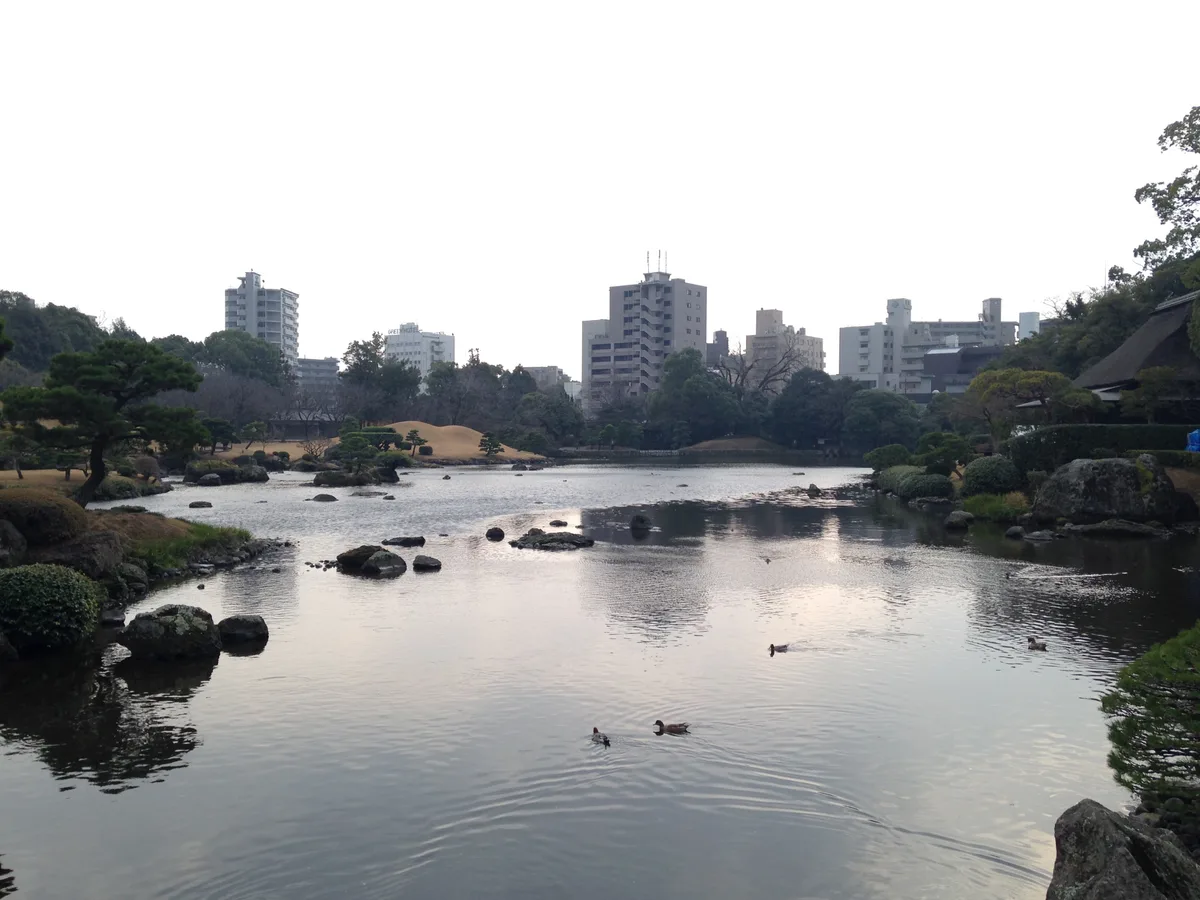
Suizenji Jojuen Garden is built around a single joke of scale: a whole miniature version of the Tokaido road, the old highway linking Kyoto and Edo, compressed into a walking loop around a spring-fed pond. The centerpiece is a grass mound shaped, unmistakably, like Mount Fuji, clipped low and cone-shaped so it reads as the mountain from every angle on the path.
It’s a strolling garden in the classic Edo-period style, meaning it was designed to be walked, not viewed from one fixed point. The Hosokawa clan, who ruled the Kumamoto domain, began laying it out in 1636 and successive lords kept adding to it over roughly 80 years. What you’re walking through today is that accumulated, deliberate landscape: clipped pines, stone bridges, a lake fed by underground springs from Mount Aso.
Reading the miniature landscape as you walk
Give yourself permission to be slow here. The pleasure of Suizenji Jojuen is in noticing that a gravel mound is standing in for a famous mountain, or that a curve in the path is a stand-in for a stretch of coastline from the old Tokaido route.
The path circles the pond counterclockwise for most visitors, past stone lanterns, azalea hedges, and pine trees trained low and horizontal in the local style. The Mount Fuji mound is the obvious photo stop, usually reached within the first ten minutes of walking.
Water clarity is part of the design, not an accident. The pond is fed by natural springs originating from Mount Aso’s aquifer, which is why it stays clear enough to reflect the pines and the miniature peak on a still day.
Izumi Shrine and the Kokindenju no Michi
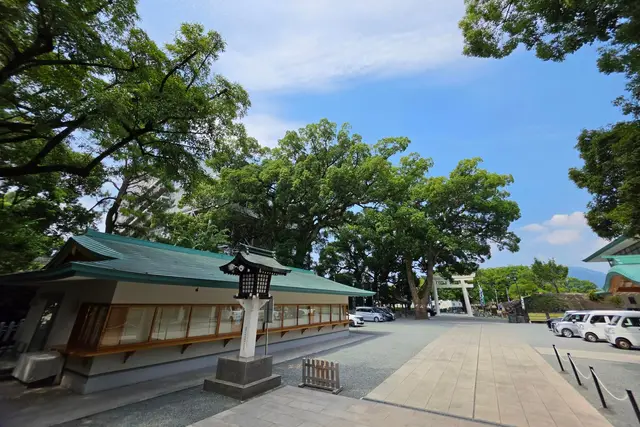
Partway around the loop stands Izumi Shrine, a Shinto shrine dedicated to the Hosokawa lords who built the garden. It’s a working shrine rather than a museum piece, so expect to see visitors stopping to pray, not just photograph.
Near the shrine is a building associated with Kokindenju, a tradition of secret transmission of classical waka poetry interpretation passed down through select scholars. It’s a quieter corner of the garden and worth the short detour off the main pond loop for anyone interested in the literary side of the site rather than just the landscaping.

The teahouse and a bowl of matcha
There’s a traditional teahouse on the grounds overlooking the pond, where you can sit on tatami and order matcha with a small Japanese sweet. It’s the natural place to pause partway through the loop rather than push straight through to the exit.
Sitting at low tables facing the water, you get the view the garden’s designers were actually building toward: pond, pines, and the Fuji mound framed together. This is worth timing deliberately rather than treating as an afterthought at the end.
- Order: matcha (powdered green tea) with a wagashi sweet
- Seating: tatami mat, floor-level tables facing the pond
- Best used: as a mid-walk pause, not a last stop before leaving
Avoiding the crowds around the Fuji mound
This is a well-visited garden, not a quiet local secret, and the crowd pattern is predictable. Weekends see the heaviest foot traffic between 10am and 4pm, concentrated around the Mount Fuji mound and the main pond-view spots.
Weekdays are consistently calmer across the entire day, from 9am to closing at 5pm. If your schedule allows a weekday visit, take it; the difference in how much breathing room you get around the classic photo angles is real.
If a weekend is your only option, arriving close to the 8:30am opening or in the last hour before 5pm closing gives you a better shot at the mound and pond views without a crowd in the frame. Photography around the Fuji mound is genuinely difficult once tour groups arrive mid-morning.
Getting to Suizenji Kōen
The garden sits at the eastern edge of Kumamoto city, in a neighborhood that takes its name directly from the site: Suizenji Kōen. From central Kumamoto, the easiest route is the city’s tram (streetcar) system, which has a Suizenji-Koen stop within walking distance of the entrance.
If you’re coming from Kumamoto Station, allow around 30 minutes total including the tram ride and short walk. Taxis are a reasonable option for groups or if you’re short on time, since the fare from the station area isn’t large.
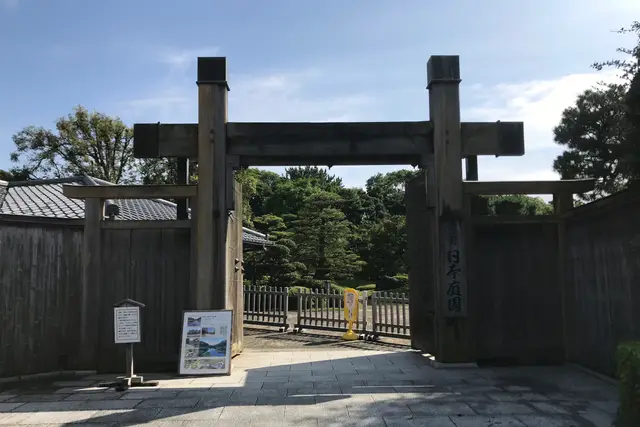
There’s no need to build in extra time for finding the entrance; the garden’s gate faces the main road and is clearly the destination for anyone arriving by tram or taxi in this part of the city.
Planning around Kumamoto Castle
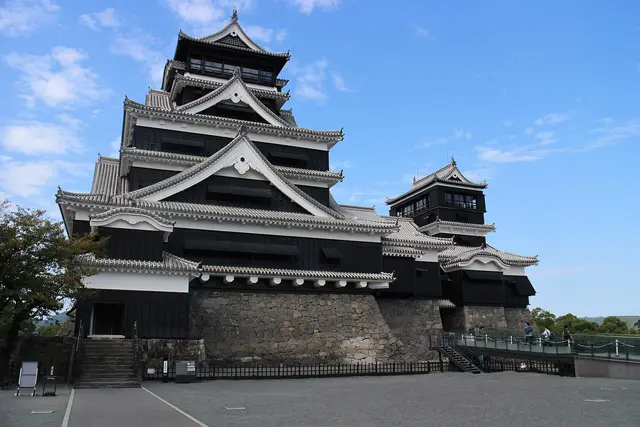
Most visitors pair Suizenji Jojuen with Kumamoto Castle, the city’s other major landmark, since both are firmly on the standard Kumamoto itinerary. The two sites are on opposite sides of the city center, so treat them as separate half-day stops rather than trying to walk between them.
A natural day plan is castle grounds in the morning, when they’re typically busier with tour groups, then the garden in the early afternoon or, better, saved for a weekday if your trip allows flexibility. Confirm current opening hours for both sites before you go, since seasonal adjustments do happen.
Plan on 60 to 90 minutes inside Suizenji Jojuen itself. That’s enough time for the full pond loop, the detour to Izumi Shrine, and a seated tea break at the teahouse without feeling rushed.
Frequently asked questions
What are the opening hours for Suizenji Jojuen Garden?
It's open every day from 8:30am to 5pm, with no listed weekly closing day. Confirm before visiting in case of seasonal changes.
When is the quietest time to visit?
Weekdays are calmer throughout the day, from 9am to 5pm. Weekends get busy from 10am to 4pm, especially around the Mount Fuji mound, so aim for early morning or late afternoon if you can only go on a weekend.
How long should I spend at the garden?
Most visitors need 60 to 90 minutes to walk the full pond loop, visit Izumi Shrine, and stop for tea at the teahouse.
How do I get to Suizenji Jojuen from central Kumamoto?
Take the city tram to the Suizenji-Koen stop, then walk a short distance to the entrance. From Kumamoto Station, the whole trip takes around 30 minutes; taxis are also a practical option.
What else is nearby worth combining with this visit?
Kumamoto Castle is the standard pairing, though it's on the opposite side of the city center, so plan it as a separate stop rather than a walk-over.
Plan your trip to Kumamoto
Some links above are affiliate links — if you book through them, Wander Atlas earns a small commission at no extra cost to you. It's how we keep every guide free.