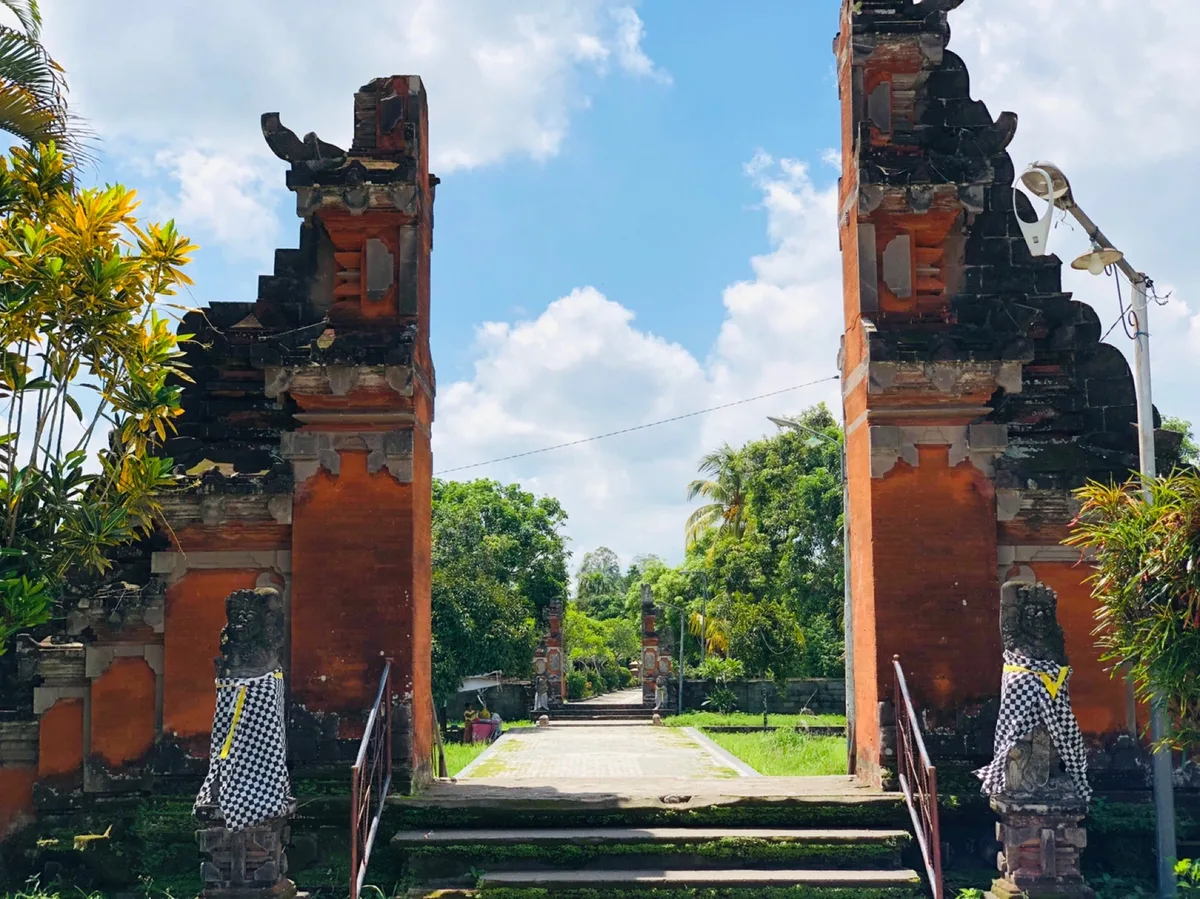
Most temples in Lombok pick a side. Pura Lingsar doesn’t. It was built in 1741 specifically so that Balinese Hindus and Sasak Wetu Telu Muslims could worship on the same ground, and that arrangement has held for close to three centuries.
Two courtyards, one temple
The layout tells you everything before you’ve read a sign. Pura Lingsar is split into two terraced courtyards on a gentle slope: the upper one, Pura Gaduh, is Hindu, with a black-and-white poleng-checked shrine facing Gunung Rinjani. The lower one, Kemaliq, belongs to the Sasak Wetu Telu tradition and centers on a spring-fed pool.
That lower pool is the temple’s quiet centerpiece. It’s home to a colony of holy eels, considered sacred by Sasak worshippers, and caretakers sell boiled eggs at the edge so you can try to coax one out from under the rocks. Don’t expect a performance; the eels surface when they surface.
Between the two courtyards, walkways cut through clipped gardens and past lily ponds fed by the same natural spring that supplies the pool. Water is the whole logic of the place: it’s a rice-growing region, and Lingsar’s spring has long been treated as the source that keeps the paddies around it fertile.
Getting there and what to expect
Pura Lingsar sits in Batu Kumbung village, Lingsar district, on Jalan Raya, roughly 20 to 30 minutes by car or scooter northeast of Mataram. There’s no train or public bus that gets you to the gate directly, so most visitors arrive by rented scooter, private car, or as a stop on a driver-guided day trip that also covers Mataram’s old town or the Narmada water gardens nearby.
Budget 45 minutes to an hour for a full walk through both courtyards and the pool area. Entry involves a small donation rather than a fixed ticket price, and a sarong or sash is provided or required at the gate; wear one even in the Sasak courtyard, since covering the legs is expected throughout the complex.

Visiting outside festival season
Under normal conditions, Pura Lingsar stays well below the crowds you’d find at Bali’s big temples, and that’s part of its appeal if you’d rather explore at your own pace than shuffle through with a tour group. Weekday late mornings tend to be the easiest time to have the gardens mostly to yourself.
The exception is the Pujawali festival, usually held around November or December on the Sasak calendar’s Purnama Sasih Kepitu (seventh full moon), when Balinese and Sasak communities gather for a ceremonial rice-and-fruit throwing ritual called Perang Topat. If you want atmosphere and ceremony, time your visit for that; if you want stillness, avoid it.
Reading the shrines without a guide
A few details are worth knowing before you walk in, since nothing is heavily signposted in English.
- The poleng (black-and-white checked) cloth on the upper shrine marks it as Hindu and represents the balance of opposing forces, a common motif across Bali and Lombok’s Hindu sites.
- The Kemaliq courtyard’s name comes from a Sasak word roughly meaning “forbidden” or “sacred,” referring to the spring and pool.
- Boiled eggs sold near the pool are for feeding the eels, not for eating; locals treat an eel sighting as a small good omen.
- Photography is generally fine in both courtyards, but ask before photographing anyone mid-prayer.
Etiquette that actually matters here
This is a working temple for two active faiths, not a museum, and both communities still use it for regular worship. Move quietly near anyone praying, keep your voice down inside the Kemaliq courtyard, and don’t step onto shrine platforms even when they look unattended.
Tipping isn’t expected, but the temple relies on the small entry donation and modest fees for sarong rental or egg-feeding, so carry a little cash in rupiah rather than assuming card payment. If you’re pairing this with the Narmada gardens or a Mataram city stop, Lingsar works well as the mid-morning leg before traffic on the ring road picks up later in the day.
Frequently asked questions
How do I get to Pura Lingsar from Mataram or Senggigi?
By rented scooter, private car, or a driver-guided day trip; it's roughly 20-30 minutes northeast of Mataram and there's no direct public bus, so you'll need your own transport or a hired driver.
Is there an entrance fee?
There's a small entry donation rather than a fixed ticket price, and sarongs are provided or required at the gate; carry cash in rupiah.
When is the quietest time to visit?
Weekday late mornings tend to be calmest, since Pura Lingsar sees far fewer visitors than Bali's major temples day to day.
How long should I plan to spend there?
Around 45 minutes to an hour covers both courtyards, the lily-pond gardens, and the sacred eel pool at a relaxed pace.
What's the best time of year to see it in full ceremony?
The Pujawali festival, usually around November or December on the Sasak calendar, brings the Perang Topat rice-throwing ritual and both Balinese and Sasak communities together; check local dates before planning around it.
Plan your trip to Lombok
Indonesia eSIM & staying connected →
Some links above are affiliate links — if you book through them, Wander Atlas earns a small commission at no extra cost to you. It's how we keep every guide free.
Related guides
 attraction
 Mount Rinjani National Park: Lombok Travel Guide (4.7★)
 attraction
 Sendang Gile Waterfall: Lombok Travel Guide
Vandal Restaurant, Kuta Lombok: Menu, Hours and Quiet Times
 restaurant