Four days under the castle walls
Milan’s patron saint gets a street fair. Oh Bej! Oh Bej! is one of the oldest Christmas markets in Italy, and in 2026 it runs from December 4 to December 7. It ends on the feast of Sant’Ambrogio, the bishop who has watched over the city since the fourth century.
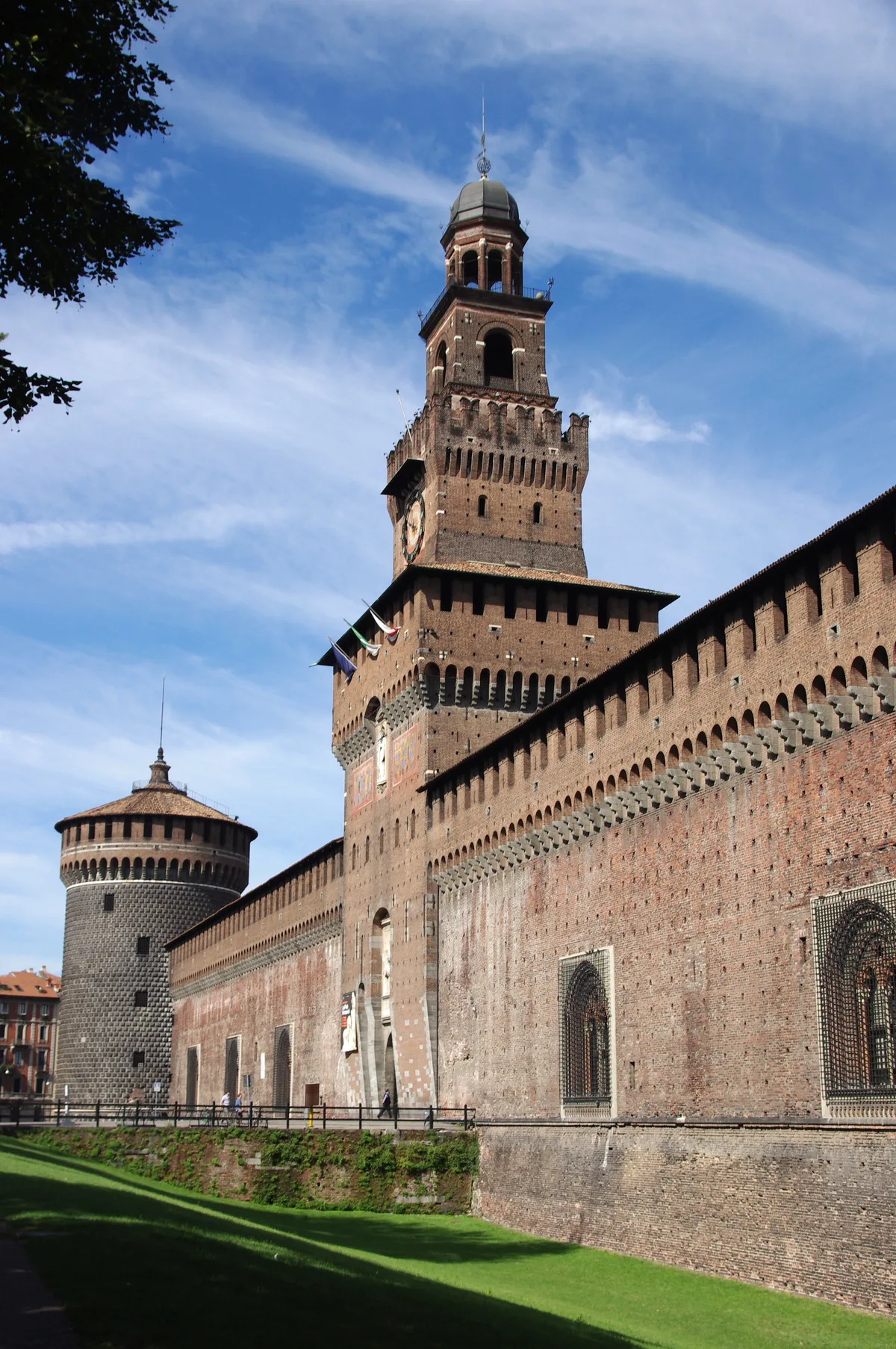
The setting is Castello Sforzesco, the brick fortress of the Sforza dukes. Stalls line up around its outer walls and spill toward Piazza Castello. Behind you rises the red brick of the Filarete Tower. In front of you are rows of awnings selling things you won’t find in a shopping centre.
Why a city shouts “how beautiful!”
The name is Milanese dialect, roughly “Oh how lovely! Oh how lovely!” Local tradition dates it to 1510. That year, a papal envoy called Giannetto Castiglione rode into Milan bringing gifts and sweets for the children, and they greeted him with that cry.
For centuries the fair crowded the narrow streets around the Basilica di Sant’Ambrogio. Later it moved to the open space around the Castello, which has far more room than the old lanes. The link to the saint never moved, though. That’s why the fair always closes on December 7 rather than drifting toward Christmas Eve like most markets.
Older Milanese still call it “the Obej,” one word. Grandparents bring grandchildren because their own grandparents brought them.
Firun, chestnuts and old copper
This is a market for rummaging as much as for Christmas shopping. Alongside the seasonal stalls, the fair has always drawn antique and bric-a-brac sellers. Expect a mix of:
- Firun: strings of dried, smoked chestnuts threaded like necklaces, the fair’s traditional emblem
- Caldarroste: roasted chestnuts, sold hot from iron pans over braziers
- Vin brulé: mulled wine, the standard cold-weather drink at Italian winter fairs
- Copperware, old prints and tin toys from the antique dealers
- Nativity figures, ornaments and handmade crafts
- Sweets and cured meats from Lombardy and other Italian regions
The firun is the souvenir that means something here. Few visitors know what it is, and Milanese families have hung it up for generations.
Getting to Castello Sforzesco
There’s no ticket and no gate. You walk straight in from the street, so getting there is the only logistics. Castello Sforzesco is one of the easiest places in central Milan to reach by public transport.
- Cairoli (M1, red line): the closest stop, opening almost onto Piazza Castello
- Lanza (M2, green line): handy for the Brera side of the castle
- Cadorna (M1/M2): also the terminus for the Malpensa Express airport train, a few minutes’ walk away
- On foot from the Duomo: walk straight up pedestrianised Via Dante, about 15 minutes
Most people come by metro. Driving into the centre means dealing with Milan’s Area C congestion zone, and parking near the Castello is scarce during the fair.
Working the stalls the Milanese way
The antique stalls run on conversation. A polite buongiorno before you touch anything gets you further than pointing. With the bric-a-brac dealers, asking “qual è il suo prezzo migliore?” (what’s your best price?) is normal. At the food and craft stalls, prices are usually fixed.
Many stallholders take cards, but small chestnut and drink sellers often prefer cash. Visitors tend to carry some euro coins and small notes for those stalls. Nobody tips at a market stall in Italy.
The weekend is when Milan turns out in force. On December 7 the whole city has a holiday for its saint, and the walkways around the castle become shoulder-to-shoulder. Locals who want to browse properly usually come on the weekday at the start of the run. Anyone who wants the festive crush usually comes on the feast day itself.
Pickpockets work any crowded Milan fair. Regulars keep bags zipped and in front of them, especially near the metro exits.
December 7: the city’s own holiday
The fair’s last day is the biggest day on Milan’s civic calendar. Sant’Ambrogio is a public holiday in the city only, so offices close while the rest of Italy works. The next day, December 8, is the national Immaculate Conception holiday. Together they make a long weekend for the city.
The Basilica di Sant’Ambrogio sits about 15 minutes’ walk south of the castle. It holds the saint’s remains in its crypt and celebrates his feast with solemn Masses. Its arcaded atrium and plain Romanesque brick front are worth seeing in their own right.
The same evening, La Scala traditionally opens its opera season with the Prima. It’s one of the great social nights of the European calendar, and crowds gather in Piazza della Scala to watch the arrivals. Earlier that day, the city also presents its civic honours, the Ambrogino d’Oro, named after the saint.
Making a day of it around the Castello
The market fills the castle’s edges, but the fortress itself stays open as a museum complex. Its courtyards are free to walk through. Inside are the civic collections, including the Museo Pietà Rondanini, which houses Michelangelo’s last, unfinished sculpture. The museums post their hours and admission on the official Castello Sforzesco site.
Walk through the castle and out the back gate and you reach Parco Sempione. That’s Milan’s central park, with the Arco della Pace at its far end. In winter it’s a quiet, misty counterpoint to the stalls.
The Brera district lies just east, with its cobbled streets, cafés and the Pinacoteca di Brera. Most visitors give the fair itself one to two hours. Add the castle and Parco Sempione and you have half a day. Finish by walking down Via Dante toward the Duomo and the Galleria Vittorio Emanuele II, both lit up for the season.
Frequently asked questions
When is Oh Bej! Oh Bej! in 2026?
The 2026 market runs from December 4 to December 7, closing on the feast of Sant'Ambrogio, Milan's patron saint.
Do I need tickets for Oh Bej! Oh Bej!?
No. It's an open-air street fair around Castello Sforzesco with no gate or ticket, so you simply walk in from Piazza Castello. Only the castle's museums charge admission, and their prices are on the official Castello Sforzesco site.
Which metro stop is closest to the market?
Cairoli on the M1 red line is the closest, almost opposite Piazza Castello. Lanza (M2) and Cadorna (M1/M2, also the Malpensa Express terminus) are short walks away.
What should I buy at Oh Bej! Oh Bej!?
The traditional souvenir is a firun, a string of dried, smoked chestnuts. Hot caldarroste (roasted chestnuts), vin brulé, antique copperware and old prints are the other classics.
How long do people usually spend at the market?
Most visitors spend one to two hours browsing the stalls. Adding the Castello courtyards, its museums and Parco Sempione turns it into a half-day outing.
Plan your trip to Milan
Italy eSIM & staying connected →
Some links above are affiliate links — if you book through them, Wander Atlas earns a small commission at no extra cost to you. It's how we keep every guide free.
Related guides
 Ended
A$AP Rocky - Don't Be Dumb World Tour (I-Days Milano): Dates, Tickets & Venue (Milan)
 event
aespa SYNK: COMPLÆXITY World Tour: Dates, Tickets & Venue (Milan)
 event
Artigiano in Fiera: Dates, Tickets & Venue (Milan)
 Ended