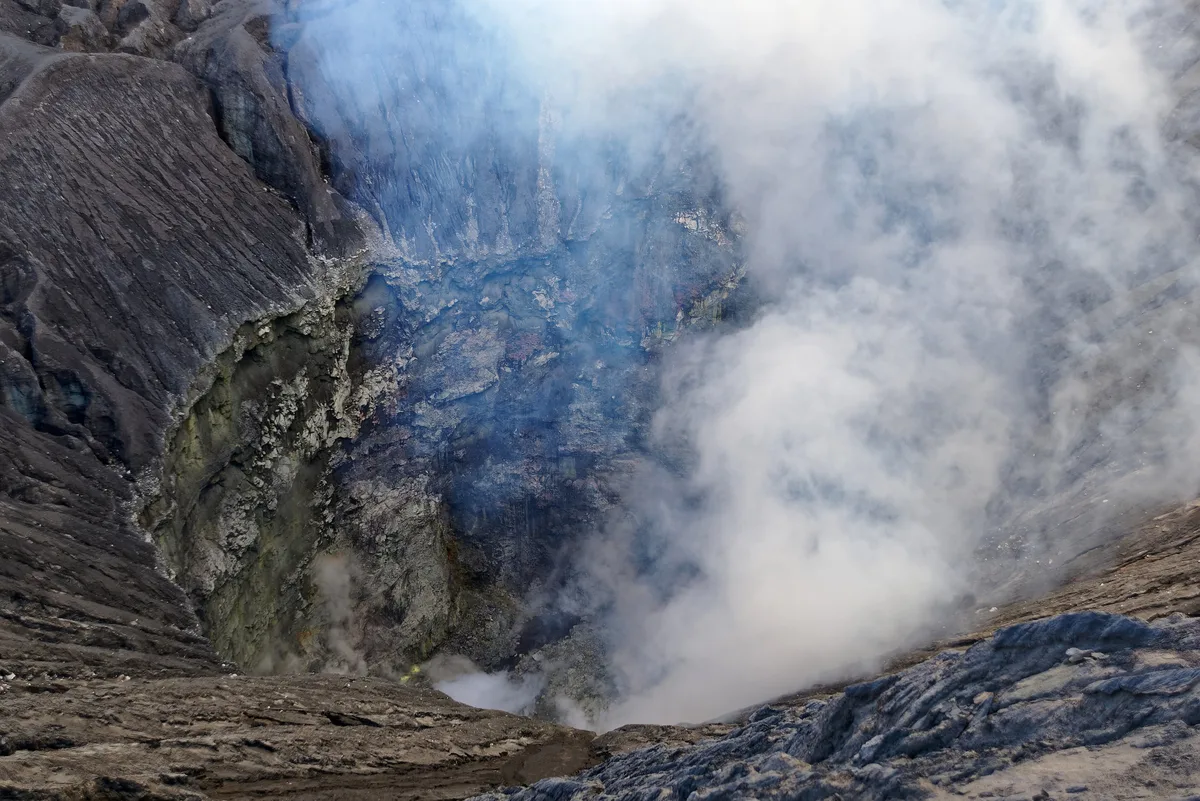
A crater inside a crater
Bromo is a volcano sitting inside a bigger one. The Tengger caldera is a vast bowl of grey volcanic sand walled by steep cliffs. Rising from its floor are several cones: Bromo, which is smoking, stripped bare and only a little over 2,300 metres high, and next to it Batok, a neat cone ribbed with green.
Behind them, Semeru often vents a puff of ash into the sky. It is the highest mountain on Java. You won’t find a lush postcard here. The place is ash, wind, sulphur and huge distances, and it is all the more striking for it.
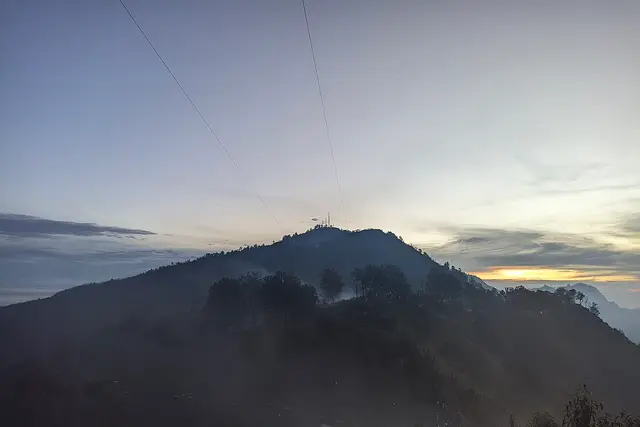
Sunrise from the Penanjakan ridge
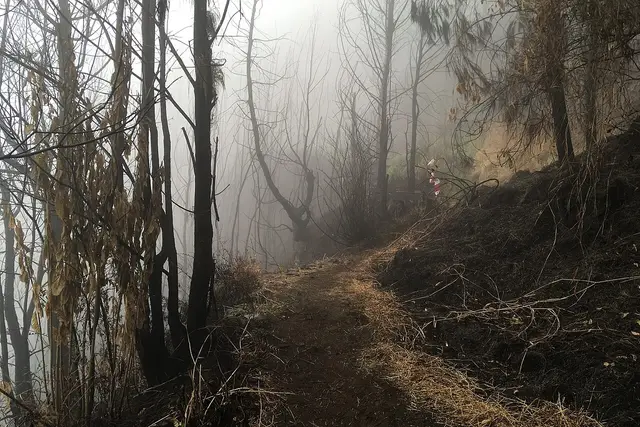
The famous view comes first, while it’s still dark. Jeeps leave the rim villages long before dawn and climb to viewpoints on the Penanjakan ridge. The higher main platform and the lower spots, including the one known as King Kong Hill, all look down over the caldera.
As the light comes up, the layers appear one by one:
- Mist pooling in the Sea of Sand
- Bromo’s steaming mouth
- Batok’s grooved slopes
- Semeru on the horizon
This is no secret, and the platforms fill with hundreds of people. Get there early for a spot at the railing. The lower viewpoints are usually less of a crush than the main deck.
Across the Sea of Sand to the rim
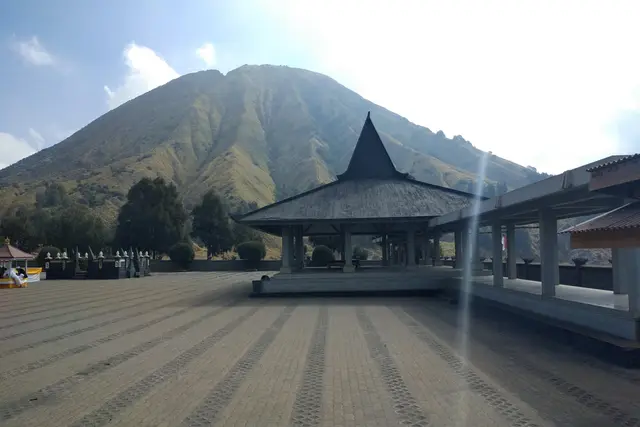
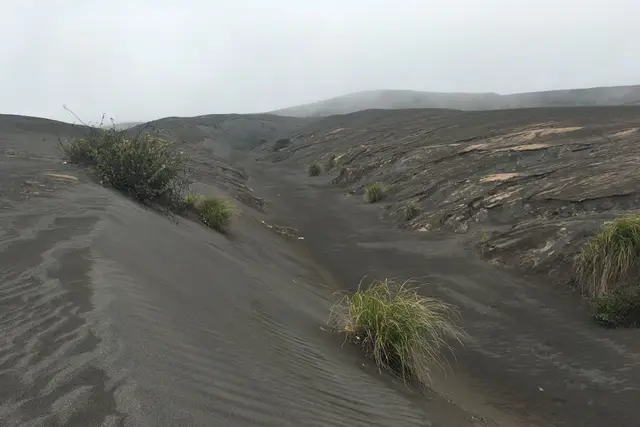
Next you head down. The caldera floor is called the Lautan Pasir, the Sea of Sand, and jeeps churn across it towards the foot of Bromo. In the middle stands Pura Luhur Poten, a Hindu temple of dark stone that belongs to the Tengger people. Its gates look stark against all that grey.
From the parking area it’s a walk uphill through soft ash to a concrete stairway, roughly 250 steps up to the crater rim. That stairway is what the park’s own description singles out. At the top, a narrow lip looks straight down into a churning, sulphurous vent. Some sections have no real railing, so keep back from the edge.
Many jeep packages add the Whispering Sands (Pasir Berbisik) and the green savanna on the caldera’s south side, nicknamed Teletubbies Hill. Plan on most of a morning for the full circuit.

Reaching the caldera rim
Most travellers stay in Cemoro Lawang, a village right on the rim. You can walk to the sunrise ridge or down to the sand from your guesthouse. The usual approach is by train or bus to Probolinggo, then by minibus or private car up the mountain road.
The address of the summit area falls on the Pasuruan side, near Tosari. Wonokitri is the gateway village there, and it suits drivers coming from Surabaya. Malang is another common starting point, with jeep tours that run straight through the night.
Overnight in the area if you can. Tours that do Surabaya to Bromo and back in one night are tiring, and you see the caldera half asleep.
Horses, jeeps and Tengger customs
Tengger men in sarongs and knitted hats wait at the jeep park with ponies. They offer rides across the sand to the bottom of the stairs. Agree the price and whether it is one-way or return before you get on, and pay in rupiah cash. There are no card machines out here.
Jeeps are hired for the whole vehicle, so travellers often team up in their guesthouse to share one. Park entry tickets are separate from the jeep. Check the national park’s official channels for how tickets are currently sold.
The crater is sacred to the Tengger. During the Yadnya Kasada festival, worshippers climb to the rim and throw offerings of crops, flowers and livestock into the vent. If your visit falls in that period, give people space on the stairs. Don’t climb into the slope below the rim to grab offerings for a photo.
At the temple, stay outside the inner courtyard unless you’re invited in, and dress modestly.
Cold, ash and the alert level
Pack for winter at the equator. Before dawn on the rim it is properly cold, sometimes close to freezing. Bring:
- A warm jacket and a hat
- A scarf or buff to keep ash and sulphur out of your mouth
- A torch for the dark walk to the stairs
- Sunglasses for the glare and grit once the sun is up
Hawkers at the viewpoints sell beanies and gloves if you forget.
The dry season, roughly May to October, gives the clearest sunrises. The wet months bring cloud and mud. Bromo is active, though, and the authorities sometimes close the crater or set an exclusion zone around it. Check the current alert level and the park’s announcements before you travel.
Frequently asked questions
Where is the best base for visiting Mount Bromo?
Cemoro Lawang, a village on the caldera rim on the Probolinggo side. You can walk from there to the Sea of Sand and the sunrise ridge, and jeeps leave from the village. Wonokitri, on the Pasuruan side, also works if you're driving from Surabaya.
How do I get to Mount Bromo by public transport?
Take a train or bus to Probolinggo in East Java, then a minibus or private car up the mountain road to Cemoro Lawang. Many travellers also join jeep tours that start from Malang or Surabaya.
How long should I spend at Mount Bromo?
The sunrise viewpoint, the Sea of Sand and the crater climb take most of a morning. Staying one or two nights nearby means you don't have to make an all-night drive.
What is the best time of year to visit Mount Bromo?
The dry season, roughly May to October, gives the best chance of a clear sunrise. Whatever the month, check the volcano's current alert level first, because the crater can be closed when activity rises.
How hard is the climb to the crater?
You walk through soft ash to a concrete stairway of roughly 250 steps up to the rim. Horses can carry you across the sand to the foot of the stairs, but you climb the steps yourself.
Plan your trip to Mount Bromo
Indonesia eSIM & staying connected →
Some links above are affiliate links — if you book through them, Wander Atlas earns a small commission at no extra cost to you. It's how we keep every guide free.
Related guides
 attraction
Pura Luhur Poten Gunung Bromo: Mount Bromo Travel Guide
 attraction
Sea of Sand Bromo: Mount Bromo Travel Guide (4.8★)
 attraction
King Kong Hill: Mount Bromo Travel Guide (4.7★)
 hidden gem