Why go
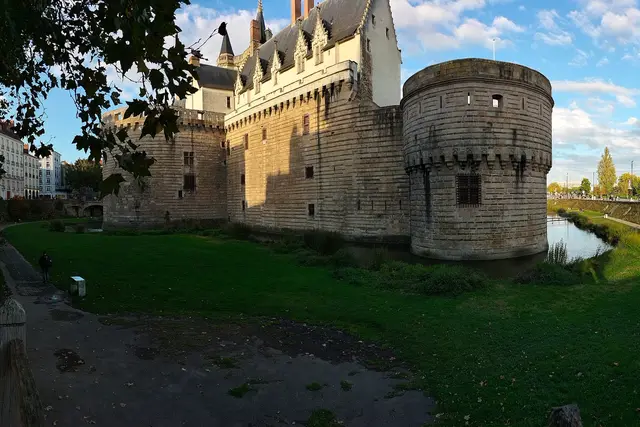
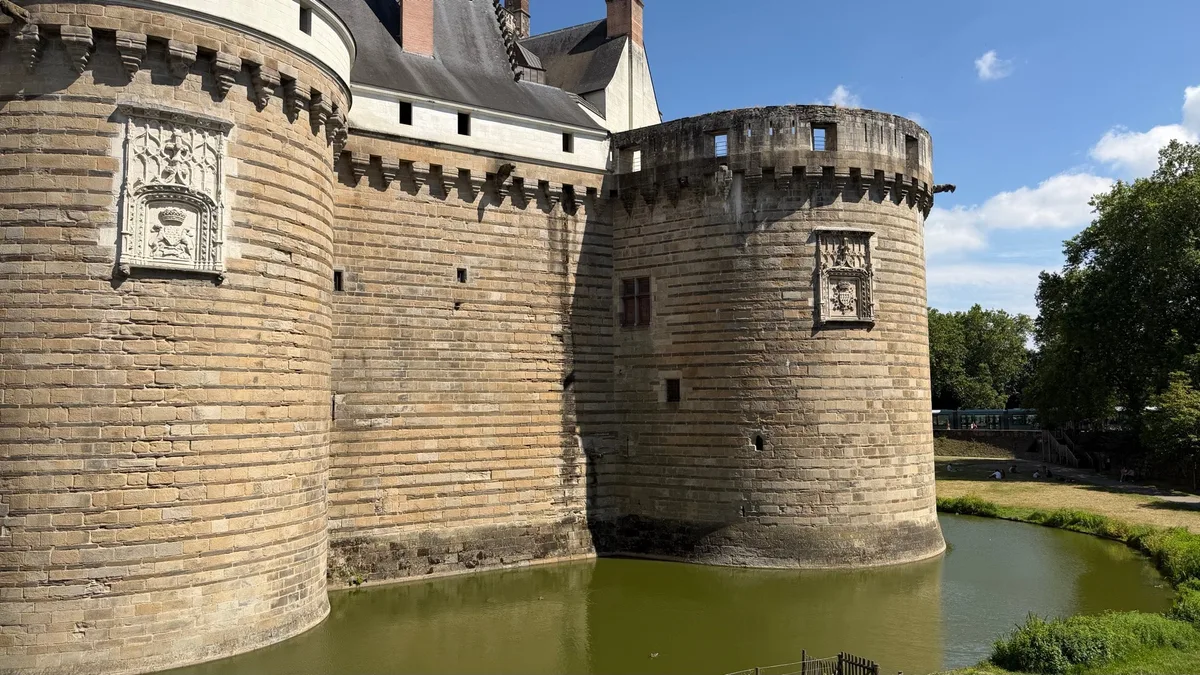
You round a corner near the Loire and suddenly there’s a moat, ramparts of pale limestone and dark schist, and a castle that looks like it wandered out of a storybook into the middle of a modern French city. This is the seat of the Dukes of Brittany, later home to Anne of Brittany and briefly to a young Louis XIV. It’s not a ruin behind a fence. You can walk right into the courtyard for free, which is rare for a monument this significant.
Getting there
The château sits at 4 Pl. Marc Elder, in the historic heart of Nantes, an easy walk from the cathedral and the old Bouffay quarter. Tram lines 1 and 2 stop nearby at Duchesse Anne, right beside the moat. If you’re coming from the train station, it’s a 15–20 minute walk or a short tram ride, either way, you’ll see the towers before you arrive.
What to see and do
The dry moat and ramparts are open to everyone, no ticket required, and you can walk a good stretch of the walls for free. Inside, the Nantes History Museum occupies the old ducal buildings, tracing the city’s story from its days as a slave-trading Atlantic port through industrial decline and reinvention.
Look for:
- Scale models showing how the port and city grew over centuries
- The Grand Logis, the duke’s residential wing with restored interiors
- The Tour du Fer à Cheval, a horseshoe-shaped tower with sweeping views
- The Golden Crown building, its rooftop line studded with dormer windows
Give yourself 1.5 to 2 hours if you’re doing the museum properly. If you’re just wandering the courtyard and walls, 30–40 minutes is plenty.

When to go
The château is open every day, 10am to 7pm, with no midday closure to plan around. That’s useful because it means you have a full nine-hour window rather than a narrow slot.
Weekends get busy fast: expect the heaviest crowds between 11am and 6pm on Saturday and Sunday. If you can only come on a weekend, aim for the last hour before closing, 6 to 7pm, when things noticeably thin out. On weekdays, the crowd stays manageable across the whole 10am–7pm stretch, so there’s less need to time it precisely.
How to visit like a local
This is one of the most-visited sites in Nantes, so the trick isn’t finding a secret entrance. It’s timing your visit and knowing what’s free.
- Walk the courtyard and ramparts without a ticket; only the museum and temporary exhibitions require paying.
- Skip the busy weekend midday window (11am–6pm) if you want the museum galleries to yourself. Go on a weekday instead, or catch the last hour before 7pm closing on weekends.
- Buy tickets at the on-site machines or online in advance during peak season to skip the queue at the door.
- Payment is standard card or cash at the ticket counter, no special local custom to navigate.
- Locals often treat the courtyard as a shortcut and meeting point rather than a tourist stop, so don’t be surprised if it feels more like a public square than a hushed monument.
- The mistake most visitors make: they see the exterior, assume that’s the whole experience, and skip the museum, missing the scale models and history that explain why the castle looks the way it does.
Check the official website before you go, since exhibition tickets and any seasonal closures can shift.
Nearby to combine with your visit
The Passage Pommeraye, a 19th-century covered shopping arcade with sculpted balustrades, is a short walk away. So is the Cathédrale Saint-Pierre-et-Saint-Paul, with its soaring Gothic nave. If you have kids or love mechanical whimsy, the Machines de l’île, home to the giant mechanical elephant, is a pleasant riverside walk from the château, making this corner of Nantes an easy half-day or full-day loop.
Frequently asked questions
How much time should I budget for the château?
Plan on 1.5–2 hours if you're visiting the history museum inside. If you're only walking the free courtyard and ramparts, 30–40 minutes is enough.
Is it free to visit?
The courtyard, moat walk, and ramparts are free to enter. Only the Nantes History Museum and any temporary exhibitions require a paid ticket.
When is the quietest time to visit?
Weekdays are calm throughout the full 10am–7pm opening window. On weekends, avoid 11am–6pm when it's busiest, and instead go in the last hour before closing, 6–7pm.
How do I get there by public transport?
Take tram line 1 or 2 to the Duchesse Anne stop, which sits right beside the château's moat. It's also a 15–20 minute walk from Nantes train station.
What's nearby if I want to make a day of it?
The Passage Pommeraye covered arcade, Nantes Cathedral, and the Machines de l'île mechanical elephant are all within easy walking or tram distance.
Plan your trip to Nantes
Some links above are affiliate links — if you book through them, Wander Atlas earns a small commission at no extra cost to you. It's how we keep every guide free.