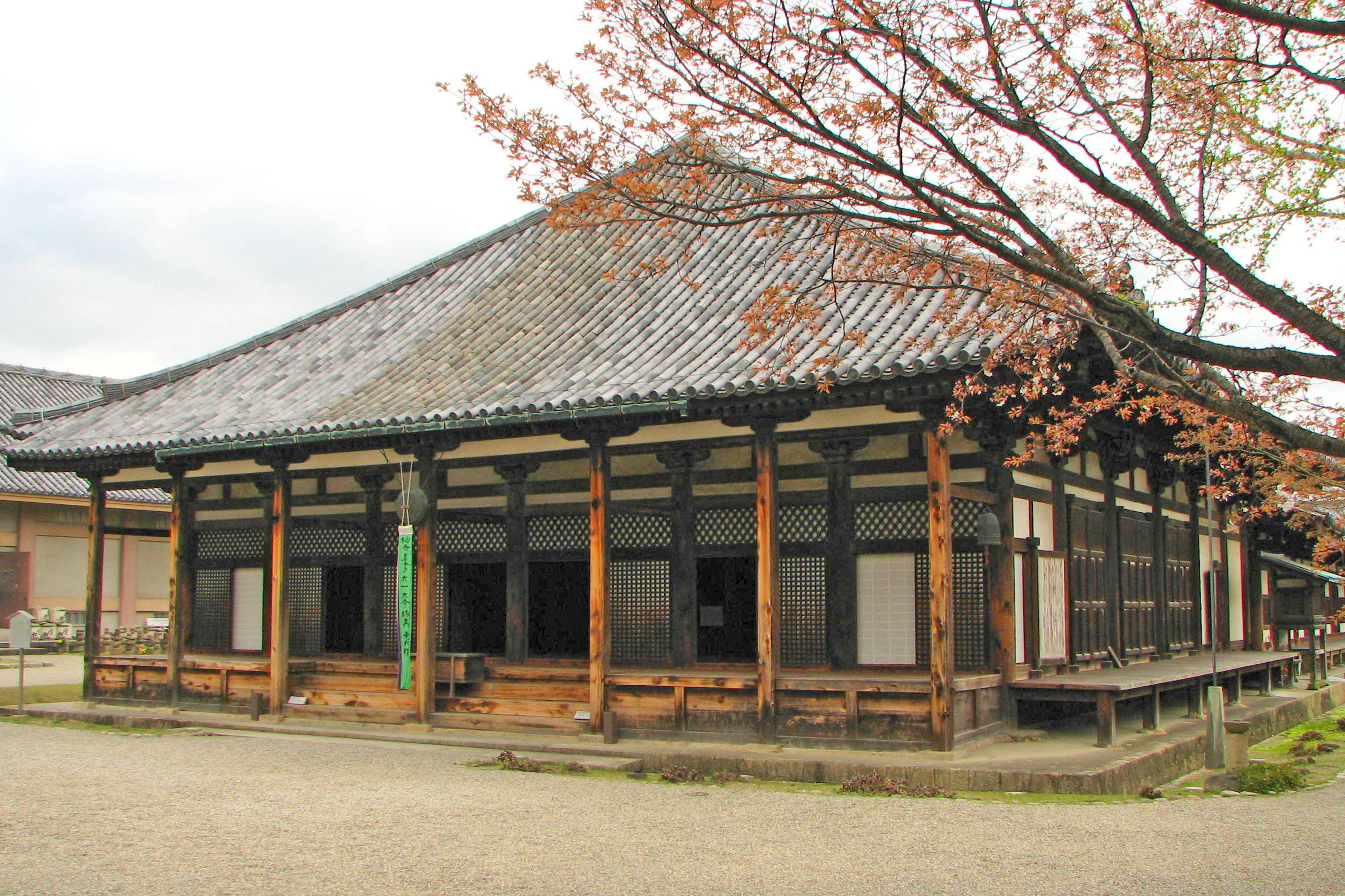
Roof tiles older than Nara itself
Look up before you look around. Part of the roof on the Gokurakubo main hall and the adjoining Zenshitsu is laid with tiles carried here from Asuka-dera. That was Japan’s first full Buddhist temple, founded by Soga no Umako in the late 6th century. The tiles are known as the oldest still in use in the country.
The temple moved to the new capital at Heijo-kyo in 718. The two surviving halls are National Treasures and part of the Historic Monuments of Ancient Nara World Heritage listing. Look for the stepped, overlapping gyogibuki style on the older sections of roof. The weathered, darker tiles sit in patches among the newer ones.
Inside the grounds
The precinct is compact, with gravel paths, low hedges and two main wooden halls side by side. Behind them, rows of small stone Buddhas and miniature stupas stand packed together. They were gathered from around the old temple lands and stand weathered and lichen-marked in tight lines.
What to look for:
- Gokurakudo (main hall): the old temple’s meditation hall rebuilt to honour Amida, with the ancient tiles overhead.
- Zenshitsu: a long, plain hall that housed monks.
- Stone Buddha field: hundreds of small carved figures in rows.
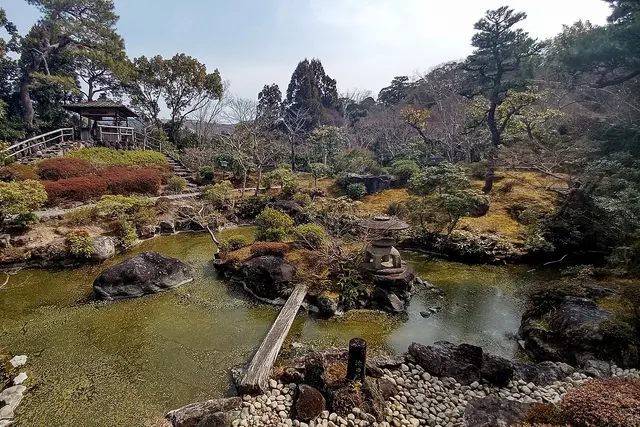
- Seasonal planting: lotus pots and bellflowers in summer, when the garden is at its fullest.
Most visitors spend 45 minutes to an hour. Add time if you want to sit on the hall verandas.

Shoes, stamps and the quiet hour
The gate opens at 9:00am every day, and the hour straight after opening is the quietest. Between 9am and 10am, on weekdays and weekends alike, you’ll have a clear view of the roofs and the stone field. On weekends, 12pm to 4pm is the busiest stretch. That’s when the paths fill and photos of the tiles come with other people’s elbows in them.
Temple manners here:
- Pay at the reception window by the entrance. The current admission is posted there, and small cash is the safest way to pay.
- Take your shoes off before stepping into either hall, and leave them on the racks provided.
- Check the signs before taking photos inside the halls. Interior photography is often restricted at Nara temples.
- Ask for a goshuin (temple seal) at reception if you carry a stamp book.
The last entry is before the 4:30pm close, so don’t plan this as a final stop at dusk.
Getting there and what’s around it
From Kintetsu Nara Station, walk south past Sarusawa Pond into the narrow lanes of Naramachi. It takes about 15 minutes. From JR Nara Station, allow roughly 20 minutes on foot. The temple stands among the old merchant houses rather than beside the deer park, so the approach is along residential streets lined with lattice-fronted shops.
Nearby, all on foot:
- Naramachi Koshi-no-Ie: a restored townhouse you can walk through, a few minutes away.
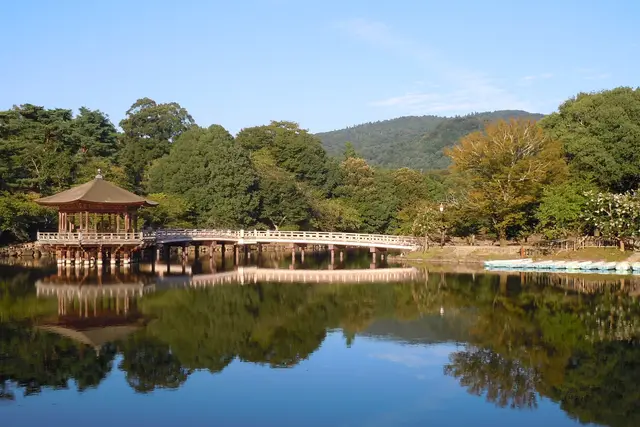
- Sarusawa Pond: on your route back, with the pagoda of Kofuku-ji reflected in it.
- Kofuku-ji: about 10 minutes north, and a natural next stop before Nara Park.
A morning plan that works well: arrive at Gango-ji for 9am, then wander Naramachi before lunch. After that, head north to Kofuku-ji and the park as the day crowds build there.
Frequently asked questions
When is the quietest time to visit Gango-ji?
9am to 10am, on both weekdays and weekends. Avoid 12pm to 4pm on weekends, which is the busiest period.
What are the opening hours?
9:00am to 4:30pm, every day of the week. Arrive well before closing so you have time to enter and walk the grounds.
How do I get to Gango-ji from the station?
It's about a 15-minute walk south from Kintetsu Nara Station, via Sarusawa Pond and into Naramachi. From JR Nara Station, allow about 20 minutes.
How long should I spend there?
45 minutes to an hour covers both halls, the stone Buddha field and the garden. It pairs easily with a walk around Naramachi.
What makes Gango-ji historically important?
It is the successor to Asuka-dera, Japan's first Buddhist temple. Its roofs still carry tiles from that original temple. The Gokurakudo and Zenshitsu halls are National Treasures within the Historic Monuments of Ancient Nara World Heritage Site.
Plan your trip to Nara
Some links above are affiliate links — if you book through them, Wander Atlas earns a small commission at no extra cost to you. It's how we keep every guide free.