Nara National Museum: Travel Guide (4.4★)
When to visit Japan: month-by-month weather, crowds and holidays →
✓ Facts verified via Google Places · Sep 17, 2026
At a glance
Live foot-traffic data via BestTime.app
How this guide is made
Produced with AI assistance and reviewed against live data sources. Facts such as hours, ratings, and location come from Google Places; images are licensed or public domain. Details can change — please verify before visiting. Editorial policy
Why go
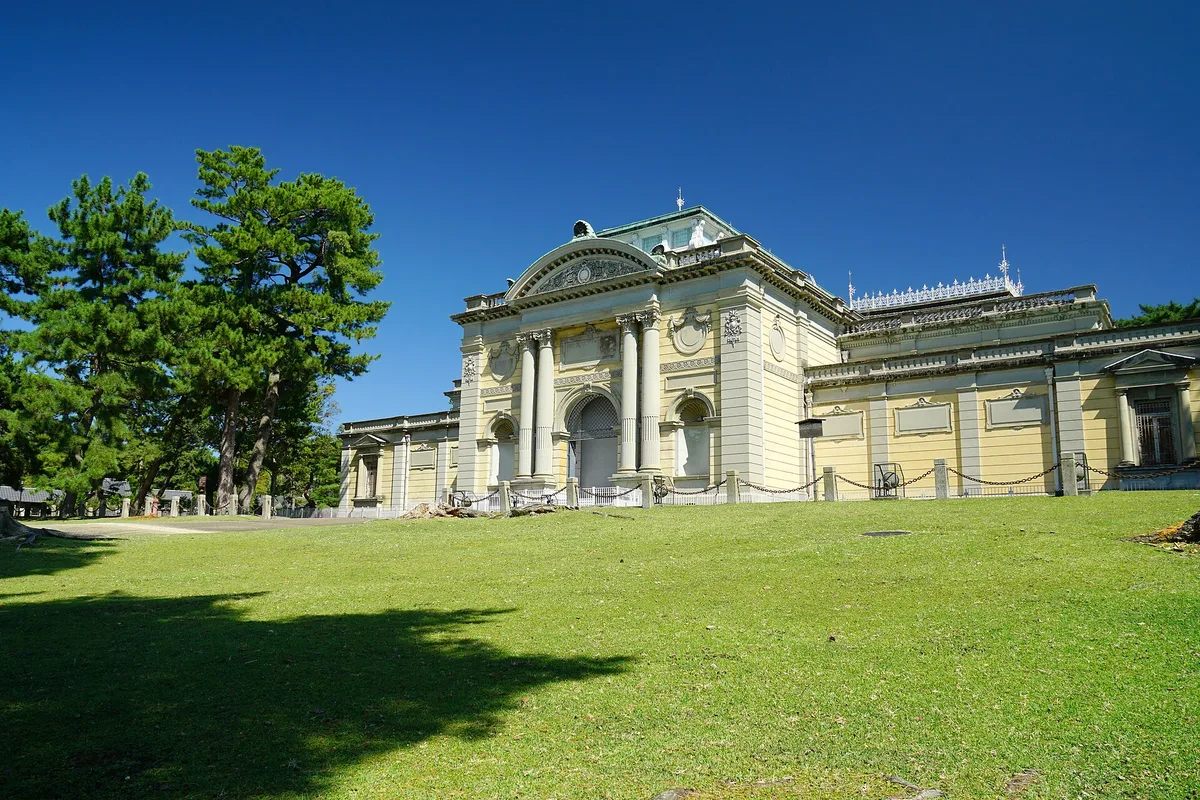
You come to the Nara National Museum for one reason above all: the Buddhas. This isn’t a museum of paintings on white walls. It’s a place built specifically to hold thirteen centuries of Japanese Buddhist art, and it shows. Founded in 1889, it was one of the first Western-style museums in the country, and its core mission has never wavered: collect, preserve, and display the sculpture, sutras, and ritual objects that once filled the temples of the old capital.
Walk into the basement-level Buddhist Sculpture Hall and the room goes dim and hushed, spotlights picking out gilt-bronze halos and the grain of centuries-old cypress wood. Bronze Kannons stand in glass cases with a stillness that no photograph quite captures. This is the kind of place where you slow your pace without meaning to.
Getting there
The museum sits inside Nara Park, Nara’s green, deer-dotted heart, an easy walk from either of the city’s two main stations. From Kintetsu Nara Station, it’s about a 5–10 minute walk east along Noboriōji-dori. From JR Nara Station, it’s closer to 20 minutes on foot, or a short bus ride toward Nara Park. Once you’re in the park, the museum is impossible to miss: a wide lawn, a scattering of sacred deer that will nose at your bag if you’re carrying food, and the museum’s East and West wings connected by an underground passage.
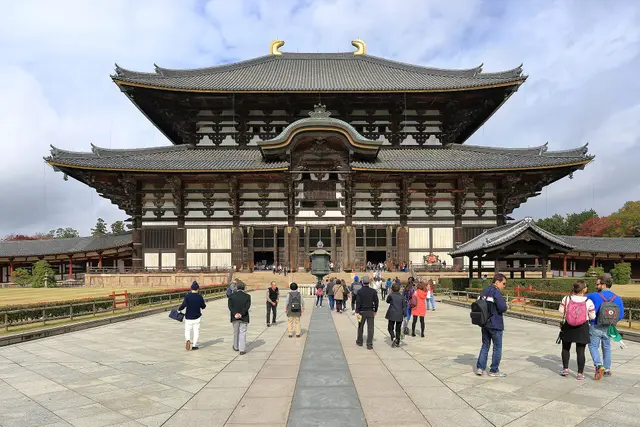
Todai-ji’s Great Buddha Hall is about a 10-minute walk north; Kasuga Taisha’s vermilion torii gates are a similar distance east, both make natural bookends to a museum visit.

What to see
Start in the Nara Buddhist Sculpture Hall (Nara Butsuzō-kan), the museum’s permanent core collection, housed partly underground where climate control keeps centuries-old wood and lacquer stable. Here you’ll find rows of standing and seated Buddhas, bosatsu, and guardian kings, many on long-term loan from temples across the Kansai region, arranged so you can walk full circle around each figure and study the carving from every angle.
The adjoining galleries hold sutra scrolls, ritual bronzes, and mandala paintings. Twice a year, in spring and autumn, the museum also hosts special loan exhibitions of Buddhist art from temples and private collections, these draw serious crowds and are worth checking the museum’s calendar for before you go, since they can reshuffle which permanent-collection rooms are open.
When to go
Give yourself 90 minutes to two hours if you want to actually read the object labels rather than skim; an hour is enough for a focused pass through the Sculpture Hall alone. Crowd patterns here are telling: weekends get busiest between 11am and 4pm, exactly when tour groups doing the Nara Park circuit (deer, Todai-ji, museum, Kasuga Taisha) all funnel through at once.
Both weekdays and weekends are quietest in the late afternoon, specifically the 5pm–6pm window, when the tour buses have moved on and the light outside starts to soften over the park. If your schedule allows it, save the museum for the tail end of your Nara day rather than the middle.
How to visit like a local
Buy your ticket at the counter or via the ticket machines just inside the entrance, cash and card are both accepted, and there’s rarely a meaningful line outside peak special-exhibition weekends. Move through in the order the galleries suggest rather than backtracking; the underground passage between wings is easy to miss and worth using rather than re-entering from outside.
The single biggest mistake visitors make is treating this as a quick add-on after Todai-ji and rushing the Sculpture Hall in ten minutes, the collection rewards slowing down, especially in the dim basement galleries where your eyes need a minute to adjust before the detail on the bronzes really comes into focus. Photography rules vary by gallery and special exhibition, so glance at the signage rather than assuming you can shoot everywhere.
If you’re visiting in spring or autumn, check whether a special exhibition is running before you go, it changes both the layout and the price of admission, and it’s the kind of detail worth confirming on the museum’s own site rather than guessing.
Frequently asked questions
How do I get to the Nara National Museum?
It's about a 5–10 minute walk from Kintetsu Nara Station through Nara Park, or roughly 20 minutes on foot (or a short bus ride) from JR Nara Station.
How long should I spend at the museum?
Plan on 90 minutes to two hours for a proper visit, or about an hour if you're focusing only on the Buddhist Sculpture Hall.
When is the quietest time to visit?
Both weekdays and weekends are calmest between 5pm and 6pm. Try to avoid 11am–4pm on weekends, when the museum sees its heaviest foot traffic.
Can I combine this with other Nara Park sights?
Yes — Todai-ji's Great Buddha Hall and Kasuga Taisha are both roughly a 10-minute walk away, making a natural half- to full-day loop through the park.
Are there special exhibitions worth planning around?
The museum typically runs special loan exhibitions of Buddhist art in spring and autumn; these can be crowded and may temporarily change which permanent galleries are accessible, so check the museum's schedule before visiting.
Plan your trip to Nara
Some links above are affiliate links — if you book through them, Wander Atlas earns a small commission at no extra cost to you. It's how we keep every guide free.