A creature drawn in subtracted stone
The Spider is roughly 46 metres long. That sounds big until you see it from a banking Cessna, where it looks small enough to cover with your thumb. Eight legs splay from a compact body, and one leg runs out into a long, oddly extended line.
The figure isn’t painted or carved. The Nazca people, who flourished here roughly 2,000 years ago, raked aside the dark, iron-stained stones of the pampa. That exposed the paler ground underneath. The desert barely sees rain or wind at ground level, so the lines have survived for centuries. Since 1994 they have been part of a UNESCO World Heritage Site.
Why so few people pin this spot
Google’s listing puts the Spider on the PE-1S and calls it open 24 hours. That’s true only in the sense that open desert has no gate. Walking on the geoglyphs is prohibited, and from the roadside the figure is invisible: the drawings only make sense from above.
So the pin collects few reviews, even though the Spider sits on the standard flight circuit. Almost everyone who sees it is in a plane seat, not standing on this stretch of highway. For a figure this well known, it’s a quiet entry in Nazca’s listings.
Getting to Nazca and into the air
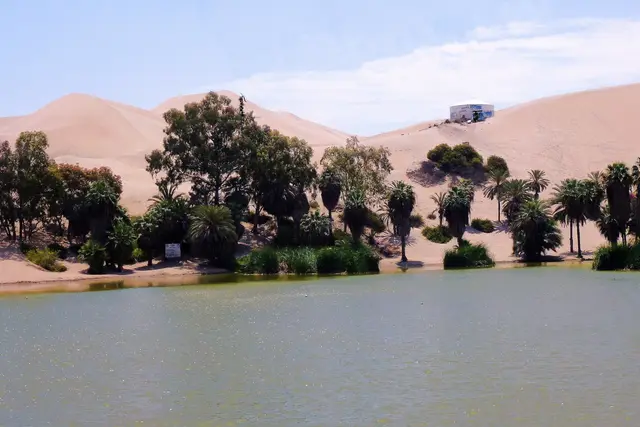
Nazca town is on the Pan-American Highway south of Lima. Long-distance buses such as Cruz del Sur and Oltursa do the trip in around 7–8 hours. Many travellers combine it with Paracas or Huacachina on the way down toward Arequipa.
Overflights leave from the Aeródromo María Reiche Neuman, a short taxi ride from the town centre. The standard loop lasts around 30–35 minutes. It usually covers these figures:
- The Whale and the “Astronaut” on the hillside
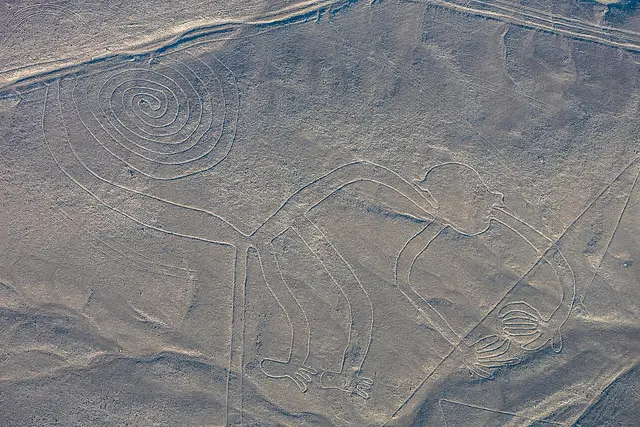
- The Monkey, with its spiral tail
- The Spider
- The Hummingbird and the Condor
- The Hands and the Tree, near the roadside observation tower
Some operators also fly from Pisco or Ica. The flight is longer, and so is the time you spend in the air before the lines appear.
Booking a seat over the Spider
Book through a registered operator at the aerodrome or a reputable agency in town. Bring your passport, because it’s checked before boarding. You’ll also be weighed so the pilot can balance the small aircraft. The airport tax is paid separately from the flight, and the counter will tell you the current amount.
Here’s what makes the flight better:
- Fly in the morning. Wind and heat turbulence build later in the day, and delays stack up behind them.
- Eat lightly. Pilots bank hard left and then right over each figure so both sides of the cabin get a view. That makes motion sickness common.
- Know your figure. The co-pilot calls out each geoglyph as you approach. Look for the Spider’s long, extended leg to orient yourself.
- Shoot short bursts. Keep the camera strap on and take a few frames, then lower the lens and just look.
If you don’t want to fly, the observation tower (mirador) beside the highway shows the Hands and the Tree from ground level. It doesn’t show the Spider.
Reading the figure once you’ve seen it
Researchers have argued for decades about what the lines were for. Theories include astronomical calendars, ritual walking paths and appeals for water in one of the driest places on earth. For the Spider in particular, some have suggested it shows a type of spider found in the Amazon, far from this coast. Treat that as one interpretation, not a settled answer.
The best context is on the ground in town. The María Reiche Museum is named for the German mathematician who spent decades mapping and protecting the lines. A planetarium talk in town also covers the astronomical theories, and both are worth an evening.
Making a day of the pampa
Most visitors give Nazca one full day. Fly in the morning, then use the afternoon for sites you can actually walk around:
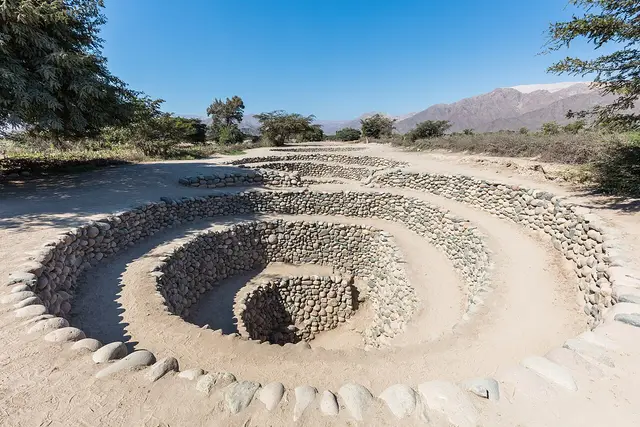
- Cantalloc aqueducts: spiralling stone puquios that still channel underground water.
- Chauchilla Cemetery: open pits where Nazca-era burials sit exposed in the sand.
- Palpa lines: hillside figures to the north, often added to longer flights.
Bring sun protection for the afternoon. The pampa has almost no shade, and the glare off the pale ground is fierce.
Frequently asked questions
Can I see the Nazca Spider from the ground?
No. Walking on the geoglyphs is prohibited, and the Spider isn't visible from the roadside observation tower, which shows the Hands and the Tree instead. You need an overflight to see it.
How long is the flight over the Nazca Lines?
The standard loop from Nazca's María Reiche Neuman aerodrome takes around 30–35 minutes and includes the Spider, Monkey, Hummingbird, Condor and Whale. Flights from Pisco or Ica take longer.
What is the best time to fly over the Spider?
Morning. Wind and heat turbulence build later in the day, which makes the ride rougher and can cause delays.
How do I get to Nazca?
Long-distance buses such as Cruz del Sur and Oltursa run from Lima along the Pan-American Highway in roughly 7–8 hours. Many travellers stop at Paracas or Huacachina on the way.
What else is near the Nazca Spider?
The Cantalloc aqueducts, Chauchilla Cemetery, the Palpa lines and the María Reiche Museum are all within easy reach of Nazca town and fill out a one-day visit.
Plan your trip to Nazca
Peru eSIM & staying connected →
Some links above are affiliate links — if you book through them, Wander Atlas earns a small commission at no extra cost to you. It's how we keep every guide free.