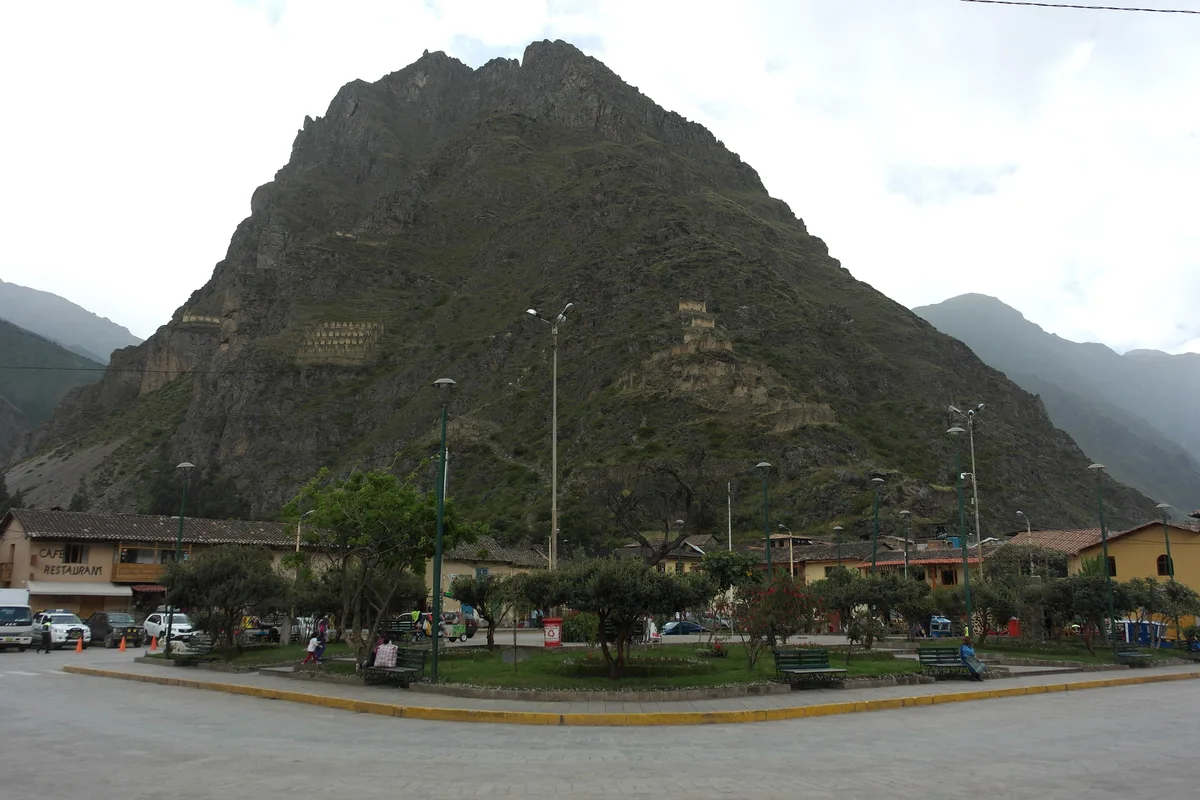
A square set on an Inca street plan
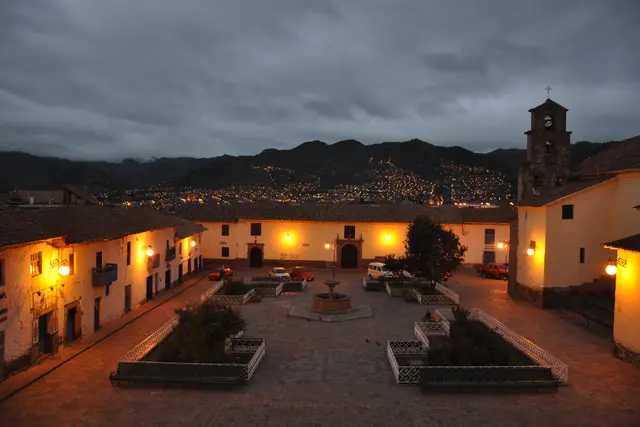
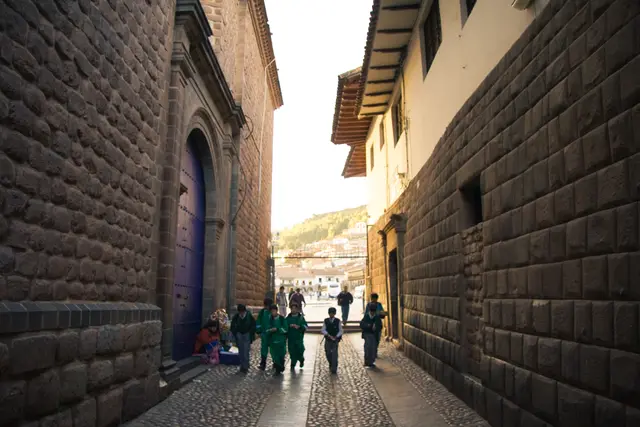
The plaza is small, cobbled and enclosed on every side. Ollantaytambo is one of the few towns in Peru whose Inca layout still works as a street grid. Narrow lanes run off the square, and stone water channels flow along them, carrying water the way they have for centuries.
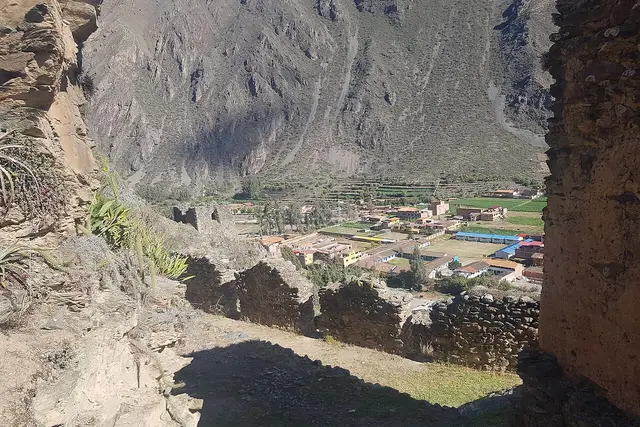
Look up from the benches and the mountains close in. The town sits at roughly 2,800 metres. On the slope of Pinkuylluna above town you can see the stone storehouses the Inca built into the hillside, with no ticket needed.
Look down at the street level too. Many of the houses on the surrounding lanes stand on fitted Inca stonework, with later adobe and tile built on top.
Where the square fits in your day
Most visitors pass through for one of three reasons:
- The ruins: the terraces and Temple Hill of the Ollantaytambo archaeological site are a short walk away, across the Patacancha river.
- The train: PeruRail and Inca Rail services to Aguas Calientes, the town below Machu Picchu, leave from the station about 15 minutes’ walk downhill.
- Transport: colectivos and mototaxis, the small three-wheeled taxis, gather around the plaza’s edges for Urubamba and onward to Cusco.
That makes the plaza a natural meeting point. If you have a gap of an hour before your train, spend it here and on the lanes behind it rather than at the station.
The square is well known and much reviewed, so don’t expect it to yourself. It works best as a base for exploring, not a single sight to tick off.
Using the plaza without the rush
Timing here follows the transport schedule. Early trains to Machu Picchu pull people downhill at dawn. Day tours from Cusco usually reach the ruins later in the morning. That leaves the early hours and the evening as the slower parts of the day around the square.
A few habits make things smoother:
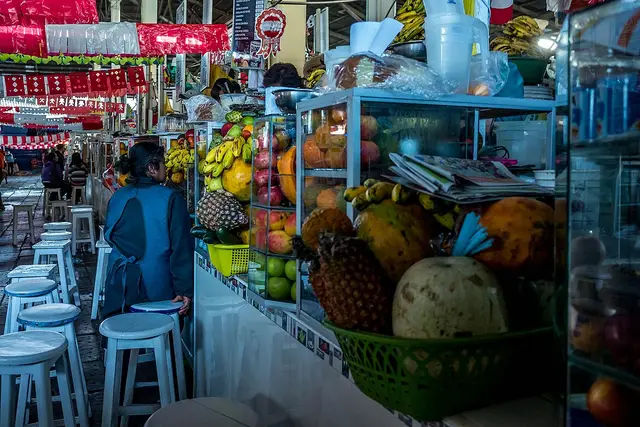
- Carry small soles. Market stalls, snack vendors and mototaxi drivers often struggle with large notes.
- Ask before photographing people. Quechua women in traditional dress, sometimes with a llama or lamb, often expect a tip for a photo. Ask first and agree before you raise the camera.
- Agree mototaxi fares before you get in. There is no meter.
- Buy ruin tickets at the site gate. Entry to the archaeological site is sold there and is also part of the Cusco tourist ticket (Boleto Turístico). Current prices are posted at the gate.
Altitude, cobbles and a slow pace
The cobbles are uneven and the water channels run open beside the paths. Watch your step after dark, when lighting on the side lanes is limited.
If you have come up from Lima, the altitude can catch you on the slight climbs out of the square. Ollantaytambo is lower than Cusco, so many travellers sleep here first to adjust. Walk slowly, drink water, and save the steep climbs at the ruins and Pinkuylluna for when you feel steady.
A stay of one night gives you the plaza in the evening and early morning. Those are the hours when the town feels most like a place people live in rather than a stop on the way to Machu Picchu.
Frequently asked questions
How do I get from the Plaza de Armas to Ollantaytambo train station?
Walk downhill for about 15 minutes, or take a mototaxi from the edge of the plaza. PeruRail and Inca Rail trains to Aguas Calientes (for Machu Picchu) leave from there.
Is the plaza open at night?
Yes, it is a public square you can walk through at any hour. Side lanes can be dimly lit, so watch for the open water channels.
How long should I spend at the plaza?
About 30–60 minutes for the square and nearby lanes. Add 2–3 hours if you also visit the Ollantaytambo ruins, a short walk away.
When is the best time to visit?
Early morning and evening tend to be calmer. Machu Picchu trains draw people away at dawn, and day tours from Cusco usually arrive later in the morning.
What is near the plaza?
The Ollantaytambo archaeological site across the Patacancha river, the Pinkuylluna storehouses on the hill above town, and colectivos to Urubamba and Cusco.
Plan your trip to Ollantaytambo
Peru eSIM & staying connected →
Some links above are affiliate links — if you book through them, Wander Atlas earns a small commission at no extra cost to you. It's how we keep every guide free.