A Square Built on a Slope
Plaza San Blas is short of breath by design. The square tilts with the hillside, and its stone paving steps up toward the plain white facade of the Templo de San Blas. Whitewashed walls, blue-painted wooden balconies and terracotta roofs close in on three sides.
Cusco sits at roughly 3,400 metres, and San Blas climbs above the centre. The square gives you a flat-ish pause after the climb. It’s also where the neighbourhood’s lanes meet, so it works as both a destination and a crossroads.
The Climb Up Cuesta de San Blas
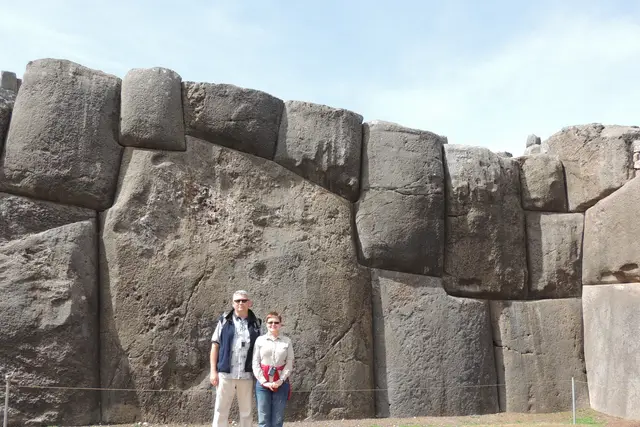
You arrive on foot. From the Plaza de Armas, walk past the cathedral and up Calle Hatunrumiyoc, where the Twelve-Angled Stone sits in an Inca wall of fitted andesite. Keep going and the street becomes Cuesta de San Blas, narrow and stepped, finishing at the square.
Allow 10–15 minutes going up, longer if you’ve just arrived in Cusco. Taxis can’t take you through these lanes, so walking is the realistic choice.
- Pace: stop on the landings and don’t rush the last stretch.
- Shoes: the stones are polished smooth and get slick after rain.
- Coming down: take Calle Tandapata for a different route back.
Templo de San Blas and Its Pulpit
The church on the square is one of Cusco’s oldest parish churches, founded in the 16th century. From outside it’s modest: thick adobe walls and a simple bell tower. Inside is the reason people climb up.
The carved cedar pulpit is regarded as one of the finest works of colonial woodcarving in the Americas. It’s crowded with saints, cherubs and twisting columns, and a skull sits at the top. Tradition attributes it to the Indigenous carver Juan Tomás Tuyru Túpac.
Entry is covered by Cusco’s Boleto Religioso, the circuit ticket that also includes the cathedral. The current price and opening times are posted at the church door and at the cathedral ticket office.

Workshops on the Surrounding Lanes
San Blas has been Cusco’s artisans’ quarter since colonial times, and the lanes around the square show it. Look for:
- Religious figures: the long-necked saints and Virgins associated with the Mendívil family are a San Blas tradition.
- Retablos: painted wooden boxes filled with miniature scenes.
- Textiles and ceramics: in doorway shops along Carmen Alto and Tandapata.
Calle Tandapata is the lane to walk slowly. An open stone water channel runs along it, and doorways open onto courtyard studios. Cafés with upper-floor windows look out over the rooftops toward the cathedral.
Doing the Plaza the Cusco Way
Plaza San Blas is well known and on most walking routes, so don’t expect to have it to yourself. A few habits make a visit smoother.
- Photos with costumed women and llamas: they expect payment. Agree before you raise the camera.
- Craft stalls and small shops: carry small notes in soles. Gentle haggling is normal at stalls but less so in established galleries.
- Inside the church: photography isn’t allowed. Remove hats and keep your voice low, because it’s still a working parish.
- Street sellers: a polite “no, gracias” while you keep walking is all you need.
Google lists the square as open 24 hours, which is fair, since it’s a public space. The church and shops keep their own hours, though. Arriving in the morning usually puts you there before the walking tours that come up from the Plaza de Armas later in the day.
Linking It With the Rest of Upper Cusco
Treat the plaza as a starting point. Give the square, the church and a loop of the lanes 1.5–2 hours, more if you stop at a café or a studio.
- Mirador de San Blas: a short, steep climb above the square for wide views over the terracotta roofs.
- Sacsayhuamán: the Inca fortress sits further uphill. It’s a demanding walk at altitude and needs its own ticket.
- Plaza de Armas and Qorikancha: downhill, and an easy afternoon after the morning climb.
At dusk the lights come on across the valley below, and the climb down Cuesta de San Blas gets busy with people going to dinner. Bring a layer. Cusco cools quickly once the sun drops behind the hills.
Frequently asked questions
How do I get to Plaza San Blas from the Plaza de Armas?
Walk. Head up Calle Hatunrumiyoc past the Twelve-Angled Stone, then continue up Cuesta de San Blas to the square. It takes about 10–15 minutes uphill, and taxis can't get through the narrow lanes.
How long should I spend in San Blas?
Allow 1.5–2 hours for the square, the Templo de San Blas and a loop along Calle Tandapata and Carmen Alto. Add more time for a café stop or the climb to the Mirador de San Blas.
Can I go inside the Templo de San Blas?
Yes. Entry is part of the Boleto Religioso circuit ticket, which also covers Cusco's cathedral. The current price and hours are posted at the church and the cathedral ticket office. Photography isn't allowed inside.
What's the best time of day to visit?
Mornings are good for clear light and for a slower climb before the walking tours come up from the centre. Dusk is good for watching the city lights come on below.
Is the walk hard because of the altitude?
It's steep, and Cusco sits at around 3,400 metres, so pause on the landings. If you've just arrived, leave San Blas until you've had a day or two to acclimatise.
Plan your trip to Cusco
Peru eSIM & staying connected →
Some links above are affiliate links — if you book through them, Wander Atlas earns a small commission at no extra cost to you. It's how we keep every guide free.