Rock, birds and a smell you won’t forget
The islands are bare rock with nothing growing on them. Wind and waves have worn them into arches and caves, and the swell booms through the gaps. Every ledge is covered in birds, and the white crust underneath is guano. For more than a century it was dug and shipped off as fertiliser.
The islands are part of the Reserva Nacional Sistema de Islas, Islotes y Puntas Guaneras. Visitors aren’t allowed to land, so the boats idle close to the cliffs instead. Here’s what to watch for:
- Sea lions packed onto the low rocks and beaches, especially loud in breeding season
- Humboldt penguins on the lower ledges
- Peruvian boobies, guanay cormorants and Peruvian pelicans by the thousand
- Old guano-loading piers and the guards’ huts on the larger island
The route out from El Chaco
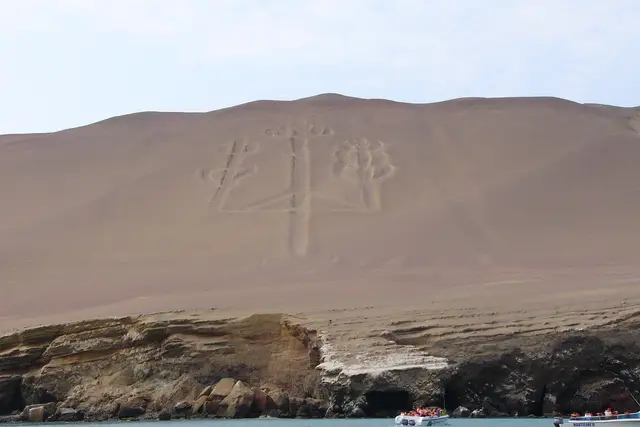
Every tour leaves from El Chaco, the small waterfront strip in Paracas town. Most boats are open motor launches with rows of benches and life jackets. On the way out they stop off the Paracas Peninsula at El Candelabro, a huge candelabra-shaped figure dug into a sandy slope. Nobody knows who made it or when, and you can only see it properly from the sea.
From there it’s a fast ride out to the islands, then a slow loop around them, then straight back. Allow about two hours on the water. Most people pair the boat with an afternoon in the Paracas National Reserve on the mainland, which has red-sand beaches and cliff viewpoints.

Booking a seat and handling the boat
Tour agencies line the malecón at El Chaco, and nearly every hotel in Paracas sells the same trip. Booking the night before is normal. Many travellers pay in Peruvian soles, cash in hand. There’s also a pier tax and a reserve entry fee on top of the tour price. Both are posted at the dock, so check there for the current amounts.
At the moment boats only run between 8am and 1pm. The Paracas wind usually builds through the afternoon, which is why trips stay in the morning. Take the earliest departure you can manage. The water is normally calmer and the light on the cliffs is softer. Rough swell can cancel or delay sailings, so leave yourself some slack if you have a bus to catch afterwards.
- Sit on the outside edge for clear photos. Guides normally turn the boat so both sides get a look.
- Wear a hat or hood. The birds fly directly overhead.
- Pack a windproof layer. Mornings out on the Pacific are cool and you’ll get splashed.
- Take seasickness tablets beforehand if swell bothers you. Once the boat leaves, there’s no stopping.
- Keep quiet near the rocks. Boats aren’t allowed to land, and shouting at the colonies is frowned upon. Guides often get a tip at the end.
Getting to Paracas
Paracas sits on Peru’s south coast, roughly three and a half to four hours by road from Lima. Long-distance buses from Lima go into Paracas town itself, a short walk from El Chaco. Others stop in Pisco, about a 20-minute taxi ride north. If your bus arrives the same morning, the early boats will already be gone. Most visitors stay one night so they can make the first departure.
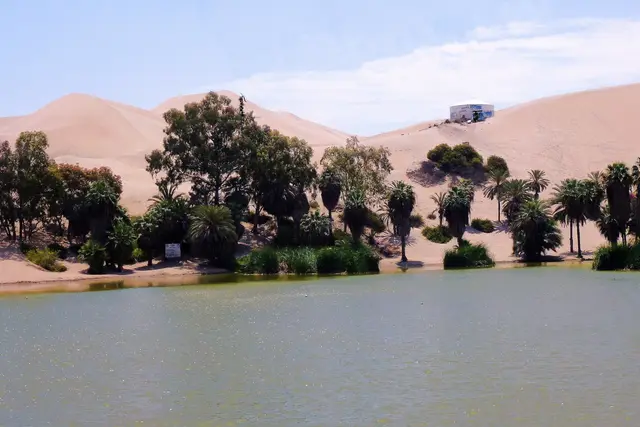
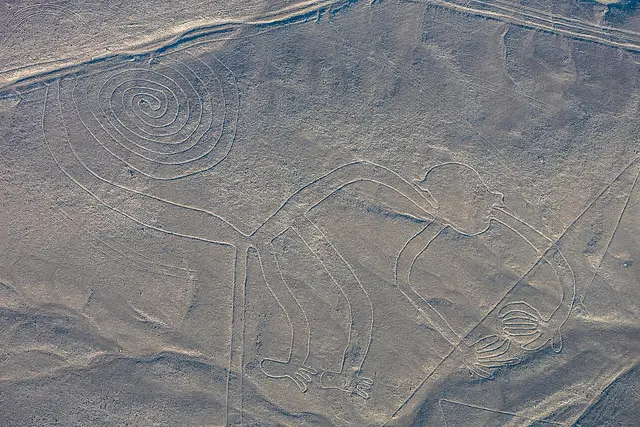
The islands are a reasonable stop on the way south to Huacachina and Nazca. A common plan is boat in the morning, reserve in the afternoon, and an overnight bus or onward transfer after that.
Frequently asked questions
Can you land on the Islas Ballestas?
No. The islands are protected inside the Reserva Nacional Sistema de Islas, Islotes y Puntas Guaneras, so every tour stays on the water and cruises close to the cliffs.
What time do boats to the Islas Ballestas leave?
At the moment departures run between 8am and 1pm from El Chaco pier in Paracas. The earliest boat usually has the calmest water, because the wind tends to build through the morning.
How long is the Islas Ballestas tour?
Allow about two hours. That covers the stop at the El Candelabro geoglyph, the loop around the islands and the ride back to El Chaco.
What animals will I see?
Sea lions, Humboldt penguins, Peruvian boobies, guanay cormorants and Peruvian pelicans. Seabirds cover nearly every ledge.
Can I do it as a day trip from Lima?
It's hard to manage, because Paracas is about three and a half to four hours away by road and the boats only run in the morning. Most people stay one night in Paracas and catch the first departure.
Plan your trip to Paracas
Peru eSIM & staying connected →
Some links above are affiliate links — if you book through them, Wander Atlas earns a small commission at no extra cost to you. It's how we keep every guide free.