Why go
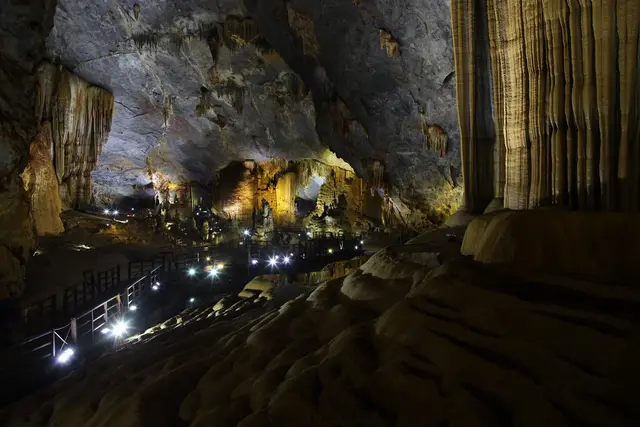
Phong Nha Cave is the reason this stretch of central Vietnam has a national park at all. It’s a river cave you enter by boat, gliding under a limestone mouth wide enough to swallow a house, into chambers hung with stalactites that took hundreds of thousands of years to form.
You don’t hike to this one, you float into it. That alone makes it different from most caves you’ve probably visited.
Getting there
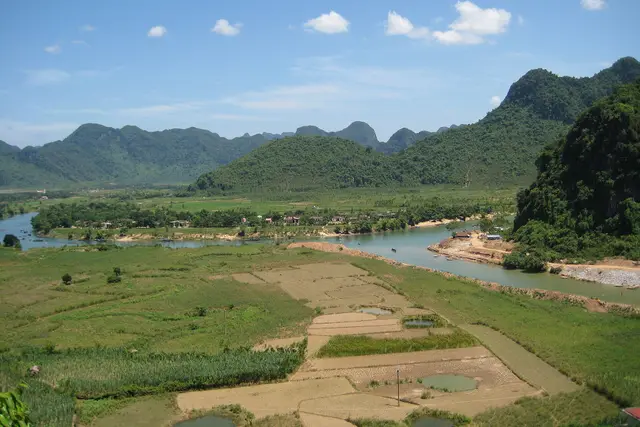
Phong Nha Cave sits inside Phong Nha-Ke Bang National Park, a UNESCO World Heritage Site, a short drive and boat trip from Phong Nha town.
- From Phong Nha town: walk or cycle to the small pier on the Son River, a few minutes from the main street.
- Hop a wooden tourist boat (shared or private) for the roughly 30-minute ride upriver to the cave mouth.
- Many visitors combine it with a motorbike or car trip to nearby Paradise Cave or the Botanic Garden the same day.
- Đồng Hới is the nearest city with an airport and train station, about 45 minutes from Phong Nha by road.
Inside the cave
The boat cuts its engine as you approach the entrance, and the boatman switches to paddling. Sound changes first, the outside world drops away, replaced by dripping water and the slap of the paddle.
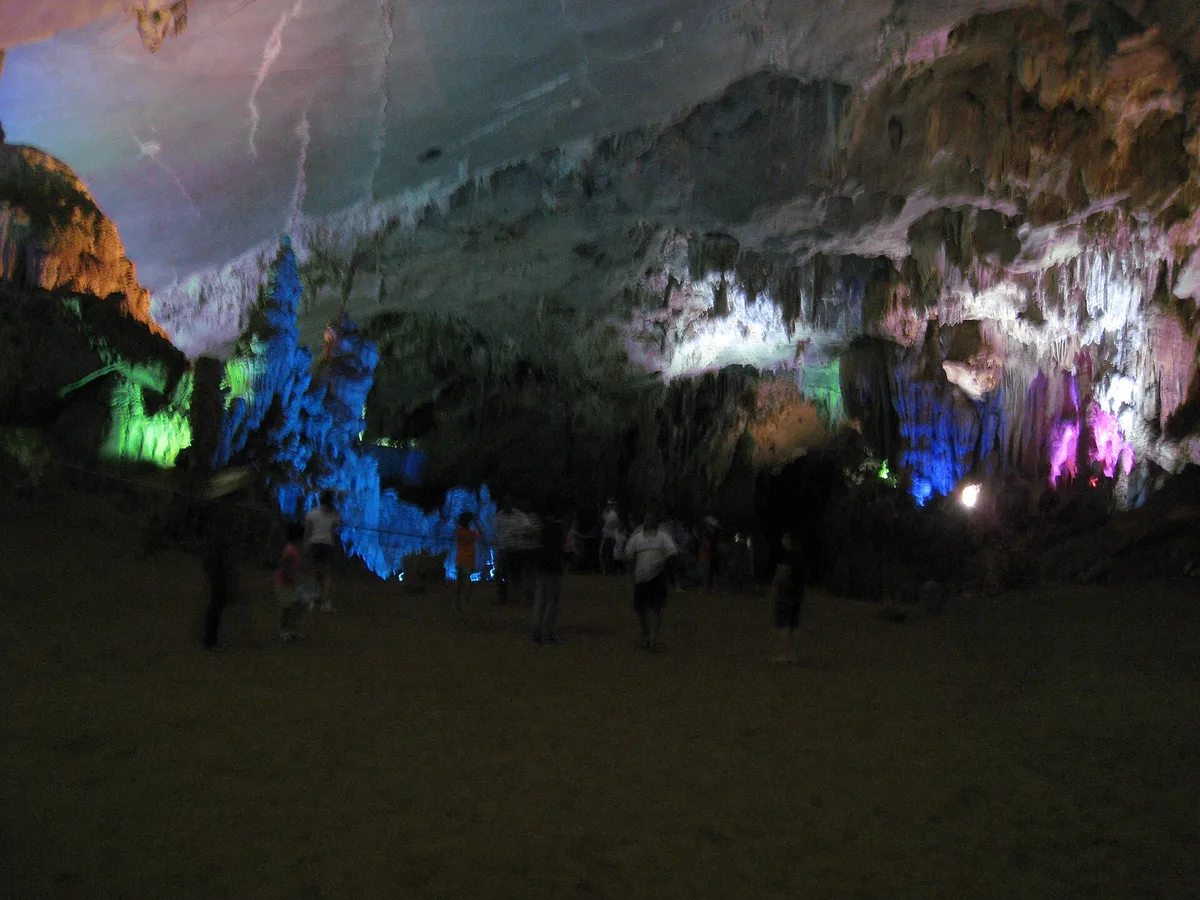
Coloured floodlights pick out formations with names like the Lion, the Royal Court, and the Buddha, stalactites and stalagmites built up over hundreds of millennia. About 1,500 metres of the cave are open to boats and walkways.
Partway through, you disembark and walk on a wooden platform through drier chambers before rejoining the boat. The whole underground stretch takes roughly an hour, cave mouth to exit.
Bring a light jacket. The cave interior stays noticeably cooler and damper than the tropical air outside.

When to go
Aim for the dry season, roughly February through August, when river levels are low and the cave stays fully accessible. Heavy rains from September to November can raise water levels enough to shorten or close the route.
Early morning departures, before the big tour groups arrive from Đồng Hới and Hue, mean a quieter boat ride and less noise inside the cave. Midday sun on the river is also intense, so morning is more comfortable regardless of crowds.
How to visit like a local
Phong Nha Cave is well established on the tourist circuit, so don’t expect a quiet secret. Plan around the crowds instead of hoping to avoid them entirely.
- Arrive at the pier as early as boats run, ideally before mid-morning, when bus groups from Hue and Đồng Hới start filling the queue.
- Boats typically operate on a per-boat rate rather than per-person, so team up with other travelers to split the cost.
- Pay in Vietnamese dong; small riverside ticket offices rarely take cards, so carry cash.
- Wear sandals or shoes you don’t mind getting wet. You’ll wade or walk on damp platforms partway through.
- Keep voices down once inside. Sound carries enormously in the main chambers, and the cave’s calm is part of the experience.
- Don’t touch the formations. Oils from skin discolor stalactites that have been forming since before humans existed.
- If you want fewer boats around you, ask about combining Phong Nha Cave with a Paradise Cave or Dark Cave add-on later in the day, once the morning rush at Phong Nha has moved on.
Nearby if you have more time
Phong Nha town itself is small and walkable, with riverside cafés and guesthouses geared toward travelers passing through the national park.
Paradise Cave, a dry cave with dramatically lit chambers, sits about a 30-minute drive away and pairs naturally with a Phong Nha Cave morning. The Dark Cave, known for mud baths and zip-lining, is another popular half-day add-on for a longer national park itinerary.
Frequently asked questions
How do I get to Phong Nha Cave?
Take a boat from the pier in Phong Nha town up the Son River — about a 30-minute ride to the cave entrance. Most travelers base themselves in Phong Nha town, reachable by road from Đồng Hới, the nearest city with an airport and train station.
How long should I spend at Phong Nha Cave?
Plan for half a day including the boat ride there and back. The cave portion itself, from entrance to exit, takes roughly an hour.
What's the best time to visit?
Go in the dry season, roughly February to August, when river levels keep the full cave accessible. Arrive early morning on weekdays to avoid tour-bus crowds that build by mid-morning.
Is Phong Nha Cave worth visiting compared to Paradise Cave?
They're different experiences — Phong Nha is a river cave you enter by boat, while Paradise Cave is a dry cave you walk through. Many visitors do both in one trip since they're about 30 minutes apart.
Do I need to book a boat in advance?
It's usually possible to arrange a boat on arrival at the pier, priced per boat rather than per person, so it helps to team up with other travelers to share the cost.
Plan your trip to Phong Nha
Some links above are affiliate links — if you book through them, Wander Atlas earns a small commission at no extra cost to you. It's how we keep every guide free.