Stand in Pisac’s plaza and look up. The green steps climbing the mountain behind the market stalls are Inca agricultural terraces, and the ruins are spread along the ridge above them. Parque Arqueológico Pisac is the site that draws most visitors to this town.
It is one of the best-reviewed Inca sites in the Cusco region, and the crowds match that reputation. Don’t come expecting solitude. Come with a plan for when you arrive and which way you walk.
The ridge above the market
The complex is generally attributed to the Inca ruler Pachacuti, who is thought to have built it as a royal estate. It is less a single ruin than a chain of sectors strung along a mountain spine. Between them you walk trails cut into rock and along the edges of terraces.
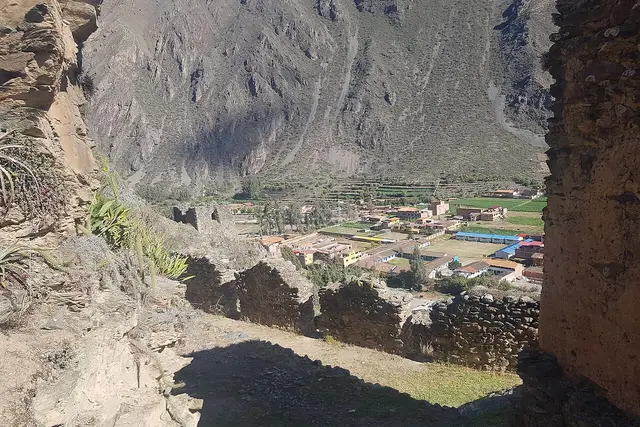
Below you lies the Urubamba River, which locals also call the Vilcanota at this stretch, running through the flat valley floor. The terraces curve with the slope like contour lines. They were farmland, not decoration, and they are why the Sacred Valley was the Inca heartland’s larder.
Reading the sectors
Most visitors pass through these areas in roughly this order from the upper entrance:
- Qantus Raqay: a cluster of rough stone dwellings near the top car park.
- Intihuatana: the ceremonial core, with the finest fitted Inca stonework on the site and a carved ritual stone known as the “hitching post of the sun”.
- P’isaqa: a residential group with rounded walls on a lower spur.
- Kanchiraqay: another set of structures, often linked to controlling the routes through the valley.
- The terraces (andenes): the long sweep you saw from the plaza, which you cross on the way down to town.
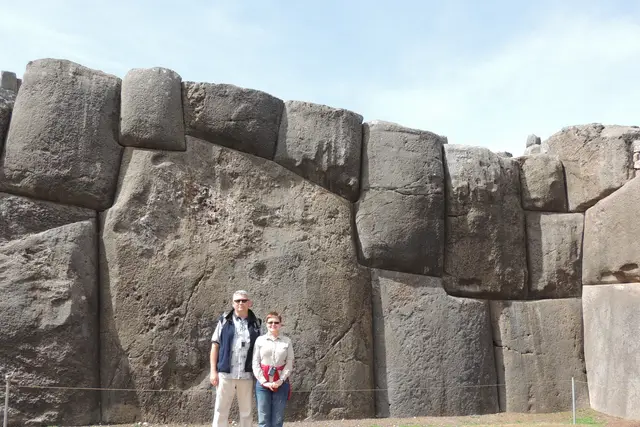
The Intihuatana is the part worth slowing down for. Compare its tight, polished blocks with the rougher fieldstone walls elsewhere. That difference is how the Inca marked a building as sacred.
Tankanamarka, the cliff full of holes
Across a ravine from the main trail you will see a rock face pocked with dozens of openings. This is Tankanamarka, often described as one of the largest Inca cemeteries known. The openings are tombs that were cut or built into the cliff.
Nearly all of them were looted long ago, which is why they gape open. You can’t walk into the cemetery itself; you view it across the gorge. Bring a zoom lens or binoculars, because from the path the tombs are a dotted pattern and the detail only shows close up.
Getting up from Pisac town
Pisac is roughly an hour from Cusco by road. Colectivos and buses run from Cusco to Pisac town, and most Sacred Valley day tours stop here too.
From town you have two ways up:
- By taxi to the upper entrance, a winding drive of around half an hour. Taxis wait near the market and the bridge.
- On foot up the trail that starts at the edge of town and climbs straight through the terraces. Expect a steep climb of about 1.5–2 hours.
The smartest approach for most people is to ride up and walk down. You start at the top, move through the sectors downhill and finish in town, with the descent doing the work your legs would hate going the other way.
Altitude matters here. Pisac town sits at roughly 2,970 metres and the ruins are higher. If you have just flown into Cusco, keep your pace slow, carry water and leave the uphill hike for later in your trip.
Getting through the gate with the Boleto Turístico
Entry is not a standalone ticket in the usual sense. Pisac is covered by the Boleto Turístico del Cusco, the regional tourist ticket that also covers Ollantaytambo, Chinchero and Moray. Current versions and prices are posted on the official Cusco tourism ticket channels and at the ticket offices. Check there rather than trusting an old blog.
How it works on the ground:
- Your ticket is checked and punched at the entrance. Keep it handy, because some trails have a second checkpoint.
- Carry your passport. Student versions require ID that matches.
- Licensed guides wait near the upper entrance. Agree on the length of the tour and the fee before you set off.
- Toilets and snack sellers sit around the upper car park. Once you head down the ridge there is nothing until town.
- Stay off the walls and respect the roped areas around the Intihuatana. Guards will call you back.
If your taxi waits for you at the top, agree on how long and settle the fare first. Drivers usually expect cash in soles.
Beating the day tours to the 8am gate
At the moment the park opens 8:00am–4:30pm every day this week. Hours at Peruvian archaeological sites can shift through the year and on holidays, so confirm on the official site before you go.
Day tours leave Cusco in the morning and usually reach Pisac mid-morning. If you sleep in Pisac or the valley and are at the gate for 8am, you get the Intihuatana before the groups pile in behind you. Late afternoon can also thin out, but leave yourself enough time to walk down before closing.
The dry season, roughly May to September, brings clear skies and firm trails. It is also peak travel season. In the wet months, from about November to March, the terraces turn green and the paths get slick, so wear boots with grip.
Plan on 2–3 hours for the upper sectors plus the walk down. Allow longer if you stop often at the viewpoints.
Down into the market and onward
The trail drops you back in Pisac town, close to the artisan market around the main plaza. It runs every day, and it is at its fullest on its traditional days, especially Sunday, when weavings, ceramics and produce spill across the square.
Pisac makes a natural first stop on a Sacred Valley loop. From here the road follows the river through Calca and Urubamba to Ollantaytambo, where another set of Inca terraces climbs above town. Your Boleto Turístico covers that site too. Chinchero and Moray sit on the high plateau on the way back toward Cusco.
Frequently asked questions
How do I get from Pisac town up to the archaeological park?
Take a taxi from near the market or bridge to the upper entrance, a winding drive of around half an hour. Or hike the steep trail through the terraces from the edge of town, which takes about 1.5–2 hours. Many visitors ride up and walk down.
What are the opening hours?
At the moment it opens 8:00am–4:30pm every day. Hours at Peruvian archaeological sites can change with the season and on holidays, so check the official site before you go.
How long should I spend at Pisac ruins?
Allow 2–3 hours for the upper sectors, including the Intihuatana, and the walk down through the terraces to town. Give yourself longer if you climb up from town on foot.
What is the best time to visit to avoid crowds?
Be at the gate when it opens at 8am. Day tours from Cusco usually arrive mid-morning. For weather, the dry season (roughly May to September) brings clearer skies, though it is also the busiest travel period.
Which ticket do I need?
Entry is covered by the Boleto Turístico del Cusco, which also includes Ollantaytambo, Chinchero and Moray. Current options and prices are posted on the official Cusco tourism ticket channels and at the ticket offices. Bring your passport.
Plan your trip to Pisac
Peru eSIM & staying connected →
Some links above are affiliate links — if you book through them, Wander Atlas earns a small commission at no extra cost to you. It's how we keep every guide free.