Why Ram Jhula matters
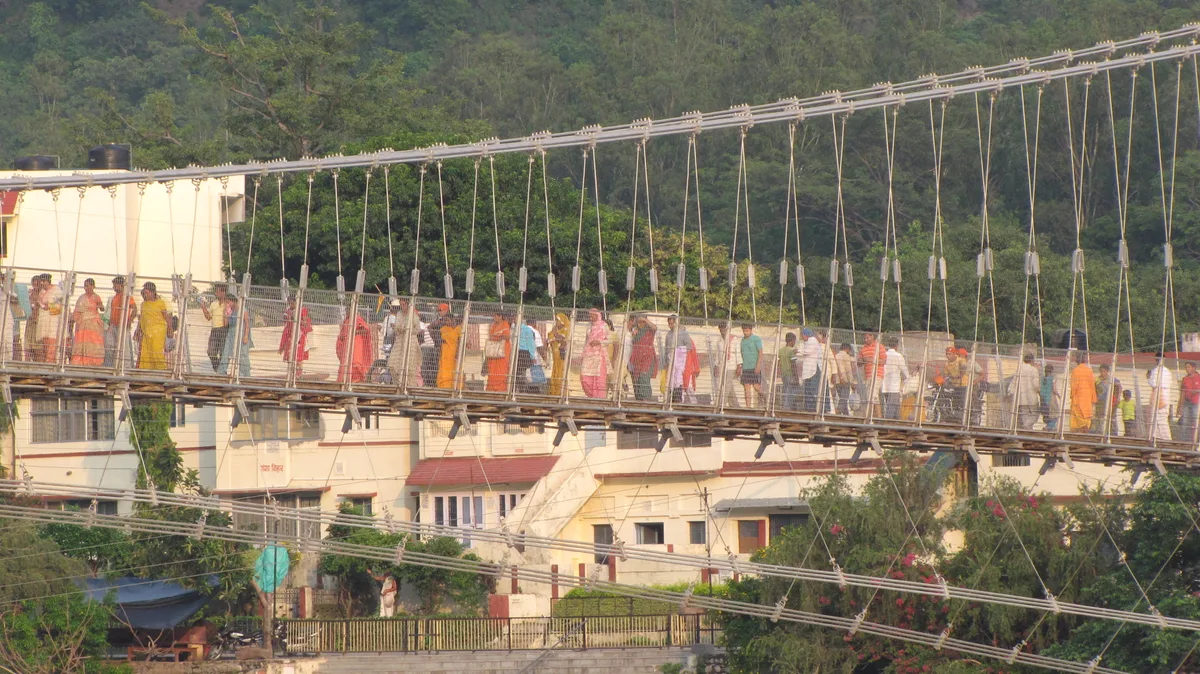
You feel the bridge before you see it (a low hum of footsteps and scooter horns rising over the Ganges. Ram Jhula is Rishikesh’s second great suspension bridge, built decades after its older cousin Lakshman Jhula upstream, and it’s now the busier of the two. It connects the Swarg Ashram side to Shivananda Nagar, and everyone crossing it is headed somewhere with a purpose) to an ashram, a chai stall, a yoga class, or the river itself.
What crossing it actually feels like
The deck is narrow iron mesh, strung with prayer flags that snap in the wind coming off the water. Motorbikes weave between pilgrims in orange robes and backpackers gripping the railing. Below, the Ganges runs a startling turquoise-green, cold and fast, with rafts occasionally drifting past.
Monkeys patrol the cables and railings, and they’re not shy, hold onto food or eyeglasses. Halfway across, pause and look downstream: you’ll spot the ghats, the domes of Parmarth Niketan, and hills stacked green behind them.
What’s around it
Both ends reward a slow wander, not just a quick crossing.
- Swarg Ashram side: dense with ashrams, bookshops selling spiritual texts, and stalls of malas and Himalayan salt.
- Ghat steps: locals and travelers alike sit here to watch the river, meditate, or just dry off after a dip.
- Parmarth Niketan ghat: a short walk south, this is where the nightly Ganga Aarti draws large crowds after sunset.
- Cafes: German Bakery and a string of rooftop restaurants overlook the water on the western bank, good for a break after crossing.

When to go
Ram Jhula never closes. It’s open 24 hours, every day. That said, “open” doesn’t mean empty. Midday and early evening bring a crush of foot and scooter traffic that turns the crossing into a slow shuffle.
Early morning, roughly 6 to 7am, is your best window. The light is soft, the air is cool, and you’ll share the bridge mostly with people heading to yoga or river dips rather than tour groups. Late evening after 8pm, once the Aarti crowds disperse, is another quiet stretch.
How to visit like a local
Ram Jhula is one of Rishikesh’s most-visited landmarks, so treat it as a busy thoroughfare rather than a quiet photo op. Plan around the crowds instead of expecting to avoid them entirely.
- Time it right: cross early morning or late evening; avoid midday and the hour before the 6pm-ish Ganga Aarti, when everyone funnels toward Parmarth Niketan.
- Walk, don’t linger mid-bridge: the deck is narrow and shared with motorbikes, stopping for photos blocks a real flow of foot and vehicle traffic.
- Mind the monkeys: don’t dangle bags, sunglasses, or snacks over the railing; they will take the opportunity.
- Dress modestly: this is a spiritual crossing point, not a beach town, shoulders and knees covered goes a long way here.
- Pay small vendors in cash: chai stalls and fruit sellers near both ends rarely take cards.
- Skip the shoes if you plan to enter an ashram or temple: many require bare feet at the threshold, so wear something easy to slip off.
- Don’t confuse it with Lakshman Jhula: that’s the other, older bridge about 3km upstream. Ask locals to specify which one if you’re getting directions.
The bridge itself takes only 10–15 minutes to cross at a normal pace, but budget closer to an hour if you want to stop at the ghats, browse Swarg Ashram’s shops, or catch part of the Aarti nearby. It rewards unhurried movement more than a quick tick-box visit.
Frequently asked questions
How do I get to Ram Jhula?
It's in Swarg Ashram, Rishikesh, reachable by auto-rickshaw or taxi from Rishikesh bus stand or railway station (about 15–20 minutes). Most hotels in Tapovan or Swarg Ashram are within walking distance.
Is there an entry fee?
No, crossing Ram Jhula is free and it's open 24 hours every day.
When is the best time to visit to avoid crowds?
Early morning between 6 and 7am is a calm stretch, along with after 8pm once Ganga Aarti crowds have dispersed. Midday and the hour before the evening Aarti are the most congested.
How long should I spend there?
Crossing takes 10–15 minutes, but plan 45 minutes to an hour if you want to explore the ghats, shops, and cafes on either end.
What's nearby worth combining with a visit?
Parmarth Niketan ghat for the evening Ganga Aarti, Swarg Ashram's bookshops and cafes, and Lakshman Jhula bridge about 3km upstream.
Plan your trip to Rishikesh
Some links above are affiliate links — if you book through them, Wander Atlas earns a small commission at no extra cost to you. It's how we keep every guide free.
Related guides
 attraction
 Parmarth Niketan Ashram: Rishikesh Travel Guide (4.6★)
 attraction
 Rajaji Tiger Reserve: Rishikesh Travel Guide (4.3★)
 hidden gem
 Triveni Ghat: Rishikesh Travel Guide (4.6★)
 attraction