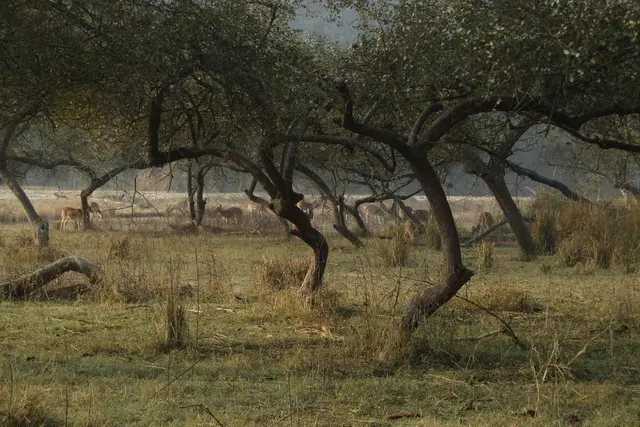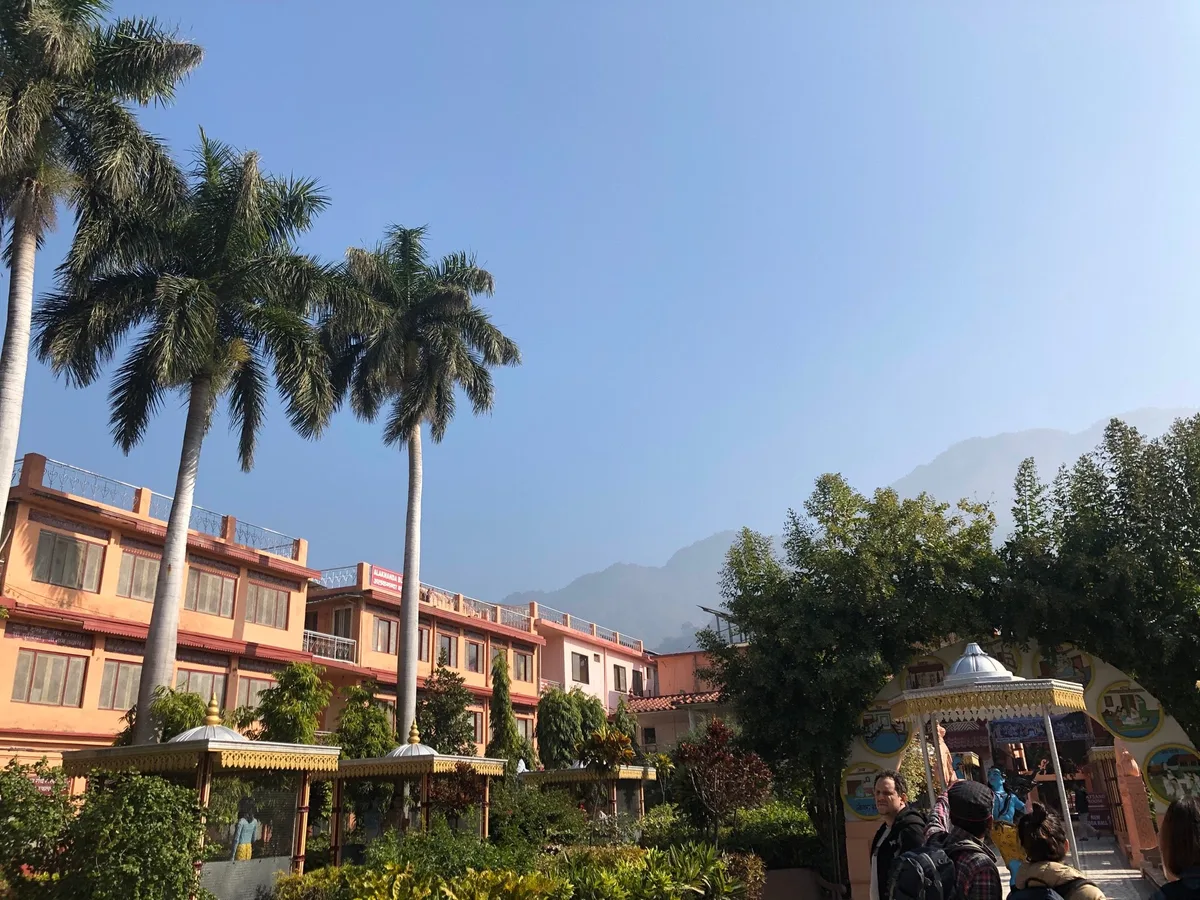
The gate on Main Market Road doesn’t look like much from the street: a wide arch, a security check, a name board painted saffron and white. Walk through it and the ashram opens up into something closer to a small campus than a temple, terraced gardens, dormitory blocks, a large open-air amphitheater of steps running straight down to the Ganga.
That amphitheater is the reason most people come. It’s where Parmarth Niketan holds its Ganga Aarti every evening at sunset, one of the largest and best-known river ceremonies in Rishikesh, led by young sadhus and ashram residents in saffron robes.
The evening aarti, and why the timing shifts
There’s no fixed clock time for the aarti because it follows sunset, so it moves across the seasons. In peak summer it can start close to 7pm; in winter it may begin as early as 5:30pm.
Check locally on the day if you can, or simply arrive an hour before the sun is due to drop. The ceremony itself runs maybe 30 to 45 minutes: bells, a shared chant, oil lamps passed hand to hand and floated out onto the current in small leaf-bowls.
Because the ashram is open until 10pm daily, you have room to arrive early, sit on the steps, and watch the river turn from brown to gold before anything formal begins.
Beating the weekend crush
This is a well-known, heavily visited ashram, not a quiet local secret, and the crowd data bears that out. Weekend evenings between 4pm and 9pm are consistently the busiest stretch, when tour groups, families and pilgrims converge on the ghat steps at once.
If you want breathing room, come on a weekday, or arrive on the earlier side even on weekends. Both weekdays and weekends stay calm through the daytime hours, so a late morning or early afternoon visit to see the gardens and buildings without the crowds is a reasonable trade if you don’t mind skipping the aarti itself.
A few practical notes for the crush:
- Claim a step-seat on the amphitheater at least 30–45 minutes before the ceremony starts on weekends.
- Keep bags and shoes with you or in view; there’s a lot of foot traffic in a tight space.
- Photography is generally fine from the steps, but keep flash and intrusive framing away from those actually praying.

What the gardens and courses actually offer
Parmarth Niketan is bigger than its riverfront face. Behind the aarti amphitheater are the actual ashram grounds: manicured lawns, flowering trees, statues of Hindu deities dotted along the paths, and residential blocks that house both long-term students and short-stay visitors.
The ashram runs structured programs in yoga, meditation and Ayurveda, and it’s one of the anchor venues for the International Yoga Festival held here each spring. Daily life includes morning yoga sessions and satsang (spiritual discourse), open to guests staying on the premises.
If you’re not enrolled in a course, you can still walk the gardens respectfully during open hours and get a sense of the place beyond the evening ceremony.
Staying versus visiting for an evening
Two very different experiences are possible here, and it’s worth knowing which one you’re signing up for. Day visitors come for the aarti, spend an hour or two, and leave, treating it as a stop alongside Laxman Jhula, Ram Jhula and the cafes of Swarg Ashram.
Longer-term guests book a room inside the ashram itself and follow its daily schedule: early yoga, meals, satsang, meditation. That side of the ashram runs on its own rhythm and generally expects modesty in dress and a level of quiet respect that’s stricter than what a casual day-tripper might assume.
If you want the residential experience, arrange it well ahead, since rooms are limited and the ashram prioritizes those enrolled in its programs.
Getting there from Ram Jhula
The ashram sits right by Ram Jhula, the pedestrian suspension bridge that’s the easiest orientation point in this part of Rishikesh. From the Ram Jhula bridge on the eastern (Swarg Ashram) side, it’s a short walk along Main Market Road, past shops selling prayer beads, shawls and books, to the ashram’s arched entrance.
Most visitors combine it with a walk across Ram Jhula itself, and many extend the trip to Laxman Jhula further downstream, or to the ghats and cafes lining the eastern bank. Auto-rickshaws from central Rishikesh or the bus stand will drop you near the bridge; from there, it’s on foot.
There’s no need to book anything in advance just to attend the evening aarti as a visitor; it’s a public ceremony, and you simply show up and find a seat on the steps.
Dress and conduct at the ghat
This is a place of worship as much as a scenic spot, and it draws pilgrims alongside tourists, so cover shoulders and knees, and expect to remove your shoes before stepping onto the amphitheater’s lower platforms. Loud conversation, phone calls, or wandering through the seated crowd once the aarti begins reads as disruptive here.
Small donations toward the aarti and the ashram’s upkeep are commonly offered but not demanded; there’s no fixed fee to attend. If in doubt about where to sit or when to remove your shoes, watching what the people around you are doing is the simplest guide.
Frequently asked questions
What time is the Ganga Aarti at Parmarth Niketan?
It follows sunset rather than a fixed clock time, so it shifts from around 5:30pm in winter to closer to 7pm in summer. Arrive about an hour before sunset to get a good seat and watch the preparations.
When is the quietest time to visit?
Crowd patterns show the ashram stays calm through the day on both weekdays and weekends. The busiest window is weekend evenings between 4pm and 9pm, so a weekday visit or an early arrival is your best bet for space.
Is there an entry fee?
No fixed admission fee to attend the evening aarti or walk the grounds; small voluntary donations are common but not required.
How do I get to Parmarth Niketan?
It's on Main Market Road in Swarg Ashram, right by Ram Jhula on the eastern bank. Take an auto-rickshaw to Ram Jhula and walk a few minutes along Main Market Road to the ashram gate.
Can I stay overnight at the ashram?
Yes, but rooms are generally reserved for those enrolled in its yoga, meditation or Ayurveda programs, and space is limited, so arrange it well in advance rather than expecting a walk-in booking.
Plan your trip to Rishikesh
India eSIM & staying connected →
Some links above are affiliate links — if you book through them, Wander Atlas earns a small commission at no extra cost to you. It's how we keep every guide free.