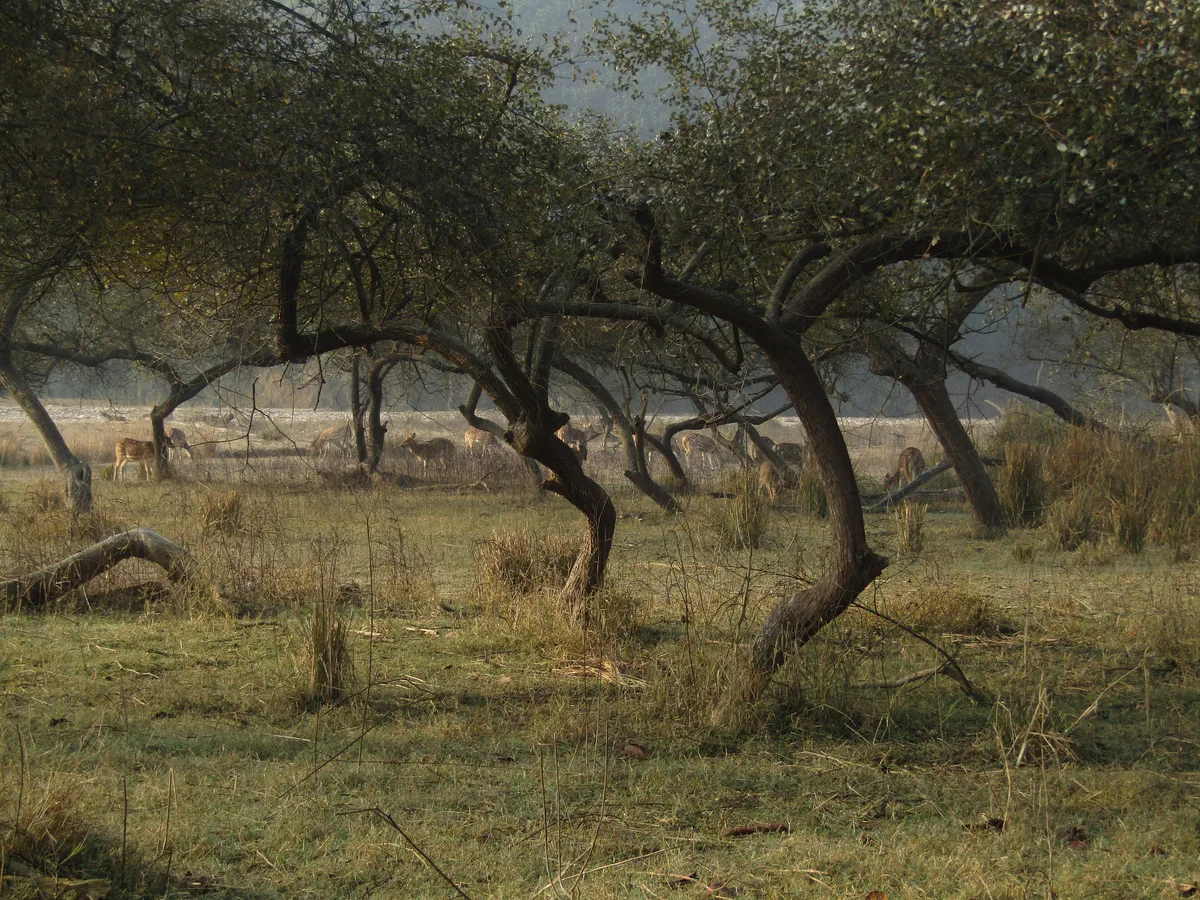
Rajaji doesn’t feel like a single park so much as three stitched-together forest blocks wrapped around the Ganga as it drops out of the Himalayas toward the plains. The reserve takes its name from Chakravarti Rajagopalachari, India’s last Governor-General, and it merged three older sanctuaries, Rajaji, Motichur and Chilla, into one 820-square-kilometre protected area in 1983. Sal forest, riverine grassland and rocky ravines all sit inside its boundary, and Rishikesh itself is close enough to some entry gates that you can do a safari as a half-day trip without changing base.
Which gate to pick
Most visitors coming from Rishikesh head for Chilla or Motichur, the two zones closest to town.
- Chilla: the most popular gate, known for elephant sightings and river frontage; expect more jeeps here on weekends
- Motichur: quieter, closer to Haridwar side, good for birdlife and leopard territory
- Ranipur/Kansro/other zones: further out, used less by day-trippers, worth it if you already have a naturalist or lodge arranging things
Tigers do live here, hence the name, but Rajaji is really an elephant stronghold first. Herds of 15 to 20 are not unusual along the river corridors, especially in the drier months when they concentrate near water.
Booking the safari, not just showing up
You cannot simply drive to the gate and walk in. Safaris run in fixed jeeps booked in advance, usually in two slots a day, one starting near opening and one in the late afternoon before the 5pm closing time. Vehicles are shared or private depending on what you book, and a forest guide rides along in both cases, that’s not optional and it’s not a tip-based add-on, it’s how the park is run.
Because Rajaji is very heavily visited, especially on weekends and during the cooler months, slots for the Chilla zone in particular can fill up. Booking a day or two ahead through a local operator or your hotel in Rishikesh is the safer route rather than turning up at the gate hoping for a spare seat.
The gate closure that catches people out
Rajaji shuts for the monsoon, typically mid-June through mid-November, when the forest tracks turn to mud and rivers rise. This isn’t a rumor or a soft recommendation, it’s a hard seasonal closure that applies across most zones. If you’re planning a Rishikesh trip in July or August expecting a safari, check current status before you build the day around it, because you’ll likely be turned away at the gate.
Outside the monsoon, the daily window is 6:30am to 5pm every day of the week, with no weekly closure. Early winter mornings (December, January) can be genuinely cold in an open jeep, so this is one park where a monsoon jacket in your bag isn’t overkill, it’s the difference between an alert two hours and a miserable one.
Best time inside the gate
Dawn entry, right at 6:30am, tends to catch animals still moving before the day heats up and before the day’s second wave of jeeps arrives. Elephants especially are more active and visible in the cool hours at either end of the day.
April through June is hot but also the driest stretch, which pushes wildlife toward the river and waterholes, often making sightings more reliable even if the heat itself is uncomfortable by midday. December through February is more comfortable temperature-wise but mornings need real layers.
Elephants, not just the tiger name on the gate
The park’s editorial reputation, and its actual wildlife density, leans elephant more than tiger. Herds move along the Ganga and Song river corridors inside the reserve, and jeep guides generally know the current grazing patterns better than any fixed viewpoint would. Leopard, sambar, chital, and a long list of resident and migratory birdlife round out what a typical safari turns up; a tiger sighting is possible but should be treated as a bonus, not the baseline expectation.
Because Rajaji sits right against the Himalayan foothills, the terrain shifts fast inside one drive, from open grassland to dense sal forest to rocky nullahs, which is part of why guides insist on sticking to fixed tracks rather than freelancing off-road.
Getting there and what to plan for
Chilla gate is roughly 15 to 20 kilometres from central Rishikesh, an easy pre-dawn drive by taxi or with whoever runs your safari booking. Motichur gate sits closer to the Haridwar side if you’re coming from that direction instead.
Plan for:
- A half-day block, roughly 3 hours safari plus travel time each way
- Cash or advance online payment depending on the operator, confirm which before you arrive
- A guide/naturalist fee bundled into most jeep bookings, not a separate tip demand
- Binoculars if you have them; the park doesn’t rent them at the gate
Since this is one of Uttarakhand’s more visited reserves rather than an overlooked one, going in with a booked slot and realistic expectations, elephants over tigers, cool hours over midday heat, beats winging it at the gate.
Frequently asked questions
How do I book a safari at Rajaji Tiger Reserve from Rishikesh?
Through a local tour operator, your hotel, or the forest department's booking system a day or two ahead. Walk-up seats exist but aren't guaranteed, especially at the popular Chilla gate on weekends.
What are the park's opening hours?
6:30am to 5pm, seven days a week, with safaris run in morning and late-afternoon slots. There's no weekly closure day, but the whole park shuts for the monsoon, roughly mid-June to mid-November.
Will I actually see a tiger?
Possibly, but don't count on it. Rajaji has a stronger reputation for elephants, with herds regularly seen along the river corridors; treat a tiger sighting as a bonus.
Which gate is closest to Rishikesh, Chilla or Motichur?
Chilla is the closer and more popular option, about 15-20 kilometres from central Rishikesh. Motichur sits nearer the Haridwar side and tends to be quieter.
What's the best season to visit?
Mid-November through mid-June is when the park is open. April to June is hot but pushes animals toward water sources, while December-January is cooler but requires warm layers for early jeep rides.
Plan your trip to Rishikesh
India eSIM & staying connected →
Some links above are affiliate links — if you book through them, Wander Atlas earns a small commission at no extra cost to you. It's how we keep every guide free.